

Vacuum Weekly: Fabric Code Savvy Upholstered Bed Care
The safest upholstered bed care routine is simple: vacuum weekly with a soft brush attachment, blot spills the moment they happen, and always match your cleaning method to the fabric code on the care tag. Deep clean periodically throughout the year, and never soak the fabric. A light dusting of baking soda between cleanings keeps odors in check without adding moisture.
TL;DR:
- Using a fabric code system ensures cleaning methods match the material, preventing damage from water, solvent, or no-liquid cleaning requirements.
- Deep clean with an extractor at most twice a year, avoiding over-wetting to prevent foam damage and mold growth.
- Regularly vacuum and blot spills immediately, with extra attention to seams and tufted buttons to remove dust and odors effectively.
- Applying a fabric protector and choosing performance, removable, washable covers significantly reduces long-term maintenance and stain risks.
- For stubborn stains or mold, a professional cleaner with specialized equipment is recommended, especially for liquids or fabrics labeled X or S.
Table of Contents
- Your Upholstered Bed Maintenance Checklist
- How Do Fabric Care Codes Change Your Cleaning Method?
- What’s the Right Way to Remove Stains From an Upholstered Headboard?
- How Often Should You Deep Clean an Upholstered Bed?
- How Can You Extend the Life of Upholstered Bed Fabric?
- When Should You Call a Professional Cleaner?
- What Cozyhome Staff Want You to Know Before You Buy
- Why Most Care Guides Get One Thing Backwards
- Sources
- FAQ
Your Upholstered Bed Maintenance Checklist
Print this out, tape it inside a nightstand drawer, or just bookmark it. Here’s what keeps a fabric or velvet headboard looking new without turning cleaning into a weekend project.
Weekly:
- Vacuum the entire headboard with a soft brush attachment on low suction.
- Work in the direction of the fabric’s nap or weave, not against it.
- Pay extra attention to seams and tufted buttons where dust collects.
Monthly:
- Check for new spots and treat them before they set.
- Sprinkle baking soda over the surface, wait some time, then vacuum it off to lift odors and light grease, a trick backed by The Spruce’s headboard-cleaning guidance.
- Wipe down any exposed wood trim with a slightly damp cloth.
Seasonally:
- Do a full deep clean and inspect for wear, loose threads, or sagging padding.
Keep on hand: a vacuum with an upholstery attachment, microfiber cloths, mild dish soap, baking soda, and a handheld steamer or rented extractor for deep cleans.
How Do Fabric Care Codes Change Your Cleaning Method?
Every upholstered bed ships with a cleaning code, usually a single letter sewn into a tag under the mattress or on the frame. Manufacturers and retailers use this system to tell you exactly which cleaners are safe, and ignoring it is the fastest way to ruin a headboard, according to Sleep Number’s upholstery care instructions.
- W (water-based): Use a mild soap solution and a damp cloth. Most cotton, linen, and polyester blends fall here.
- S (solvent-based): Skip water entirely. Use a dry-cleaning solvent or upholstery foam cleaner, since water can leave rings or shrink the fibers.
- W/S (either): You have flexibility to use water-based or solvent-based products depending on the stain.
- X (vacuum only): No liquid cleaners of any kind. This is common on delicate silks and some specialty weaves.
- F (foam only): A water-free foam cleaner applied with a soft brush, then vacuumed once dry.
Velvet needs a light touch, brush in one direction with a soft-bristle brush to keep the pile from flattening or developing shine spots. Leather and faux leather headboards skip fabric codes entirely and need leather-specific conditioners instead of soap. Suede is closer to velvet, brush gently and never scrub.
Before cleaning any new spot, test your cleaner on a hidden section, like the back of the headboard or under a cushion. Wait a few minutes and check for color transfer or texture change before treating the visible area.
Pro Tip: If your bed has no visible tag, check the manufacturer’s website or original packaging. Guessing the fabric code is how most accidental bleach spots and shrinkage happen.
What’s the Right Way to Remove Stains From an Upholstered Headboard?
Blotting, not rubbing, is the rule that saves fabric. Rubbing drives the stain deeper into the fibers and can fray the weave, while blotting lifts it out. Always work from the outer edge of the stain toward the center so you’re not spreading it wider.
- Grease or oil: Cover the spot with baking soda, let it sit for 20 to 60 minutes to absorb the oil, then vacuum thoroughly. If a faint mark remains and your fabric code allows it, dab with a little mild dish detergent diluted in water.
- Water, coffee, or wine: Blot up excess liquid immediately with a dry cloth. For W-coded fabrics, dab with a mild soap solution, then rinse by blotting with a second cloth dampened in clean water, since soap residue left behind attracts dirt later, per The Spruce. Finish by blotting dry.
- Ink or blood: These need enzyme cleaners or a diluted hydrogen peroxide solution. Spot-test first since peroxide can lighten dyed fabrics, and treat blood with cold water only, since heat sets the protein into the fibers.
Tufted headboards and deep seams trap grime that a flat cloth can’t reach. A soft-bristle brush or an old toothbrush helps work cleaner into button wells and stitching without oversaturating the padding underneath.
How Often Should You Deep Clean an Upholstered Bed?
Regular deep cleaning throughout the year is recommended by upholstery professionals to keep fabric looking fresh without wearing it down from over-handling, according to Better Homes & Gardens.
For routine refreshing, a handheld steamer works well and kills odor-causing bacteria, which makes it a smart choice after an illness in the house. For deeper, set-in grime, a rented upholstery extractor does more, since it injects cleaning solution and pulls it back out in the same pass.
The deep-clean flow:
- Vacuum thoroughly first to remove loose debris.
- Spot-treat any visible stains before running the machine.
- Steam or extract in straight, overlapping passes, never circular scrubbing.
- Blot away excess moisture immediately with a dry towel.
- Open windows or run a fan to speed drying.
Over-wetting is the single biggest risk in this process. Soaking the foam padding underneath can cause permanent water rings, degrade the foam’s structure, or invite mold, warns NC State Extension. Keep every cloth just damp, work in small sections, and skip the heat gun, since blasting hot air can shrink or scorch fabric before it dries evenly.
How Can You Extend the Life of Upholstered Bed Fabric?
The best upholstered bed maintenance happens before a stain ever shows up. A few habits make the biggest difference over years, not weeks.
- Choose performance fabric or removable covers if you have kids or pets. A washable slipcover turns a two-hour deep clean into a fifteen-minute laundry cycle, and pet-friendly upholstery fabrics hold up far better against claws and shedding than delicate weaves.
- Apply a fabric protector if your manufacturer approves one for your specific code. This adds a stain-resistant layer without changing the look or feel of the material.
- Position the bed away from direct sun. UV exposure fades and weakens fibers over time, so angling the headboard away from a west-facing window preserves color far longer.
- Vacuum more often in households with pets or allergy sufferers, since dander and hair build up faster than in a pet-free bedroom.
When Should You Call a Professional Cleaner?
Some jobs go beyond a DIY fix. Call a professional for large or set-in stains, lingering odors that survive baking soda treatment, foam that feels saturated after a spill, X-coded fabrics that can’t touch water at all, or any sign of mold. Professionals use controlled-extraction equipment that applies and removes solution in one pass, getting deeper results with less risk to the padding. When you call, describe the fabric code, the type of stain, and what you’ve already tried, that context helps them choose the right method on the first visit.
What Cozyhome Staff Want You to Know Before You Buy
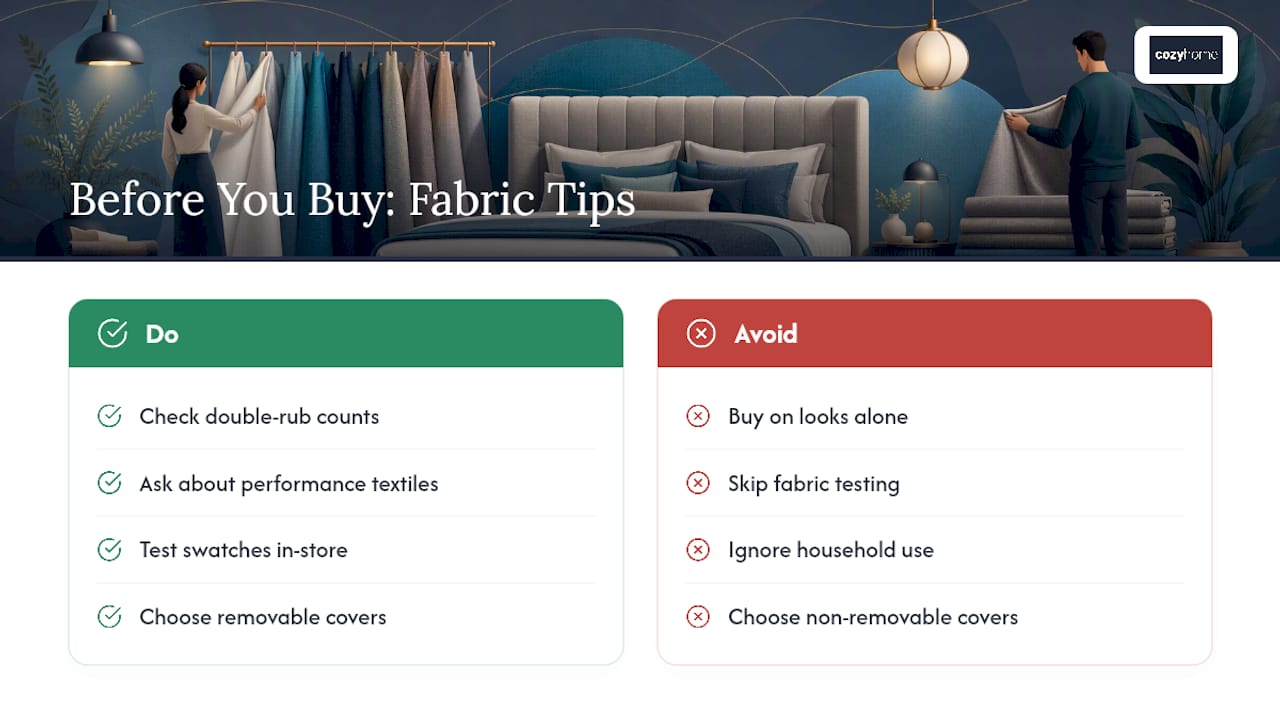
Care starts before the bed ever reaches your bedroom. Choosing the right fabric upfront prevents most of the maintenance headaches homeowners deal with later.
We walk every customer through double-rub counts and performance textiles so the fabric on a custom sofa fabric guide actually matches how the piece will be used, not just how it looks in the showroom light. A busy household with kids and a dog needs a different weave than a quiet guest room. Removable, machine-washable covers are one of the easiest upgrades we recommend for exactly that reason, they turn upholstery care from a chore into a laundry cycle.
Our in-store swatch process lets you feel and test fabric against your actual lifestyle before committing, which is why our customers report fewer returns and long-term satisfaction with their choice.
That hands-on guidance, paired with made-to-order construction options like removable covers, is what separates a piece built for your life from one pulled off a warehouse floor.
Why Most Care Guides Get One Thing Backwards
Most upholstery advice treats cleaning products as the hero of the story. The bigger factor is moisture discipline. Nearly every ruined headboard I’ve seen traced back wasn’t the wrong soap, it was too much water left sitting in the padding. A damp cloth, worked in small sections, beats an aggressive scrub with the “right” cleaner every time.
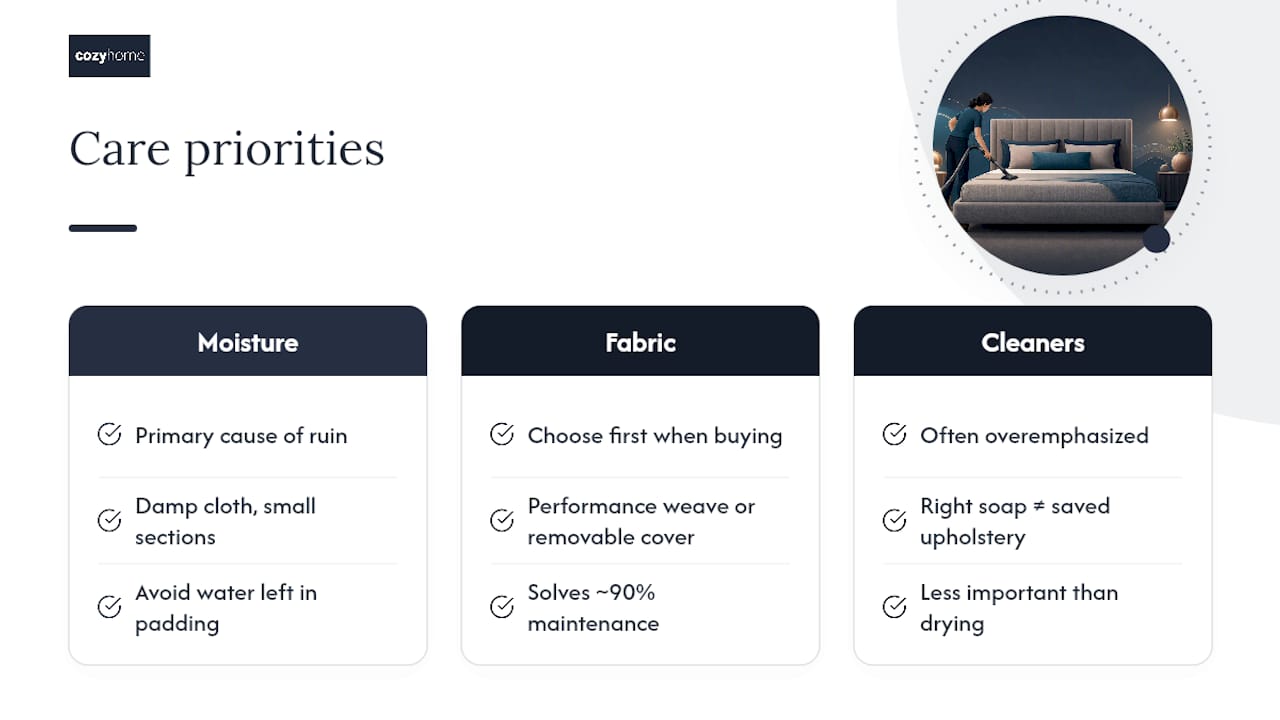
The other overlooked piece is timing. Waiting a week to treat a coffee spill turns a thirty-second blot job into a professional cleaning bill. The fabric code system exists precisely so homeowners don’t have to guess, yet most people never check the tag until something’s already gone wrong.
If you’re buying new, prioritize fabric selection over cleaning products. A performance weave or a removable cover solves ninety percent of future maintenance problems before they start. The upholstered bed care routine matters, but the fabric decision you make on day one matters more.
— Dean P.
Sources
- How to Clean a Fabric Headboard Like a Pro — The Spruce
- How to Clean an Upholstered Headboard — Better Homes & Gardens
- Cleaning flooded upholstered furniture — NC State Extension
- Upholstered furniture cleaning instructions — Sleep Number Support
FAQ
Is It Hard to Keep an Upholstered Bed Clean?
Not if you stay ahead of it. A weekly vacuum pass plus immediate blotting of spills keeps most upholstered beds looking new, and the only real risk is skipping the fabric care tag and using the wrong cleaner.
Do Upholstered Beds Get Dust Mites?
Yes, fabric headboards can harbor dust mites and dander the same way mattresses and pillows do. Weekly vacuuming with an upholstery attachment and periodic steam cleaning help control allergen buildup, especially in homes with pets.
Can You Use Dawn Dish Soap on Upholstery?
A small amount of mild dish soap diluted in water works on W-coded fabrics, but always spot-test on a hidden area first. Solvent-only (S) or vacuum-only (X) fabrics can’t tolerate any water-based soap without risking stains or shrinkage.
How Long Do Upholstered Beds Typically Last?
Lifespan depends heavily on fabric quality and how well it’s maintained, but a well-built frame with a durable, high double-rub-count fabric and consistent care can last well over a decade. Choosing performance fabric or a removable cover upfront extends that lifespan further by making regular cleaning far easier.