

How to Design a Custom Sofa From Scratch
TL;DR:
- Designing a custom sofa involves precise planning, sturdy joinery, and durable upholstery fabric. It addresses unique space constraints and ergonomic needs, creating comfort tailored to individual preferences. Proper build techniques ensure long-lasting support, supportibility, and aesthetic appeal through careful material selection and modular design options.
Designing a custom sofa from scratch is the process of planning, building, and upholstering a sofa to your exact dimensions, comfort preferences, and style. Unlike mass-market options pulled from a warehouse shelf, a made-to-order sofa solves real problems: awkward room layouts, unusual ceiling heights, or the need for a specific fabric that no retailer stocks. The process draws on ergonomic standards, woodworking techniques, and upholstery skills that any motivated homeowner can learn. We put this guide together to walk you through every stage, from the first measurement to the final cushion.
What tools and materials do you need to design a custom sofa?
Every successful build starts with the right materials. Kiln-dried hardwood, such as oak or ash, forms the strongest sofa frames because it resists warping and holds screws firmly over time. Plywood rated for structural use works well for seat decks and back panels. For sustainable builds, look for timber certified by the Forest Stewardship Council (FSC) or Responsible Wood, which confirms environmental responsibility and long-term durability.
Essential tools for frame building:
- Circular saw or miter saw for cutting lumber to length
- Pocket hole jig and drill for joinery
- Wood glue and clamps for curing joints
- Tape measure, square, and marking pencil
- Staple gun (heavy-duty, 16mm–19mm staples) for upholstery
- Upholstery scissors and a tack hammer
- Safety glasses, hearing protection, and work gloves
Fabric durability at a glance:
| Fabric type | Martindale rub count | Best use |
|---|---|---|
| Bouclé | 30,000–50,000 | Low to medium traffic |
| Chenille | 30,000–60,000 | Medium traffic, textured look |
| Performance linen | 50,000+ | High-traffic family rooms |
| Leather | N/A (abrasion-resistant) | High traffic, easy cleaning |
Pro Tip: Buy 15–20% more fabric than your measurements suggest. Pattern matching, cutting errors, and re-dos on corners consume more material than most first-time builders expect.
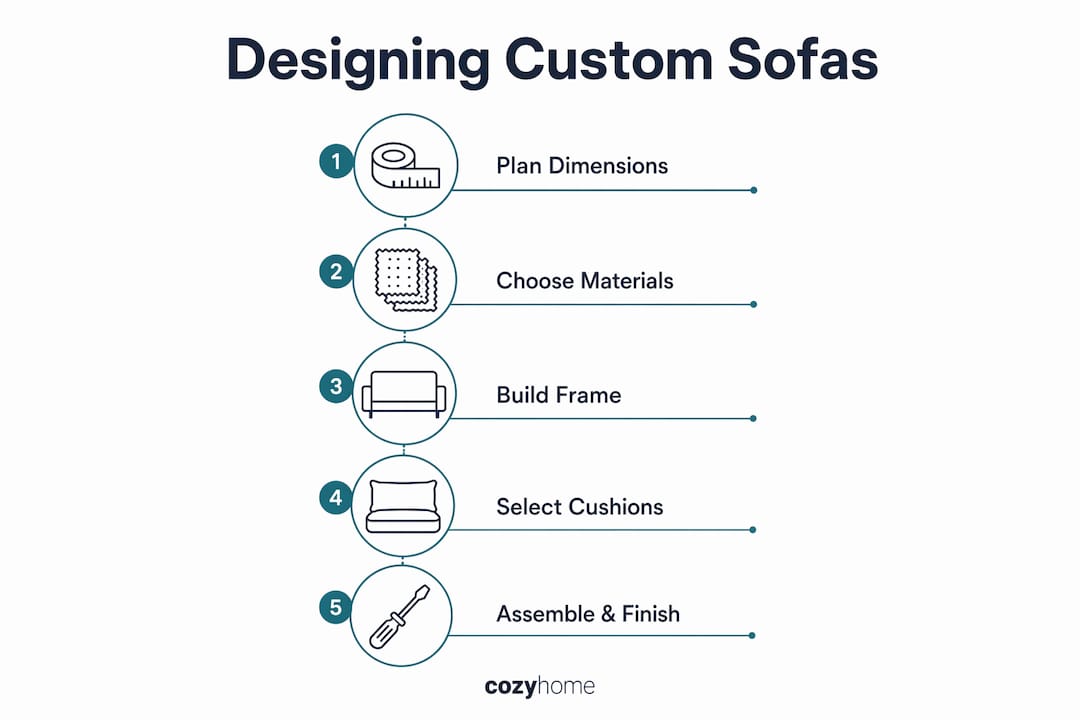
How do you plan sofa dimensions and ergonomics?
Accurate planning separates a sofa that fits from one that frustrates. Start by measuring the room’s usable floor space, then subtract at least 90 cm of circulation clearance on each open side of the sofa. Measure every doorway, hallway, and stairwell the sofa must pass through before you cut a single board.
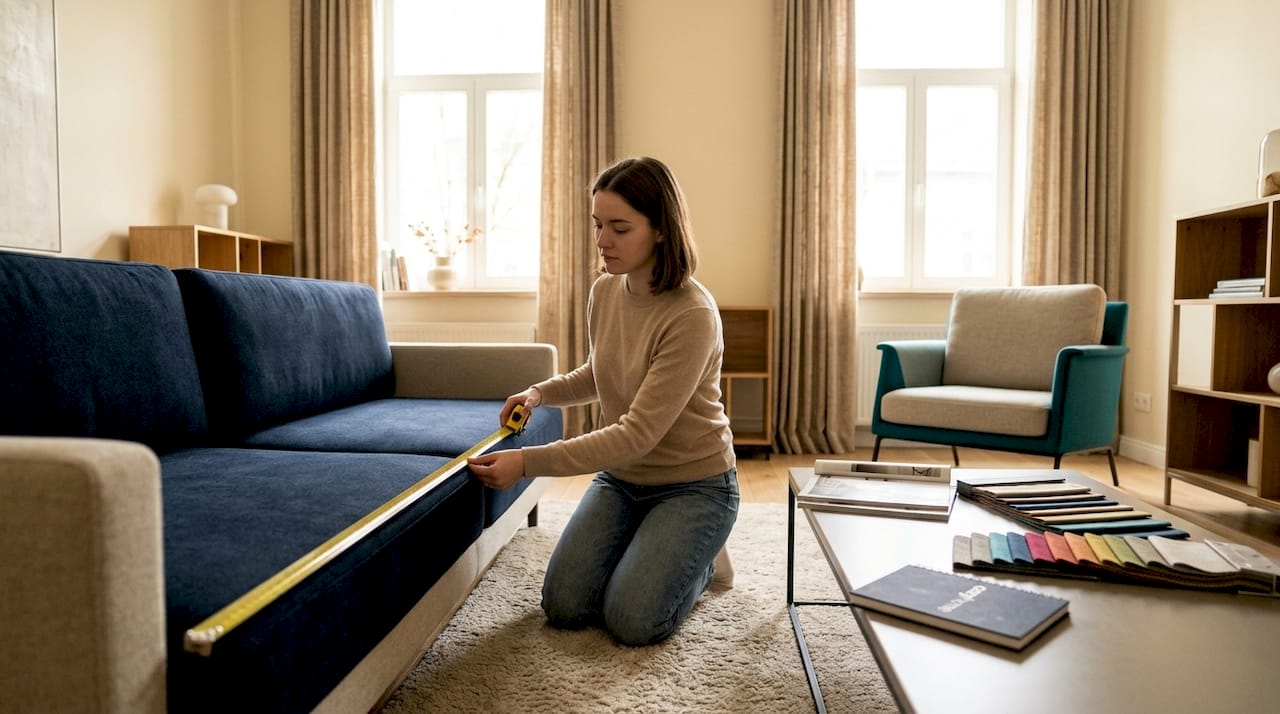
Ergonomic standards give you a reliable starting point for comfort. Seat height of 43–46 cm suits most adults for both upright sitting and relaxed lounging. Seat depth of 52–56 cm accommodates a range of body types without forcing a perched or sunken posture. A backrest pitch of 100–110 degrees balances support for watching TV and casual conversation.
Follow these planning steps in order:
- Sketch the room to scale on graph paper, marking windows, doors, and traffic paths.
- Mark the sofa footprint on the floor using painter’s tape to visualize the actual size.
- Cut cardboard or foam templates to the planned seat depth and height, then sit on them.
- Adjust dimensions based on how the templates feel for different household members.
- Confirm all module sizes pass through every doorway before finalizing the frame plan.
Pro Tip: Always test ergonomic measurements by physically sitting and lounging on prototype cushions before committing to frame dimensions. What looks right on paper often feels wrong in practice.
A modular approach adds long-term flexibility. Adding or removing modules like chaises or ottomans later supports changing room layouts without rebuilding the entire sofa. Plan connection points and leg placement with this in mind from the start.
How do you build a strong sofa frame?
Frame construction is where most DIY sofas succeed or fail. Select straight, dry lumber with no visible knots at load-bearing joints. Cut all pieces to length before assembly, and label each one to avoid confusion during the build.
Follow this construction sequence:
- Build the base rectangle first, using pocket hole screws and wood glue at every corner joint.
- Add cross-supports across the seat deck every 30–40 cm to prevent flex under weight.
- Attach the back frame at the planned pitch angle, bracing it with diagonal supports.
- Install the arm frames, checking for square with a carpenter’s square before the glue cures.
- Attach a plywood seat deck (at least 18mm thick) over the base frame for a firm, flat surface.
- Install no-sag springs or heavy-duty webbing across the seat deck.
The joinery method matters more than most builders realize. Premium wood glue provides the majority of joint strength. Pocket screws hold pieces in position while the glue cures, but they do not carry long-term load alone. Clamp every glued joint for at least one hour before moving on.
Seat support spacing is equally critical. Webbing or no-sag springs spaced 70–80 mm apart prevent the seat from sagging or developing a hammock shape over time. Wider spacing weakens support noticeably within the first year of use.
“The frame is the skeleton of your sofa. No amount of premium foam or beautiful fabric will fix a frame that flexes, creaks, or sags. Invest the time to get the joinery right before you move on to anything else.”
How do you choose cushions, foam, and upholstery fabric?
Cushion fill determines how a sofa feels on day one and how it holds up after years of daily use. The three main options each serve a different comfort profile.
| Fill type | Feel | Durability | Maintenance |
|---|---|---|---|
| High-density foam (HR 35–38 kg/m³) | Firm, supportive | Excellent | Low |
| Feather-down blend | Plush, soft | Moderate | Regular fluffing needed |
| Hybrid (foam core + fiber wrap) | Balanced | Very good | Minimal |
HR foam at 35–38 kg/m³ wrapped with a layer of fiber batting delivers the best combination of shape retention and comfort. The foam provides structure, and the batting softens the surface feel without sacrificing support. Look for CertiPUR-US certified foam, which confirms the product meets standards for content, emissions, and durability.
Cushion composition strongly affects comfort: high-density foam suits households that want firm, consistent support, while feather blends suit those who prefer a softer, more enveloping feel. Hybrids work well for most households because they age more gracefully than pure feather fills.
Fabric selection follows the same logic. Upholstery fabric with a Martindale rub count above 30,000 holds up in high-traffic living rooms. For 2026 interiors, textured fabrics like bouclé and chenille in warm neutral tones such as oatmeal, taupe, and warm gray are the leading choices. They photograph well, hide everyday wear, and complement a wide range of furniture styles.
Pro Tip: Order fabric samples and live with them in your room for 48 hours before committing. Natural and artificial light change fabric color significantly, and what looks perfect in a showroom can read differently at home.
For a professionally finished look, cut fabric panels with a 5 cm seam allowance on all sides. Sew removable covers with hidden zippers along the back seam so cushions can be washed or re-covered later without replacing the foam.
Finishing, assembly, and avoiding common mistakes
The final assembly stage is where attention to detail pays off. Dry-fit every module and cushion before stapling any fabric permanently. Check that all legs sit level on the floor and that the frame does not rock. Attach felt or rubber pads to every leg base to protect flooring.
Common mistakes to avoid:
- Stapling fabric under tension before checking alignment, which causes puckering at corners
- Skipping the dry-fit step, which leads to discovering frame misalignment after upholstery is complete
- Using webbing spaced wider than 80 mm, which causes early seat sagging
- Choosing foam below the recommended density, which compresses and loses shape within months
- Attaching legs before upholstering the base, which makes it impossible to wrap fabric cleanly around the bottom rail
Test the finished sofa by sitting in every position: upright, reclined, and sideways. Press down firmly on each seat cushion to check for uneven firmness. Grab the backrest and apply lateral pressure to confirm the frame does not flex or creak. If you built a modular design, connect and disconnect each module three times to confirm the connection points hold securely.
Pro Tip: Photograph every stage of the build. If a problem appears later, photos of the frame before upholstery make troubleshooting far faster than guesswork.
For homeowners who want the look and feel of a custom piece without the full DIY commitment, exploring bespoke furniture design options gives a clear picture of what professional made-to-order services offer alongside the DIY route.
Key Takeaways
Designing a custom sofa from scratch requires accurate ergonomic planning, strong frame joinery, and fabric with a Martindale rub count above 30,000 to deliver lasting comfort and durability.
| Point | Details |
|---|---|
| Ergonomic standards matter | Seat height of 43–46 cm and backrest pitch of 100–110 degrees suit most adults comfortably. |
| Frame joinery is the foundation | Wood glue carries most joint strength; pocket screws hold pieces during curing only. |
| Webbing spacing prevents sagging | Space no-sag springs or webbing no wider than 70–80 mm apart across the seat deck. |
| Foam density determines longevity | HR foam at 35–38 kg/m³ with fiber batting retains shape and firmness over years of use. |
| Fabric durability starts at 30,000 | Choose upholstery with a Martindale rub count above 30,000 for high-traffic living rooms. |
What I have learned from watching people build their own sofas
After spending years around custom furniture, I have noticed one pattern that separates satisfying builds from frustrating ones. Most people spend 80% of their planning time on aesthetics and about 20% on ergonomics. The result is a sofa that looks exactly right in photos but feels slightly off every single day.
The ergonomic numbers are not suggestions. A backrest pitched at 95 degrees instead of 105 degrees does not sound like much, but after an hour of sitting, the difference is real and uncomfortable. The homeowners who get this right are the ones who build cardboard mockups and actually sit in them for a full evening before touching a saw.
The other thing I have come to believe strongly: customization solves functional problems, not just aesthetic ones. A sofa designed around a specific room layout, a specific family’s sitting habits, and a specific fabric that will survive two kids and a dog is worth far more than a beautiful piece that fights the room every day. That is the real case for building your own, and it is the same reason we think made-to-order furniture, whether DIY or professionally crafted, almost always outperforms what you pull off a showroom floor.
— Dean P.
cozyhome furniture: custom sofas built for your space
If the DIY process feels like more than you want to take on right now, cozyhome furniture in Plano, Texas offers a direct path to a sofa built around your room, your style, and your comfort preferences.
cozyhome furniture carries over 700 fabric and leather options, and every piece is made to order with American craftsmanship. The in-store team in Plano walks you through sizing, configuration, and fabric selection so the finished piece fits your space the way a custom build should. Browse the Excelsior Sofa in Cream, the Excelsior in Gray, or the Koba Sofa in Black to see what made-to-order looks like when it comes fully finished and ready to live in. Free local delivery and flexible financing make the process straightforward from the first visit to final placement.
FAQ
What is the standard seat height for a custom sofa?
The standard ergonomic seat height for a custom sofa is 43–46 cm. This range supports comfortable sitting for most adults across a variety of postures.
How do I choose the right foam density for sofa cushions?
High-resilience foam at 35–38 kg/m³, wrapped with fiber batting, delivers the best balance of firmness and shape retention. Look for CertiPUR-US certification to confirm the foam meets safety and durability standards.
What Martindale rub count should upholstery fabric have?
Upholstery fabric for a high-traffic household should have a Martindale rub count of at least 30,000. Fabrics rated above this threshold hold up to daily use without pilling or wearing through quickly.
How far apart should sofa webbing or springs be spaced?
No-sag springs and heavy-duty webbing should be spaced no more than 70–80 mm apart across the seat deck. Wider spacing causes the seat to sag or develop a hammock shape within the first year.
Can I add modules to a custom sofa after the initial build?
Yes. A modular sofa design allows you to add chaises, ottomans, or extra seats later without rebuilding the entire frame. Plan connection points and leg placement during the original build to make future additions straightforward.