

Furniture Craftsmanship Grade: What Buyers Need to Know
TL;DR:
- Furniture craftsmanship grade classifies furniture based on quality, durability, and construction techniques. Higher grades like Premium use traditional joinery and solid wood, lasting decades, while Economy grades rely on fasteners and veneer, often needing replacement. Inspecting joinery, hidden construction areas, and finishing details helps determine a piece’s true craftsmanship and longevity.
Furniture craftsmanship grade is a standardized measure that indicates the quality and durability of furniture based on materials, construction techniques, and finishing methods. The Architectural Woodwork Institute defines three grades, Economy, Custom, and Premium, each with measurable standards for joinery, finish, and materials. Understanding what is furniture craftsmanship grade matters because it directly predicts how long a piece will hold up, how it looks over time, and whether it can be repaired rather than replaced. For consumers and design professionals alike, knowing these grades turns a confusing purchase into a confident one.
What is furniture craftsmanship grade and how is it defined?
Furniture craftsmanship grade is the industry’s way of classifying construction quality across three levels: Economy, Custom, and Premium. The AWI grading system measures joinery precision, finish consistency, and material selection at each level. Economy grade covers basic functional construction with minimal finish requirements. Custom grade, the most widely specified level in residential and commercial projects, requires tighter tolerances and more consistent finishing. Premium grade demands the highest standards across every variable, from the wood species used to the smoothness of the final coat.
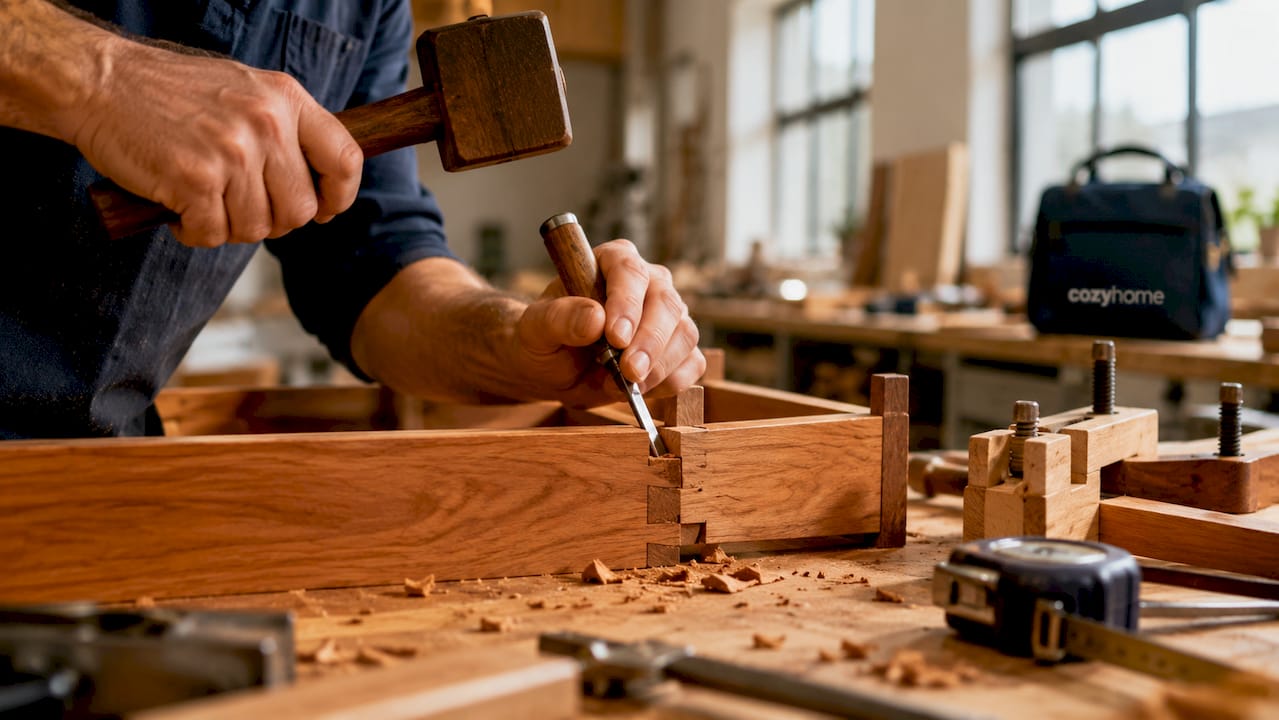
Wood quality feeds directly into craftsmanship grade. The National Hardwood Lumber Association grades hardwood boards by clear yield percentage, with the FAS (Firsts and Seconds) standard requiring 83⅓% clear wood yield. That number matters because higher clear yield means fewer knots, fewer defects, and a more stable, attractive surface. Premium grade furniture typically sources from FAS or equivalent lumber, while Economy grade may use lower yield boards where appearance is secondary to function.
The term “craftsmanship grade” is the consumer-friendly phrase for what the industry formally calls a quality classification standard. Both phrases describe the same thing: a structured way to communicate construction expectations before a buyer commits to a purchase.
What are the common furniture craftsmanship grades and how do they differ?
The three AWI grades represent distinct construction expectations, not just price tiers. Each grade sets minimum requirements for joinery methods, surface preparation, finish application, and material selection.
| Grade | Joinery standard | Finish quality | Typical application |
|---|---|---|---|
| Economy | Staples, nails, cam locks | Basic paint or stain, minimal prep | Rental properties, short-term use |
| Custom | Dowels, pocket screws, some traditional joinery | Consistent stain or paint, sanded surfaces | Residential, mid-range commercial |
| Premium | Mortise-and-tenon, dovetail, hand-fitted | Multi-coat, hand-rubbed, matched grain | Heirloom residential, high-end commercial |
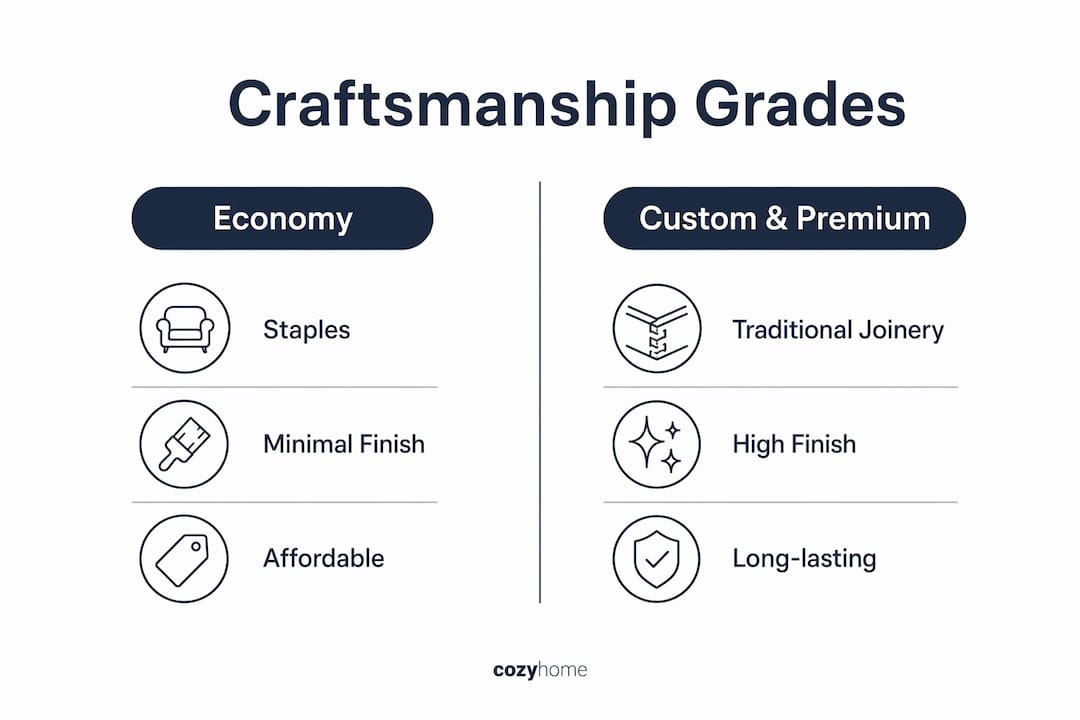
Economy grade furniture serves a clear purpose: it is affordable and functional for situations where longevity is not the priority. Custom grade covers most of what you find in quality retail showrooms and represents a solid middle ground. Premium grade is where traditional joinery methods like mortise-and-tenon and dovetail joints appear consistently, providing mechanical strength that outlasts any adhesive or fastener.
Pro Tip: When shopping in a showroom, ask specifically which AWI grade the piece meets. If the salesperson cannot answer or deflects to style descriptions, treat that as a signal to look more closely at the construction.
Understanding craftsmanship levels in furniture also means recognizing what each grade costs over time, not just at purchase. A Premium grade piece may cost more upfront but rarely needs structural repair. An Economy grade piece often needs replacement within a few years, making the total cost higher than it first appeared.
How do inspection standards like AQL affect furniture quality grading?
Craftsmanship grade and inspection standards are two different things. Craftsmanship grade describes how a piece is built. Inspection standards describe how a finished batch is checked before it ships.
Mass-manufactured furniture is commonly controlled through AQL 2.5 at General Inspection Level II. For a 1,000-piece order, around 80 units are sampled. If major defects exceed the threshold in that sample, the entire batch is rejected. This statistical approach catches systematic problems but does not guarantee every individual unit is defect-free.
Defects in the AQL framework fall into three categories:
- Critical defects: Structural failures or safety hazards. Zero tolerance applies. A chair leg that could collapse under normal use is a critical defect.
- Major defects: Issues that affect saleability, such as deep scratches on a tabletop or a drawer that does not close properly. These have an allowable threshold.
- Minor defects: Cosmetic issues like a small paint drip on an unexposed surface. These have a higher allowable count.
Furniture inspections also include dimensional checks, hardware operation tests, finishing quality reviews, and packaging assessments. A proper pre-shipment inspection catches problems before costly returns or replacements occur. For buyers of imported furniture, asking suppliers for AQL inspection reports is a practical way to verify quality claims beyond the craftsmanship grade label.
The key distinction: AQL tells you whether a batch passed a statistical check. Craftsmanship grade tells you how the piece was designed and built. Both matter, and neither replaces the other.
What craftsmanship features define heirloom-quality furniture?
Heirloom-quality furniture is defined by four core variables: wood species selection, traditional joinery, sustainable finishes, and material honesty. Material honesty means solid wood throughout, not veneer over particleboard. Each variable contributes to a piece that holds up structurally and aesthetically for decades.
Joinery is the single most reliable indicator of craftsmanship quality. Mortise-and-tenon and dovetail joints are interlocking wood-to-wood connections that provide exceptional mechanical strength. A mortise-and-tenon joint actually becomes stronger over time as the wood settles and the adhesive fully cures. Staples and nails, by contrast, loosen with use and are nearly impossible to repair cleanly once they fail.
Finish quality separates furniture that ages well from furniture that looks worn within a few years. Maintainable finishes, such as oil or wax, can be refreshed at home. Film finishes, like lacquer or polyurethane, are harder to repair when they chip or peel. Premium grade pieces typically use multi-coat, hand-rubbed finishes that allow for spot repair without refinishing the entire surface.
ANSI/BIFMA standards provide objective performance benchmarks through load, tilt, and impact cycle testing. These tests complement craftsmanship grades by measuring real-world durability rather than construction intent. Design professionals routinely specify BIFMA-tested pieces for commercial projects where safety and longevity are non-negotiable.
Pro Tip: Flip a chair upside down before buying. If you see staples or hot glue at the joints, the piece is Economy grade regardless of how it looks from the front.
Key features that define high craftsmanship grade furniture:
- Solid wood frames with no particleboard or MDF in structural areas
- Mortise-and-tenon or dovetail joinery at all load-bearing connections
- Consistent finish with no drips, thin spots, or unmatched grain at seams
- Drawer boxes with dovetail corners and smooth, full-extension slides
- Hardware that operates without play or resistance
How can you assess furniture craftsmanship grades in practice?
Assessing furniture quality grading in person requires a short but deliberate inspection. These steps work in a showroom, at a warehouse, or when a delivery arrives at your door.
- Check the joinery at stress points. Look at corners, leg connections, and arm attachments. Visible wood-to-wood joints with no gaps signal Custom or Premium grade. Visible staples or cam-lock fittings signal Economy grade.
- Open every drawer. Dovetail corners on drawer boxes indicate Premium grade construction. Stapled or glued box corners indicate Economy. The drawer bottom should be solid wood or quality plywood, not thin cardboard-like material.
- Inspect the back and underside. Hidden areas reveal true build quality. A finished back panel and a clean underside with no exposed staples or rough edges indicate a manufacturer who cares about the whole piece, not just the visible surface.
- Lift one corner and drop it gently. No sound or flex indicates strong joinery. A creak or wobble signals weak construction that will worsen with use.
- Read the specification sheet. Look for wood species names, joinery method descriptions, and finish type. Vague terms like “wood composite” or “engineered wood” often indicate particleboard cores. Specific terms like “kiln-dried solid oak frame” indicate genuine material honesty.
The most common buyer mistake is not checking hidden construction areas where manufacturers cut costs with particleboard cores under veneer or cam-lock fittings instead of joinery. A piece can look identical to a Premium grade item from three feet away and be Economy grade underneath. Checking the handcrafted construction details before purchase takes less than five minutes and prevents years of regret.
For design professionals, asking suppliers for AWI grade documentation and BIFMA test reports provides written verification of craftsmanship claims. For consumers, a quick physical inspection covers most of the same ground.
How do craftsmanship grades influence furniture longevity and value?
Craftsmanship grade is the strongest predictor of how long furniture lasts and whether it retains value. Economy grade furniture, built with staples, cam locks, and particleboard, typically requires replacement within a few years under regular household use. Premium grade furniture, built with traditional joinery and solid wood, routinely lasts decades and can be passed down.
| Grade | Expected lifespan | Repairability | Value retention |
|---|---|---|---|
| Economy | 2–5 years | Low (staple/nail damage is hard to fix) | Minimal |
| Custom | 10–20 years | Moderate (dowel joints can be re-glued) | Moderate |
| Premium | 25+ years | High (traditional joinery rarely fails) | Strong |
Joinery failures made with staples or nails are very difficult to repair because the wood around the fastener holes is damaged and cannot be re-tensioned. Mortise-and-tenon and dovetail joints, by contrast, rarely need repair. When they do loosen, a furniture restorer can re-glue them cleanly without visible damage.
The environmental case for Premium grade furniture is straightforward. A sofa replaced every four years generates far more waste than one that lasts thirty. Buying high craftsmanship grade furniture is one of the most practical slow living choices a household can make, reducing both cost and consumption over time. The upfront price difference between Economy and Premium grade narrows considerably when you account for replacement cycles.
Maintainable finishes also extend value. A piece with an oil or wax finish can be refreshed at home for a fraction of the cost of refinishing or replacing. Film finishes that chip or peel often make a piece look worn beyond its years, reducing both its usable life and its resale value.
Key Takeaways
Furniture craftsmanship grade is the most reliable indicator of durability, repairability, and long-term value, making it the first thing to verify before any furniture purchase.
| Point | Details |
|---|---|
| AWI defines three grades | Economy, Custom, and Premium set measurable standards for joinery, finish, and materials. |
| Joinery is the top quality signal | Mortise-and-tenon and dovetail joints outlast staples and cam locks by decades. |
| AQL inspection is separate from grade | Statistical batch sampling checks for defects but does not replace craftsmanship grade evaluation. |
| Hidden areas reveal true quality | Inspect drawer boxes, backs, and undersides to find where manufacturers cut costs. |
| Higher grade means lower lifetime cost | Premium grade furniture lasts 25+ years; Economy grade typically needs replacement within 2–5 years. |
What I have learned about reading craftsmanship grades honestly
After years of looking at furniture up close, the detail that surprises most people is how little the visible surface tells you. A beautifully upholstered sofa or a richly stained table can hide Economy grade bones underneath. The finish and fabric are the first things a manufacturer invests in because those are what sell in a showroom. The joinery and frame material are where costs get cut when margins are tight.
The craftsmanship grade label, when it exists at all, is often buried in a specification sheet or omitted entirely in retail settings. I have found that asking a direct question, “What joinery method is used at the leg connections?”, separates knowledgeable sellers from those who are guessing. A confident, specific answer is a good sign. A pivot to style or price is not.
The sustainability angle is one I think gets underplayed. Choosing bespoke or high-grade furniture is not just a quality decision. It is a consumption decision. Every Premium grade piece that lasts thirty years is a piece that does not end up in a landfill after five. That framing changes how the price feels, and it should.
My honest advice: spend five minutes on the physical inspection described above before any purchase over a few hundred dollars. The drop test and the drawer check take thirty seconds each and will tell you more than any marketing description.
— Dean P.
cozyhome furniture: built to the standard that lasts
At cozyhome furniture, we build every piece to meet or exceed Custom and Premium grade standards, using solid frames, quality joinery, and finishes that hold up to real daily life. Our Plano showroom lets you see and feel the construction before you commit, so you are never guessing about what is underneath the fabric.
Our Excelsior sofa is a strong example of what Premium grade construction looks like in a living room setting: solid frame, consistent finish, and upholstery that is built to last well beyond the typical replacement cycle. With 700+ fabric and leather options and free local delivery across the DFW area, we make it straightforward to get a high craftsmanship grade piece that fits your space and your budget. Stop by the showroom or browse our full collection at cozyhomefurniture.com to see the difference quality construction makes in person.
FAQ
What is furniture craftsmanship grade?
Furniture craftsmanship grade is a classification system that rates the quality of furniture construction based on materials, joinery methods, and finish standards. The Architectural Woodwork Institute defines three grades: Economy, Custom, and Premium.
How do AWI grades differ from each other?
Economy grade uses basic fasteners and minimal finish preparation. Custom grade requires consistent finishing and tighter construction tolerances. Premium grade demands traditional joinery like mortise-and-tenon and the highest finish quality.
What is AQL and how does it relate to furniture quality?
AQL (Acceptable Quality Limit) is a statistical sampling standard used to inspect batches of manufactured furniture for defects before shipment. It measures whether a batch meets quality thresholds but does not describe how the furniture was built.
How can I tell if furniture is high craftsmanship grade in a store?
Lift one corner of the piece and drop it gently. No sound or flex indicates strong joinery. Also check drawer box corners for dovetail joints and inspect the back panel for a finished surface rather than raw or stapled edges.
Does a higher craftsmanship grade mean better long-term value?
Premium grade furniture typically lasts 25 or more years and can be repaired when needed. Economy grade furniture often requires replacement within 2–5 years, making the total cost over time higher despite the lower purchase price.