

Signs of Quality Furniture Construction: A Buyer's Guide
TL;DR:
- High-quality furniture shows durable joinery, kiln-dried hardwood frames, and fabrics rated at least 15,000 double-rub counts. Consumers should perform simple in-store tests and ask for specific material and construction details to verify longevity. Well-built furniture includes features like mortise-and-tenon joints, dovetail corners, and solid backside panels indicating craftsmanship.
Signs of quality furniture construction are the specific, observable indicators of durable materials, solid joinery, and skilled craftsmanship that determine how long a piece will last in your home. The industry term for evaluating these indicators is “furniture construction assessment,” and knowing how to do it separates a smart purchase from an expensive mistake. Kiln-dried hardwood frames, mortise-and-tenon joints, and double-rub count ratings are the three benchmarks that matter most. This guide walks you through each one so you can walk into any showroom and evaluate what you are actually buying.
1. What are the best joinery methods indicating quality furniture?
Joinery is the single most reliable furniture construction indicator. It determines whether a piece holds together under daily stress or loosens within a few years.
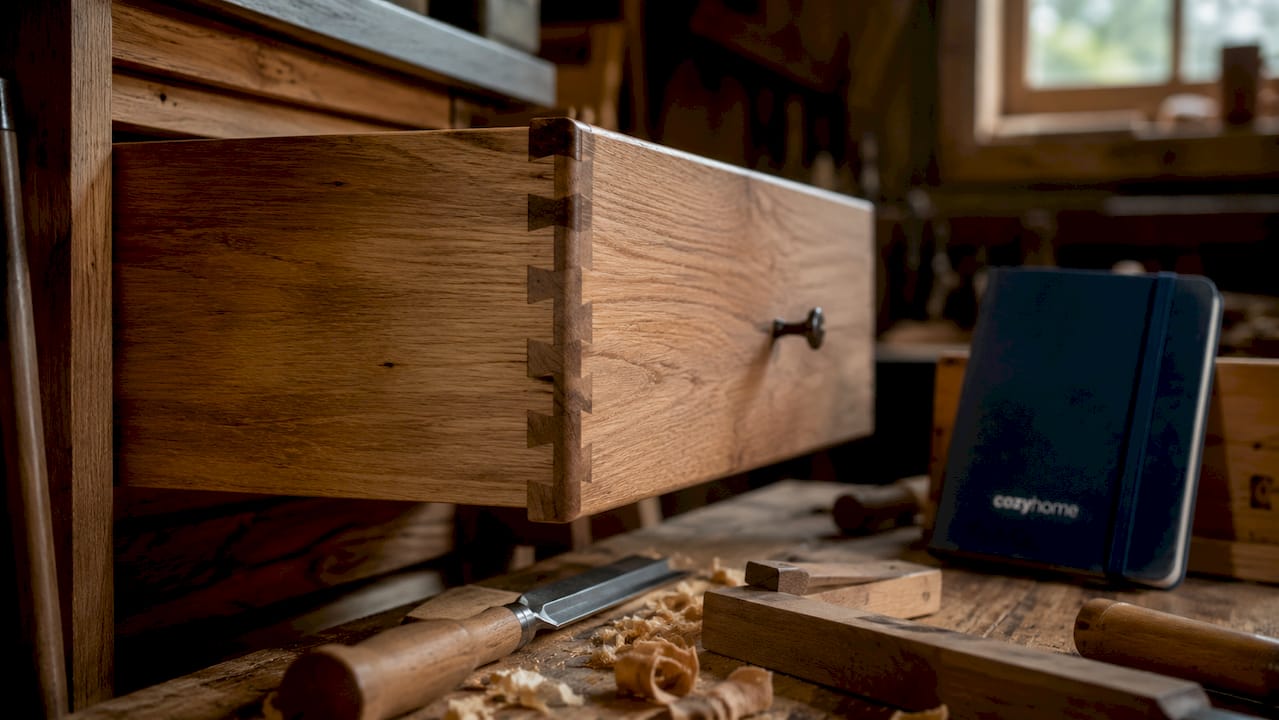
Mortise-and-tenon joints are the gold standard for frame construction. A tenon (a projecting piece of wood) fits into a mortise (a matching cavity) to create a mechanical lock that resists racking forces. Mortise-and-tenon and dovetail joints provide durable, interlocking connections that outperform simpler assembly methods. This means a chair or sofa frame built with these joints will not wobble after years of regular use.
Dovetail joints signal craftsmanship in drawer construction. The interlocking fan-shaped cuts create a connection that resists pulling apart, which is exactly the stress a drawer experiences every time you open it. Dovetail-jointed drawer corners indicate superior craftsmanship and strength compared to stapled or glued butt joints.
Lower-quality furniture relies on dowel joints, cam locks, or staples. These methods are faster and cheaper to produce, but they fail under repeated stress. Corner blocks, which are triangular wood pieces glued and screwed into frame corners, are a positive reinforcement sign. They add rigidity where frames are most vulnerable.
- Mortise-and-tenon: Best for chair legs, sofa frames, and table bases
- Dovetail: Look for these inside drawer corners
- Corner blocks: Check inside cabinet and sofa frame corners
- Avoid: Visible staples, cam locks, or glued butt joints on structural connections
Pro Tip: Pull a drawer fully out and flip it over. If you see interlocking fan-shaped cuts at the corners, those are dovetails. If you see a flat butt joint held by staples, that piece was built to a price, not a standard.
2. How to assess the quality of furniture materials and frames
Frame material determines the structural life of any piece. Kiln-dried hardwood frames prevent warping and structural failures by controlling moisture content to 6–8%. Wood with higher moisture content will shrink and crack as it dries inside your home, loosening every joint in the process.
Hardwoods like oak, maple, ash, and beech are the preferred frame materials. Softwoods like pine are acceptable for secondary components but not for primary load-bearing frames. When a retailer cannot tell you the specific wood species used in a frame, that is a warning sign.
A common misconception is that furniture must be all solid wood to be high quality. Engineered cores like plywood or MDF under veneer are often more stable and resistant to warping than solid wood panels across large surfaces. Solid wood is best for structural frame members; engineered panels work well for large flat surfaces like tabletops and cabinet sides.
Frame quality indicators at a glance
| Indicator | What to look for |
|---|---|
| Wood species | Oak, maple, ash, or beech for frames |
| Moisture content | Kiln-dried to 6–8% |
| Panel material | Plywood or MDF core under veneer for large surfaces |
| Assembly gaps | No visible gaps larger than 0.5 mm on finished joins |
| Weight | Heavier pieces generally indicate denser, higher-quality materials |
Panel-to-panel gaps limited to 0.5 mm are the industry benchmark for high-quality visible assembly. A gap you can slide a fingernail into signals poor tolerances throughout the piece.
Pro Tip: Lift one front leg of a sofa or chair about two inches off the floor. If the opposite rear leg lifts with it, the frame is rigid and well-built. If the frame twists and the opposite leg stays flat, the joinery is weak.
3. What upholstery and cushion features demonstrate durable furniture construction?
Upholstery durability is measured by double-rub count, a standardized test that simulates the friction of someone sitting down and standing up. Residential upholstery should meet a minimum of 15,000 double-rub counts, with heavy-use furniture targeting 25,000 or more. A fabric rated below 15,000 will show wear within a few years of normal family use.
Foam density is the other critical number. Foam density at or above 35 kg/m³ is preferable for primary seating cushions. Foams below 25 kg/m³ show visible compression within one to two years. When a retailer describes cushions as “high-density” without providing a number, ask for the specific kg/m³ rating. Vague claims are not a specification.
Leather grades matter as much as fabric ratings. Top-grain leather is sanded and finished but retains the natural grain structure, making it durable and repairable. Bonded leather is made from leather scraps pressed together with adhesive. It peels and cracks within a few years and cannot be repaired.
- Fabric: Ask for double-rub count; minimum 15,000 for residential, 25,000+ for high-traffic areas
- Foam: Request density in kg/m³; 35–45 kg/m³ is the ideal range for seat cushions
- Leather: Top-grain or full-grain for longevity; avoid bonded leather on primary seating
- Stitching: Look for tight, even stitching with no loose threads at seams or tufting points
- Cushion wrap: A layer of fiber or down wrap over foam adds comfort and helps the cushion hold its shape
Stat callout: Foam densities below 25 kg/m³ show visible compression within 1–2 years. Foam at 35–45 kg/m³ retains its shape and support for significantly longer under the same daily use.
The custom upholstery process at quality manufacturers involves selecting fabrics by double-rub count and foam by density, not by appearance alone.
4. How to evaluate furniture hardware, drawers, and finishes for quality
Hardware is a proxy for overall manufacturing investment. A manufacturer who installs quality hinges and drawer slides cares about the full product, not just the visible surfaces. Soft-close drawer runners and quality hardware signal a manufacturer who invests in long-term durability. Soft-close mechanisms also reduce stress on drawer joints over time.
Check the back panels and interior drawer bottoms. High-quality furniture finishes all visible and interior surfaces, avoiding thin particleboard or stapled hardboard on backs and drawer interiors. A piece that looks beautiful from the front but uses stapled hardboard on the back has been built to pass a showroom glance, not to last.
- Drawer slides: Full-extension, soft-close slides indicate quality; partial-extension slides that stop short are a cost cut
- Hinges: Cabinet hinges should open and close smoothly with no side play; adjustable hinges are a positive sign
- Leveling feet: Adjustable feet on sofas and case goods allow for uneven floors and protect the frame
- Finish consistency: Stain and lacquer should be even with no drips, streaks, or bare patches
- Back panels: Should be solid plywood or MDF, not thin stapled hardboard
Open every door and drawer in the showroom. A smooth, controlled close with no rattling or binding tells you the tolerances are tight throughout the piece, not just on the front face.
5. What practical tests can consumers perform in stores to confirm furniture quality?
Physical testing in a showroom takes less than five minutes and reveals more than any product description. These tests work on sofas, chairs, case goods, and dining furniture.
- Frame twist test: Lift one front leg two inches off the floor. A rigid frame will lift the opposite rear leg. A frame that twists has weak joinery.
- Press test on arms and backrests: Applying firm pressure to sofa arms and backrests without frame flex or creaking confirms solid joinery. Any creak or flex under moderate hand pressure will worsen with daily use.
- Cushion resilience test: Press a seat cushion down firmly and release. Quality foam springs back quickly and fully. Foam that stays compressed or recovers slowly is below the 35 kg/m³ threshold.
- Drawer extension test: Pull a drawer fully out and check for smooth glide, no binding, and dovetail joints at the corners. Push it closed and listen for a soft, controlled close.
- Fabric texture check: Run your hand across the upholstery fabric in multiple directions. Quality fabric feels consistent and shows no pilling or loose weave. Check seam lines for even stitching with no puckering.
Pro Tip: Bring a small flashlight to the showroom. Shine it inside cabinet interiors and under sofa skirts. The quality of what you cannot see from the front tells you exactly how much the manufacturer cared about the whole piece.
Visiting a furniture showroom rather than a warehouse store gives you the space and time to run these tests properly, with staff who can answer specific construction questions.
Key Takeaways
Quality furniture construction is confirmed by kiln-dried hardwood frames, mortise-and-tenon or dovetail joinery, foam density at or above 35 kg/m³, and upholstery rated at a minimum of 15,000 double-rub counts.
| Point | Details |
|---|---|
| Joinery is the top indicator | Mortise-and-tenon and dovetail joints outperform dowels, staples, and cam locks. |
| Frame material matters | Kiln-dried hardwood at 6–8% moisture content prevents warping and joint failure. |
| Upholstery has measurable standards | Request double-rub count (15,000+ residential) and foam density (35+ kg/m³) before buying. |
| Hardware reveals overall quality | Soft-close runners and finished interior surfaces signal a manufacturer who builds the whole piece well. |
| Test in person | The frame twist test and cushion press test take two minutes and confirm what no spec sheet can. |
What I have learned from years of watching furniture fail
What I have learned from watching furniture fail
People consistently buy furniture based on how it looks in a showroom under good lighting. That is the wrong filter. A piece can look beautiful and fall apart in three years if the frame is softwood with dowel joints and the cushions are under-density foam wrapped in a high-rub-count fabric. The fabric survives; the structure does not.
The single most reliable predictor of furniture longevity I have found is the quality of what you cannot see. Finished back panels, dovetailed drawer corners, corner blocks inside sofa frames. These details cost money to produce and add nothing to the visual appeal. A manufacturer who includes them is building for the long term.
The second thing I tell every homeowner is to ask for numbers. Not “hardwood frame” but “which species.” Not “high-density foam” but “what is the kg/m³ rating.” Not “durable fabric” but “what is the double-rub count.” Retailers who build well are proud to answer those questions. Retailers who cannot answer them are telling you something important.
Knowing these signs of craftsmanship before you shop saves you from replacing a sofa in four years and spending twice what you would have on a well-built piece the first time.
— Dean P.
cozyhome furniture: quality construction you can see and feel
At cozyhome furniture, every sofa and sectional starts with a kiln-dried hardwood frame built to the construction standards this guide describes. We use top-grade joinery, high-density foam in our cushions, and upholstery fabrics rated well above the 15,000 double-rub residential minimum. Our staff can answer every question about wood species, foam density, and fabric ratings because we know exactly what goes into each piece.
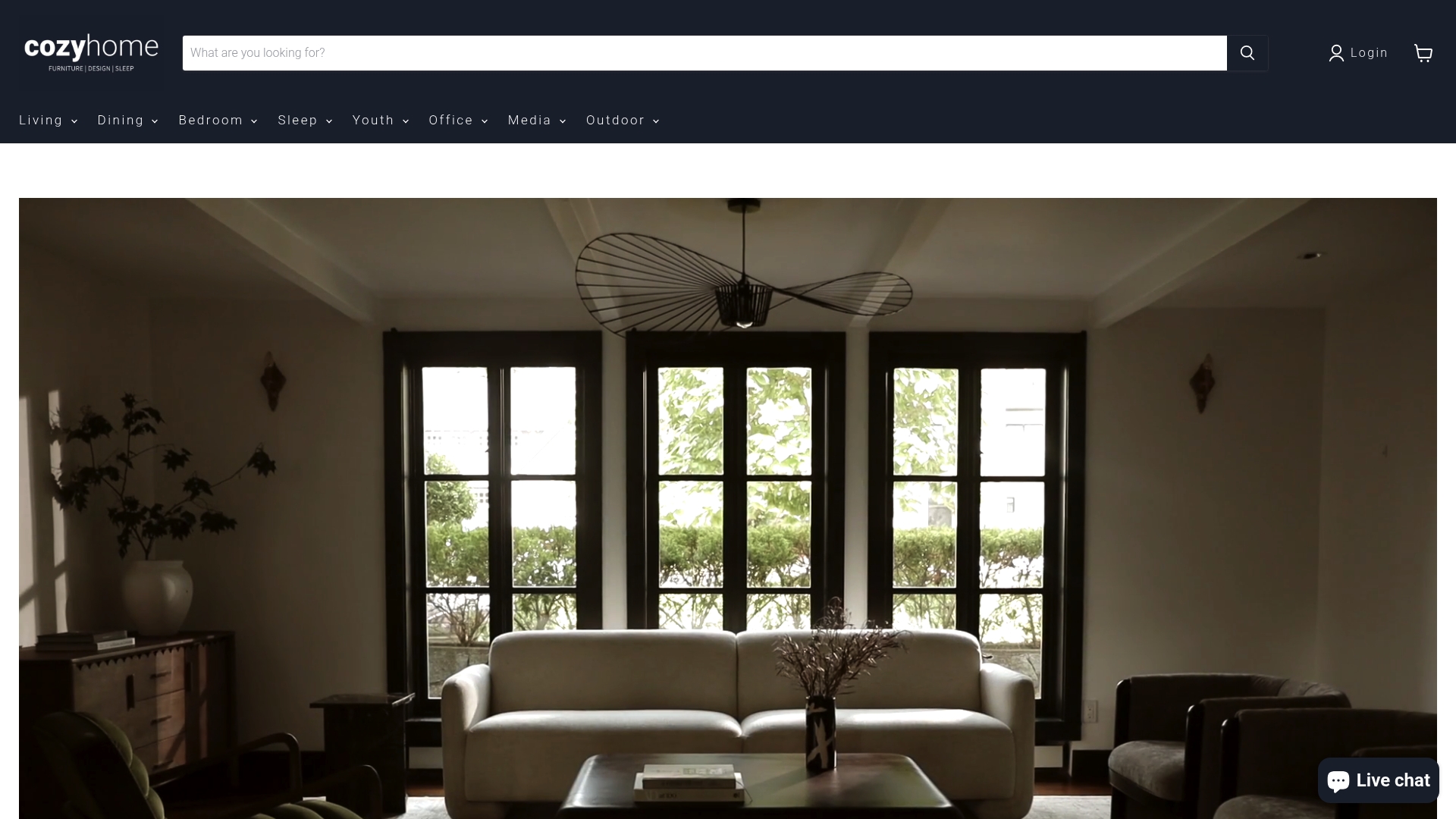
The Excelsior Sofa is a strong example of what these standards look like in a finished piece. Visit our Plano showroom and run every test in this guide on any piece on the floor. We welcome it. You can also browse our full range of handcrafted American-made furniture to see how construction quality translates into pieces built to last.
FAQ
What joinery method is best for furniture frames?
Mortise-and-tenon joints are the strongest method for furniture frames. They create a mechanical interlock that resists the racking forces frames experience during daily use.
What double-rub count do I need for a family sofa?
Residential upholstery should have a minimum of 15,000 double-rub counts. For high-traffic family use, look for 25,000 or more.
Is solid wood always better than engineered wood in furniture?
Not always. Kiln-dried hardwood is best for structural frames, but engineered cores like plywood are often more stable than solid wood for large flat panels like tabletops and cabinet sides.
How do I test foam cushion quality in a store?
Press the cushion firmly down and release it. Quality foam rated at 35 kg/m³ or above springs back quickly and fully. Foam that stays compressed or recovers slowly will show permanent sagging within one to two years.
What does the back panel of furniture tell me about quality?
A finished plywood or MDF back panel signals that the manufacturer built the whole piece to a standard. A thin stapled hardboard back is a sign of cost-cutting that often extends to the frame and joinery as well.