

Furniture Silhouette Style: What It Is and How to Use It
Furniture silhouette style is defined as the overall outline or profile of a piece, determined by its geometric lines, proportions, and shape as seen from the front, side, and top. This outline, independent of fabric, finish, or hardware, is what places a chair in the Victorian era or a sofa squarely in the Mid-Century Modern canon. Understanding what is furniture silhouette style gives you a reliable framework for identifying, comparing, and choosing furniture that fits your space and your aesthetic goals. We think this is one of the most underused tools in home decorating, and once you see it, you cannot unsee it.
What is furniture silhouette style and how does it work?
Furniture silhouette refers to a piece’s overall outline or profile, identified by viewing its proportions and geometric lines from the front, side, and top. The shape you see when you strip away color, pattern, and texture is the silhouette. That shape is what designers use to classify furniture into recognized historical and contemporary styles.
The reason silhouette matters so much is that it communicates style before anything else does. Walk into a room and your eye reads the shapes first. A chair with a high, curved back and cabriole legs reads as Queen Anne before you ever notice the upholstery. A low, rectangular sofa with tapered legs reads as Mid-Century Modern regardless of whether it is covered in wool or leather.
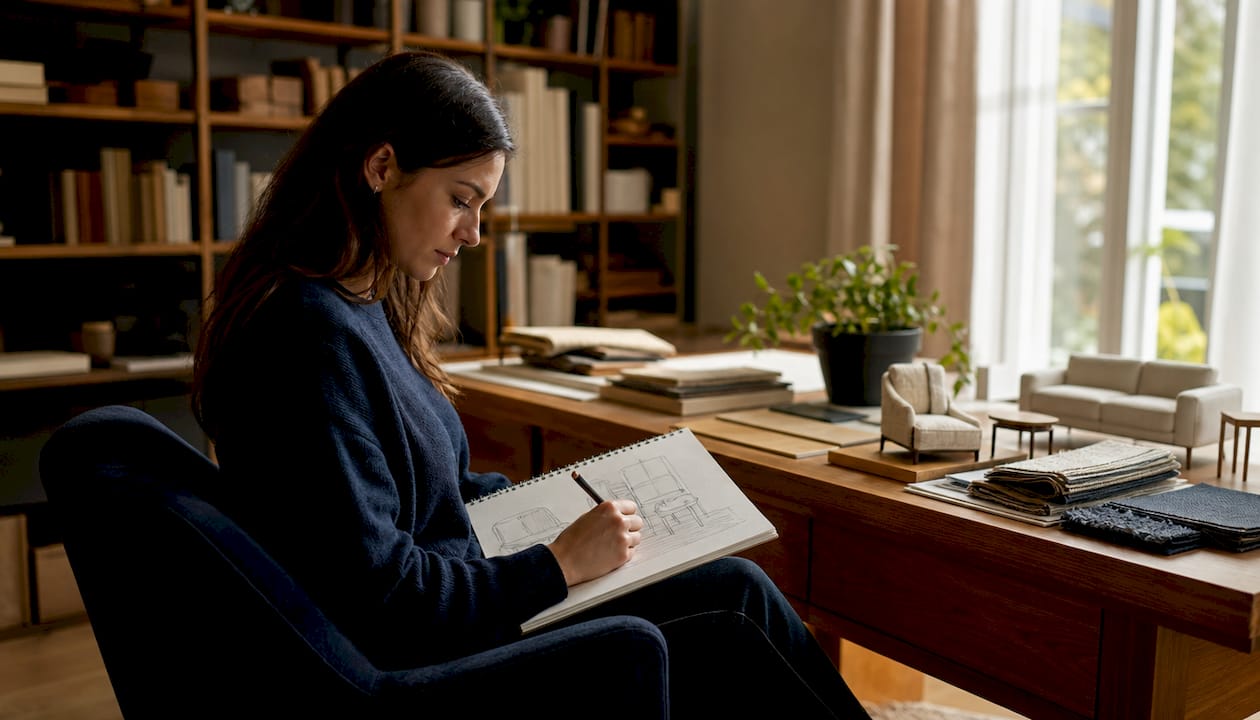
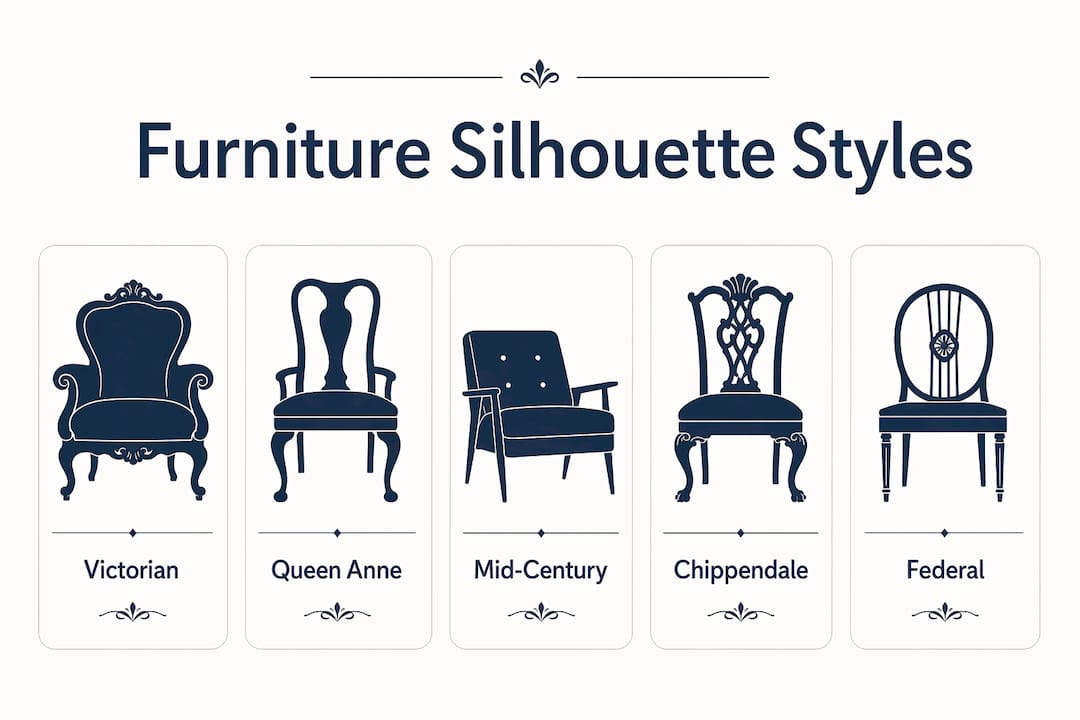
Silhouette also works as a classification tool across eras. Recognizing styles like Federal versus Queen Anne depends on silhouette lines and curves, not just decorative details. This means two pieces can share the same fabric and finish but belong to completely different design families based on shape alone.
How do you identify and analyze a furniture silhouette?
Identifying a silhouette correctly takes a specific approach. Comparing at least three distinct features, such as leg style, proportion, and ornamentation, improves style classification accuracy. Relying on one feature alone leads to misidentification.
The most useful technique is distance. Designers stress the importance of judging silhouette from afar to neutralize distracting surface details. Step back to the far side of the room and look at the piece as a shape, not as an object. The true outline becomes clear when you remove yourself from the details.
The key silhouette features to evaluate are:
- Leg style: Tapered, cabriole, turned, bun, or straight legs each signal a different era and style family.
- Back profile: Curved, camelback, straight, or slatted backs define the piece’s vertical character.
- Arm shape: Rolled, squared, flared, or absent arms change the overall width and weight of the silhouette.
- Proportion: Is the piece tall and vertical, or low and horizontal? Proportion communicates period and intent.
- Ornamentation presence: Heavy carved detail suggests Victorian or Baroque. Clean, unadorned lines point to Arts and Crafts or Mid-Century Modern.
- Overall geometry: Is the dominant shape a rectangle, an oval, a curve, or an angular form?
Pro Tip: Photograph the piece against a plain wall and convert the image to grayscale. This removes color and texture entirely, leaving only the silhouette for evaluation.
The underside of furniture also reveals construction details like dovetails and maker’s marks that confirm silhouette style authenticity. Checking construction quality alongside shape gives you a more complete picture of what you are looking at.
What are the most recognized furniture silhouette styles?
Several major silhouette styles have defined Western furniture design across centuries. Each has a distinct geometric identity that makes it recognizable at a glance.
| Style | Dominant shape | Typical leg type | Proportion emphasis |
|---|---|---|---|
| Victorian | Curved, ornate, vertical | Turned or cabriole | Tall, heavy, upward |
| Arts and Crafts | Blocky, rectilinear | Straight, thick | Horizontal, grounded |
| Mid-Century Modern | Low, clean, geometric | Tapered, splayed | Long, low, wide |
| Queen Anne | Refined curves, graceful | Cabriole with pad foot | Balanced, elegant |
| Chippendale | Structured curves, detailed | Ball-and-claw | Vertical, formal |
Victorian silhouettes are defined by their vertical emphasis and heavy ornamentation. The curves are dramatic and the proportions lean upward, creating a sense of grandeur. Arts and Crafts pieces push in the opposite direction, favoring blocky horizontal forms and thick straight legs that feel grounded and solid.
Mid-Century Modern silhouette design is the most widely recognized today. Its low profile, clean geometry, and tapered legs create a silhouette that reads as both casual and deliberate. Queen Anne and Chippendale silhouettes share refined curves but differ in their level of structural detail. Queen Anne is lighter and more graceful; Chippendale is more formal and structured.
Understanding these distinctions matters practically. A Chippendale dining chair and a Queen Anne side chair can look similar in a catalog photo, but their silhouettes tell a different story when you see them in person.
What are the current silhouette furniture trends for 2026?
2026 design trends favor retro furniture silhouettes, notably curved and mod seating, mixing historical shapes with modern spaces. This revival introduces sculptural focal points that work well in contemporary residential settings. The trend is not about recreating period rooms. It is about using a strong historical silhouette as a contrast element in an otherwise modern interior.
Bold contrast is another defining feature of current silhouette style home decor. Geometric pedestals, polished metallic finishes, and black-and-white palettes all amplify the visual impact of a strong silhouette. For example, Bernhardt’s Silhouette dining table uses stainless steel inlays with sculptural octagonal pedestals, showing how material and form work together to make silhouette the focal point.
At the high end, pieces like the Turri Silhouette sofa demonstrate how softness and fullness in a silhouette, combined with refined fabrics and tailored craftsmanship, define room atmosphere through texture and shape harmony. These pieces become the visual anchor of a room without relying on color or pattern to do the work.
Incorporating modern silhouette furniture into your home works best with a clear process:
- Assess your room’s existing shapes. Identify whether your current furniture leans geometric, organic, or mixed. Choose a silhouette that either complements or intentionally contrasts.
- Pick one statement silhouette piece. A curved sofa or a sculptural chair works best as a focal point, not as a repeating element.
- Consider scale relative to the room. A low, wide Mid-Century Modern silhouette can make a small room feel larger. A tall Victorian silhouette can make a large room feel more intimate.
- Factor in lighting. Natural and artificial light both interact with silhouette shape. A piece with open legs and negative space reads lighter than a solid, skirted base.
- Test placement before committing. Use painter’s tape on the floor to mark the piece’s footprint and evaluate how the silhouette reads from your main sightlines.
Pro Tip: Negative space in silhouette design is critical for visual balance. A piece with too much solid mass and no open space beneath it will feel heavy in the room, regardless of how good it looks in isolation.
For rooms that also incorporate calming, intentional decor, pairing silhouette furniture with modern spiritual home decor creates a grounded, cohesive aesthetic that feels both considered and personal.
Common mistakes to avoid when choosing silhouette furniture
The most frequent mistake homeowners make is choosing furniture based on fabric or finish first and shape second. Surface materials are easy to change or reupholster. Silhouette is permanent. A piece with the wrong proportions for your room will not improve with better fabric.
A second common error is ignoring how a silhouette interacts with neighboring pieces. A heavily curved Victorian chair placed next to a strictly rectilinear Arts and Crafts table creates visual tension that reads as disorder, not eclectic style. Silhouettes need to either share a design language or contrast deliberately, not accidentally.
Common mistakes and how to correct them:
- Focusing on upholstery color instead of shape: Step back and evaluate the piece’s outline before considering fabric.
- Buying online without checking proportions: Always verify height, width, and depth against your room dimensions. A silhouette that looks balanced on a screen can feel wrong at scale.
- Mixing too many silhouette families: Limit a room to two silhouette families at most. More than that creates visual noise.
- Ignoring leg style: Legs define the lower silhouette and affect how heavy or light a piece feels. Thin tapered legs create airiness; thick straight legs add weight.
- Confusing similar styles: Federal and Queen Anne pieces share curved elements but have distinct silhouettes. Checking leg style and back profile together prevents misidentification.
Key Takeaways
Furniture silhouette style is the single most reliable framework for identifying, classifying, and choosing furniture that fits your room and your design goals.
| Point | Details |
|---|---|
| Silhouette is shape, not surface | Evaluate outline and proportion before fabric, finish, or hardware. |
| Distance reveals true silhouette | Step back across the room to read the piece’s shape without distraction. |
| Three features confirm a style | Compare leg type, back profile, and proportion together for accurate classification. |
| 2026 trends favor retro curves | Curved and mod seating silhouettes work as sculptural focal points in modern rooms. |
| Negative space affects visual weight | Open space beneath and around a piece keeps it from feeling heavy in the room. |
Why silhouette is the language designers actually speak
Silhouette is the part of furniture design that most homeowners overlook, and it is the part that professional designers think about first. I have watched people spend weeks agonizing over fabric swatches for a sofa that had the wrong proportions for their room from the start. The fabric decision was irrelevant. The silhouette was the problem.
Focusing on silhouette transforms furniture into impactful room art, commanding attention regardless of full functionality. That is not an exaggeration. A well-chosen silhouette piece does more for a room’s character than any amount of accessorizing. It sets the tone before anyone sits down.
The practical takeaway is this: train yourself to see furniture as shape first. When you walk into a showroom, squint. Blur the details. Read the outlines. That habit will save you from expensive mistakes and help you build rooms that feel intentional rather than assembled. Silhouette appreciation is a skill, and like any skill, it gets sharper with practice. Start with the pieces you already own and ask yourself what shape they actually are.
— Pecan
Stylish silhouette furniture, built for your space at Cozyhomefurniture
At Cozyhomefurniture, we believe the right silhouette makes a room. Our Plano showroom carries sofas, chairs, and accent pieces with clean lines and distinctive profiles that hold their own as design statements.
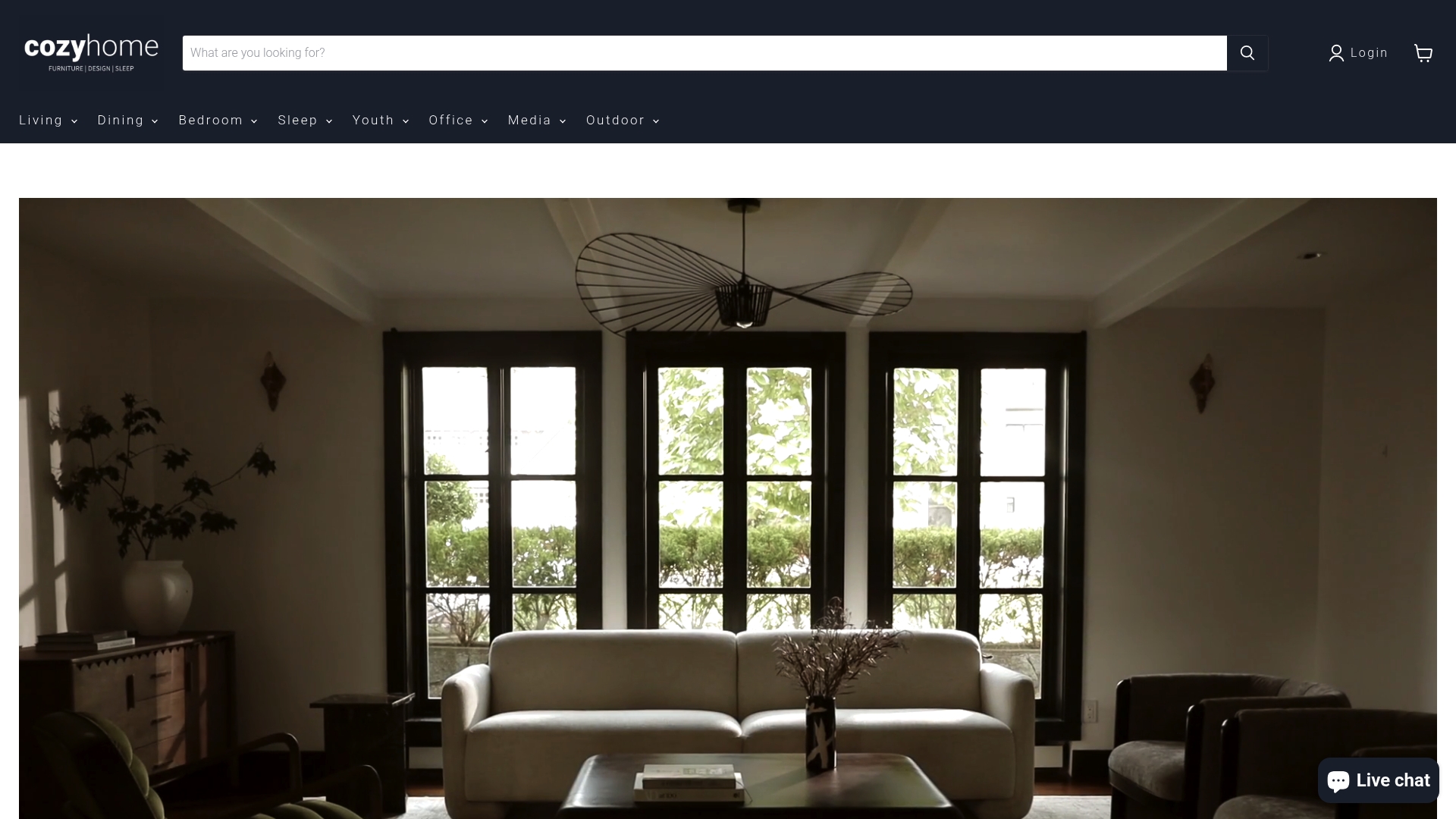
The Excelsior Sofa in Cream is a strong example of modern silhouette furniture done right: a low, structured profile with balanced proportions that works in both contemporary and transitional rooms. We also carry the Excelsior in Gray for homeowners who want the same silhouette in a more neutral palette. With 700+ fabric and leather options and American-made craftsmanship, every piece we build is shaped around your room, not pulled from a warehouse. Visit our Plano showroom and let our team help you find the silhouette that fits.
FAQ
What is furniture silhouette style?
Furniture silhouette style is the overall outline or profile of a piece, defined by its geometric lines, proportions, and shape as seen from multiple angles. It is the primary tool designers use to classify furniture into recognized historical and contemporary styles.
How do I identify a furniture silhouette?
Step back from the piece and evaluate its outline from across the room, comparing at least three features: leg style, back profile, and overall proportion. Removing yourself from surface details makes the true silhouette visible.
What silhouette furniture styles are trending in 2026?
Curved and mod seating silhouettes are leading 2026 design trends, with designers mixing retro shapes into modern interiors as sculptural focal points. Bold geometric pedestals and high-contrast palettes are also prominent.
Why does silhouette matter more than fabric or finish?
Silhouette is permanent. Fabric and finish can be changed or reupholstered, but the underlying shape of a piece cannot. Choosing the wrong silhouette for a room creates proportion and balance problems that no surface update can fix.
How do I avoid mixing incompatible silhouettes?
Limit a room to two silhouette families and check that their dominant shapes either share a design language or contrast deliberately. Mixing too many silhouette styles creates visual noise rather than an eclectic look.