

What Is a Furniture Focal Point? Your Room Design Guide
A furniture focal point is defined as the dominant visual element in a room that immediately captures attention and anchors the entire layout. Interior designers call this the “emphasis point,” and it serves as the organizing principle for every other piece in the space. Successful rooms distribute visual weight with 60% for the primary focal point, 30% for secondary interest, and 10% for accents. That ratio is not a suggestion. It is the difference between a room that feels pulled together and one that feels restless. Focal points are ideally positioned 60–65 inches from the floor, which aligns with natural sightlines when standing or seated. Understanding what makes a good focal point is the first step toward furniture arrangement that actually works.
What role does a furniture focal point play in interior design?
A focal point gives a room purpose. Without one, the eye wanders without landing anywhere, and the space feels incomplete no matter how much furniture fills it. Classic focal points include fireplaces, large windows, statement art, and uniquely designed furniture pieces, each providing a strong visual anchor that defines the room’s character.
Focal points also control traffic flow. Furniture arranged around a clear anchor creates natural pathways that guide people through the room without disrupting seating areas. A room without a focal point tends to produce awkward furniture clusters and unclear movement patterns.
The visual hierarchy principle works like this:
- Primary focal point (60%): The dominant piece or feature, such as a sculptural sofa, a fireplace, or a large artwork. Everything else responds to it.
- Secondary interest (30%): Supporting elements like a coffee table, a pair of accent chairs, or a media console that complement the primary anchor.
- Accent details (10%): Throw pillows, plants, candles, and small decorative objects that add texture without competing for attention.
This structure prevents what designers call “visual chaos,” where too many elements fight for dominance and the room feels cluttered even when it is tidy.
Pro Tip: When choosing your primary focal point, ask yourself where your eyes land first when you walk into the room. If the answer changes every time, the room needs a stronger anchor.
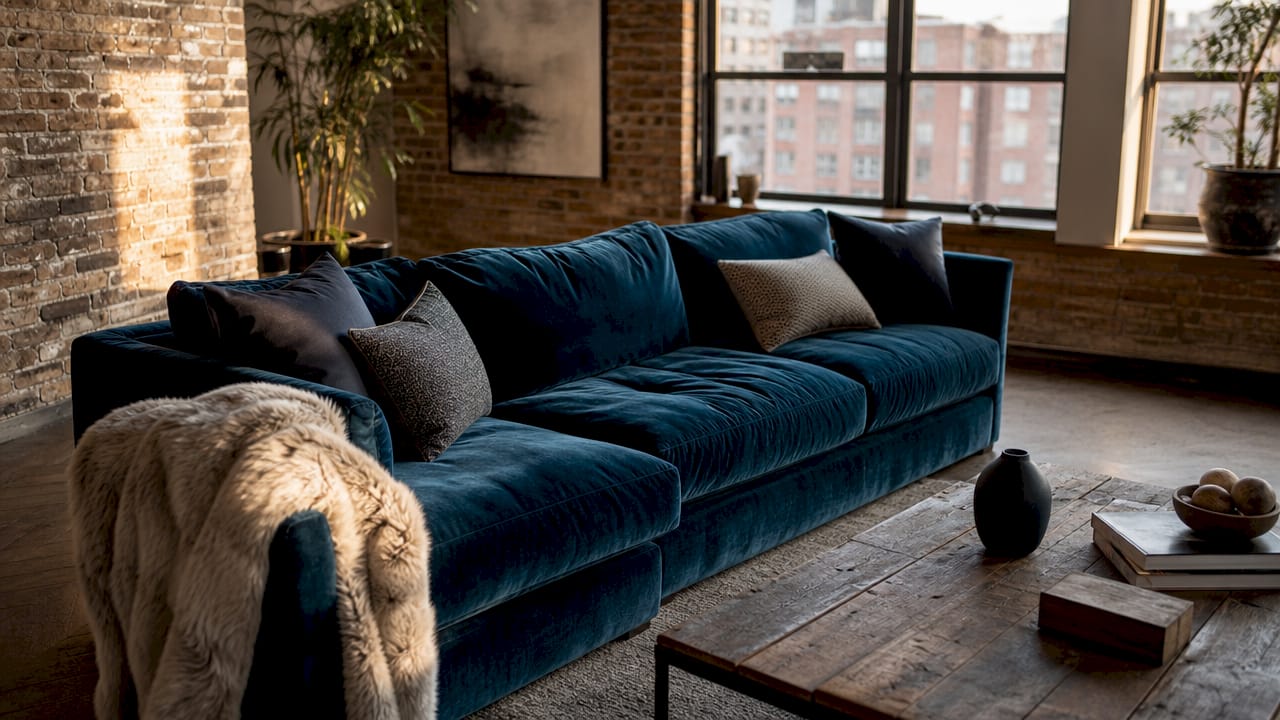
Focal points also define style. A velvet sofa in a deep jewel tone signals one aesthetic. A raw wood dining table signals another. The focal piece sets the tone, and the rest of the room follows. Choosing the right furniture to anchor your living space is one of the most practical design decisions a homeowner can make.
How to create a focal point when no architectural feature exists
Many rooms lack a fireplace, a bay window, or any built-in feature that naturally draws the eye. That does not mean the room cannot have a strong focal point. It means the focal point must be built deliberately using furniture, lighting, and placement.
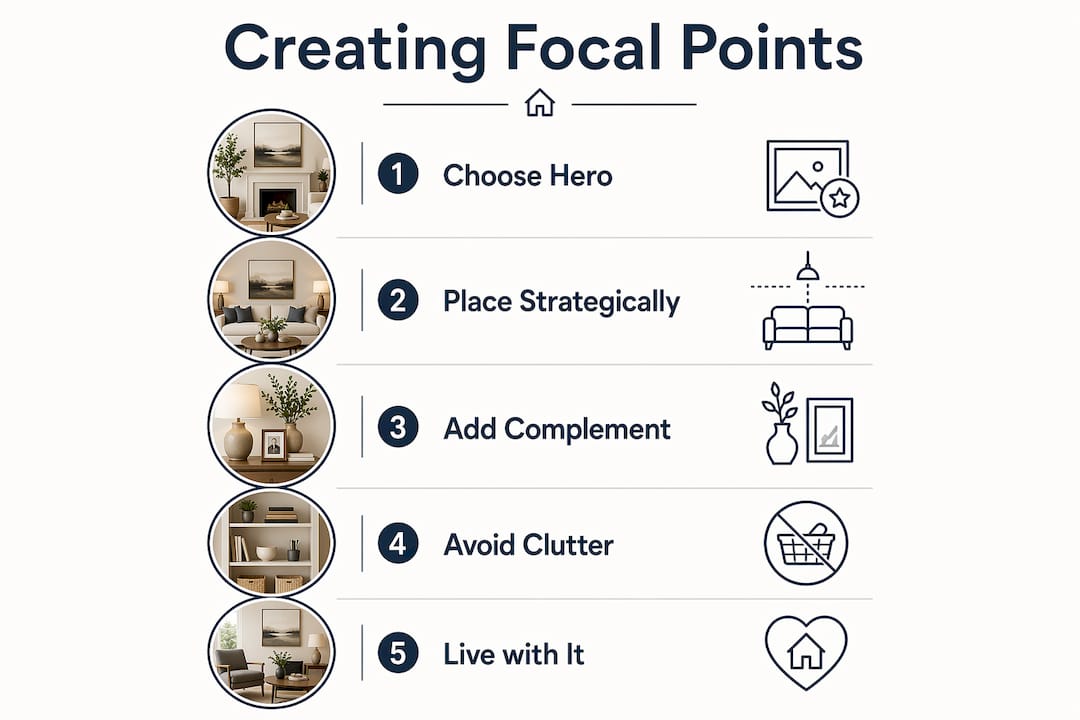
Designers recommend starting with a “hero” piece. A custom sofa or statement artwork placed intentionally in a room without architectural anchors becomes the organizing center. The key is selecting a piece with enough visual weight to hold that position. Scale, color, and craftsmanship all contribute to that weight.
Follow these steps to build a focal point from scratch:
- Choose your hero piece. Select one furniture item or artwork with strong visual presence. A large sofa in a distinctive fabric, a sculptural chair, or an oversized canvas all work well. The piece should be proportionate to the room, not dwarfed by it.
- Position it deliberately. Place the hero piece on the wall or in the area you want to anchor. Seating should face or frame it, not turn away from it.
- Add targeted lighting. Accent lighting increases focal visual weight by 20–30%, making the piece stand out even in a neutral room. A floor lamp, a picture light, or recessed spotlights all work.
- Simplify the surroundings. Reduce surrounding decor by 50–70% to avoid visual clutter. The focal piece needs breathing room to register as dominant.
- Decide on symmetry or asymmetry. Symmetrical arrangements feel formal and calm. Asymmetrical arrangements feel dynamic and modern. Both can support a focal point effectively when applied with intention.
Pro Tip: Pair your hero piece with art that echoes its color palette. A sofa in warm beige reads even stronger when the artwork above it pulls from the same tones. For practical guidance on pairing furniture with wall art, the art arrangement guide from Artify offers clear, room-by-room advice.
The most common mistake at this stage is adding too much too fast. Place the hero piece, live with it for a few days, and then layer in secondary elements one at a time.
How to balance multiple focal points without creating visual chaos
A common misconception is that a room needs only one focal point. A well-designed space actually uses a clear hierarchy with both primary and secondary points working together. The problem is not having multiple focal points. The problem is having multiple focal points of equal weight with no clear winner.
Think of it as a conversation. One person leads, others contribute, and nobody talks over everyone else at the same time. The primary focal point speaks loudest. Secondary points respond to it. Accent details add texture without demanding attention.
Here is how primary and secondary focal points differ in practice:
| Feature | Primary focal point | Secondary focal point |
|---|---|---|
| Visual weight | Dominant, largest presence | Supportive, smaller scale |
| Placement | Central wall or main sightline | Adjacent walls or corners |
| Color or contrast | Bold or highly textured | Complementary, not competing |
| Furniture response | All seating faces or frames it | Positioned to support flow |
| Lighting emphasis | Direct accent lighting | Ambient or indirect lighting |
Distributing visual weight correctly keeps the room cohesive. A living room might have a statement sofa as its primary anchor and a gallery wall as a secondary point. The gallery wall adds interest without pulling focus away from the sofa, because it uses smaller frames, softer tones, and indirect lighting.
- Keep secondary focal points at least one visual step below the primary in scale or color intensity.
- Focal points should dictate traffic flow so people move around, not through, the primary focal zone.
- Leave open space between focal areas. Visual breathing room is what allows each point to register clearly.
What furniture pieces make the most effective focal points?
The best focal point furniture combines scale, character, and craftsmanship in a way that holds attention without effort. Starting with a meaningful or investment-worthy piece makes arranging the rest of the room more intuitive and authentic. The piece does not need to be expensive. It needs to be intentional.
These furniture types consistently perform well as room anchors:
- Sculptural sofas: A sofa with a curved silhouette, a deep channel-tufted back, or an unusual fabric color carries enough visual weight to anchor an entire living room. The Excelsior Sofa in Cream from Cozyhomefurniture is a strong example, with a clean architectural profile that reads as a focal piece without overwhelming the room.
- Statement dining tables: A large dining table in a distinctive material, such as black oak or solid natural wood, becomes the undisputed center of a dining room. The Post Large Dining Table in Black Oak from Cozyhomefurniture pairs bold material with a simple silhouette, which is exactly the combination that makes a table feel like a destination rather than a surface.
- Accent chairs with strong form: A chair with an unusual shape or a rich leather finish can anchor a reading nook or bedroom corner. The Form Leather Corner Chair in Sonoran Tan from Cozyhomefurniture works this way, combining warm leather with a structured frame that draws the eye naturally.
- Display cabinets and shelving: A tall display cabinet with glass panels and a dark finish adds height and depth. The Wilde Display Cabinet in Black from Cozyhomefurniture creates a vertical focal point that works especially well in rooms with high ceilings.
Pairing any of these pieces with a living room art guide helps homeowners select wall pieces that reinforce rather than compete with the furniture anchor.
Common mistakes that undermine a furniture focal point
The most frequent error is trying to create too many focal points at once without establishing hierarchy. Every wall gets a large piece of art. Every corner gets a statement lamp. The result is a room where nothing stands out because everything is competing.
These are the pitfalls that most often flatten a focal point’s impact:
- Overloading the focal area with accessories. Placing too many objects around a hero piece dilutes its presence. Overloading a room with accessories causes “focal point blindness,” where the eye stops registering the anchor entirely.
- Misplacing the focal point relative to traffic. A sofa positioned so that people walk in front of it constantly disrupts the seating area and weakens the focal effect. The furniture should frame the focal zone, not block access to it.
- Ignoring proportion and scale. A small sofa in a large room cannot hold the focal position no matter how beautiful it is. Scale must match the room’s dimensions for the piece to register as dominant.
- Mixing too many patterns near the focal piece. Busy patterns on surrounding pillows, rugs, and curtains pull attention away from the anchor. Keep pattern use restrained within the focal zone.
Pro Tip: Restraint is the most underused design tool. Removing one accessory from a focal area almost always makes the anchor piece read more clearly. When in doubt, take something away rather than adding more.
Visual breathing room is the most powerful tool available for elevating a furniture piece to a true room anchor. Empty space is not wasted space. It is what makes the focal piece visible.
Key Takeaways
A room’s focal point works only when it holds clear visual dominance, supported by a strict hierarchy of 60% primary, 30% secondary, and 10% accent weight.
| Point | Details |
|---|---|
| Define the anchor first | Choose one hero piece before arranging any other furniture in the room. |
| Follow the 60/30/10 rule | Assign 60% visual weight to the primary focal point, 30% to secondary elements, and 10% to accents. |
| Use lighting to reinforce | Targeted accent lighting increases a focal piece’s visual weight by 20–30%. |
| Simplify the surroundings | Reduce surrounding decor by 50–70% so the focal piece has room to register clearly. |
| Control traffic flow | Arrange furniture so people move around the focal zone, not through it. |
Why the focal point is the decision that makes everything else easier
Working with homeowners over the years, I have noticed one pattern that separates rooms that feel finished from rooms that feel like they are still in progress. The finished rooms always have a clear answer to the question: “What is this room about?” The unfinished ones do not.
The focal point is that answer. Once you commit to it, every other decision becomes simpler. The rug size, the sofa placement, the lighting direction, the art selection. All of it responds to the anchor. Without one, you are making dozens of independent decisions that have no reason to relate to each other.
I have also seen homeowners resist committing to a focal piece because they are afraid of getting it wrong. That fear usually leads to rooms full of medium-sized, medium-colored, medium-everything furniture that adds up to nothing memorable. Choosing a piece with emotional or investment significance is the better path. A piece you genuinely love will hold the focal position with confidence, and the room will feel like yours.
Trust the hierarchy. Trust the breathing room. And trust that one strong decision is worth more than ten cautious ones.
— Pecan
Statement furniture built to anchor your space
At Cozyhomefurniture, we build furniture that is meant to be the focal point of a room, not just fill it. Our Plano showroom carries custom sofas, dining tables, and accent pieces designed with the scale, craftsmanship, and character that make a piece hold the room’s attention.
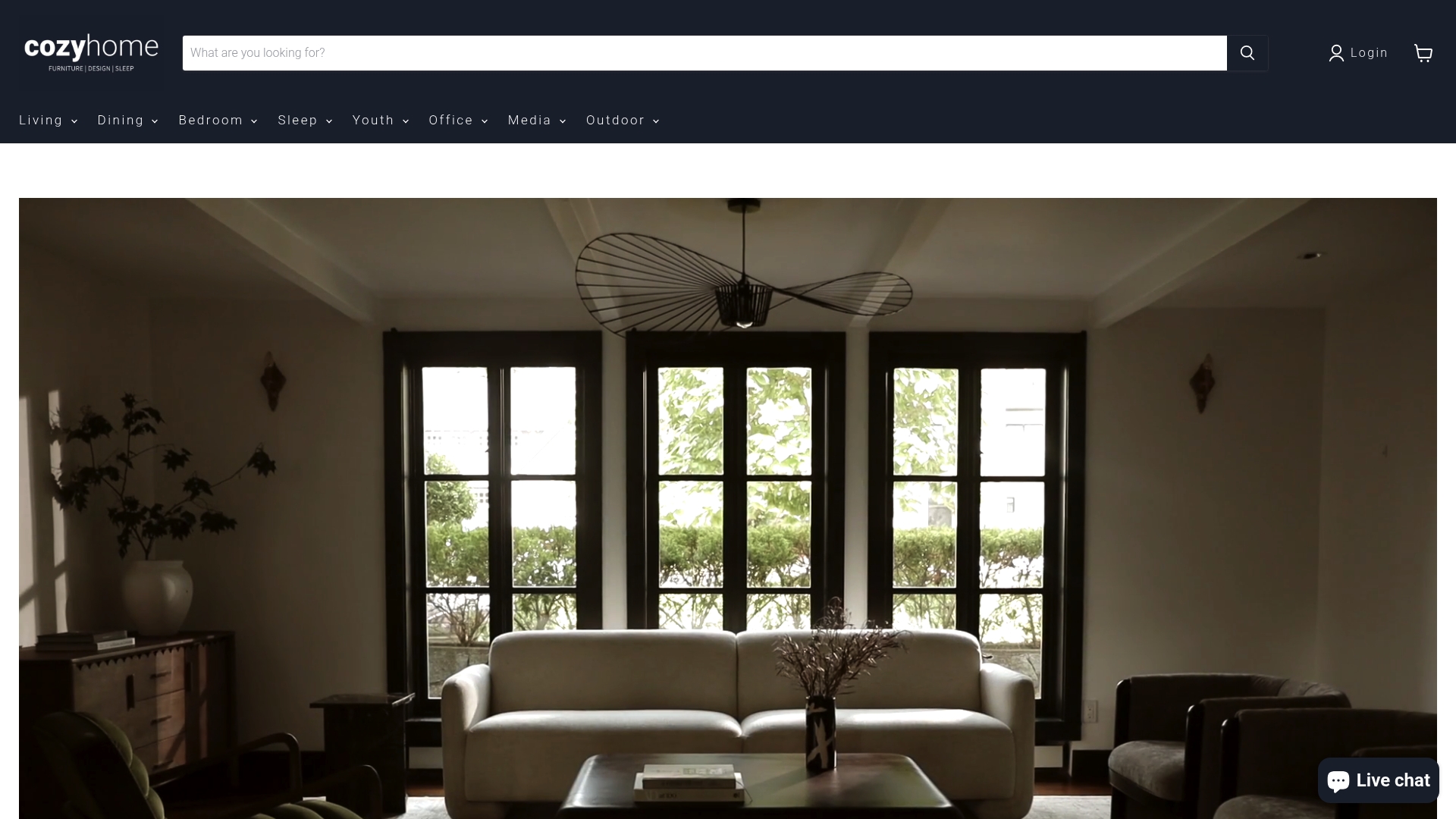
The Excelsior Sofa in Shiitake Beige and the Quinn Sofa in Oatmeal are two of our most popular anchor pieces, each built to order with your room’s dimensions and fabric preferences in mind. With 700+ fabric and leather options and free local delivery across the DFW area, we make it easy to find the piece that your room has been waiting for. Visit us in Plano and let our team help you choose the right anchor for your space.
FAQ
What is a furniture focal point in interior design?
A furniture focal point is the dominant visual element in a room that draws the eye first and organizes the surrounding layout. It can be a statement sofa, a large dining table, a fireplace, or a piece of artwork, as long as it holds clear visual dominance over the rest of the space.
How do I create a focal point without a fireplace?
Choose a hero piece with strong visual weight, such as a sculptural sofa or large artwork, and position seating to face it. Add accent lighting to increase its presence, and reduce surrounding decor by 50–70% to give the piece room to stand out.
How many focal points should a room have?
A room works best with one primary focal point supported by one or two secondary interest points. Multiple focal points of equal weight create visual chaos. The 60/30/10 rule keeps the hierarchy clear.
What makes a piece of furniture a good focal point?
Scale, color, and craftsmanship are the three qualities that give furniture enough visual weight to anchor a room. The piece should be proportionate to the room’s size and positioned where the eye naturally lands upon entering.
Where should a focal point be placed in a room?
Focal points are most effective when positioned 60–65 inches from the floor, which aligns with natural sightlines for both standing and seated viewers. The primary focal wall is typically the first wall visible from the room’s main entrance.