

Furniture Scale in Design: A Practical Guide for Homeowners
Furniture scale in design is defined as the size relationship between a furniture piece and the surrounding space it occupies. Getting this relationship right determines whether a room feels balanced and comfortable or awkward and cramped. The industry term for this principle is “design scale,” and it works alongside proportion, visual weight, and human scale to create spaces that function well and look good. Understanding what is furniture scale in design gives homeowners and design students a concrete framework for making better furniture decisions, not just aesthetic ones.
What is furniture scale in design and how is it measured?
Scale in interior design is the size relationship between an object and the surrounding space. Practitioners apply the two-thirds rule, where major furniture occupies 60–75% of available wall length and seating elements cover 15–25% of floor area. These percentages give you a measurable starting point before you buy anything.
Human scale is the second measurement standard. A standard king bed measures 76x80 inches and requires at least a 12x12 foot room, with nightstand heights matching the mattress height at roughly 25 inches. These are not suggestions. They are the baseline dimensions that keep a bedroom functional and comfortable.
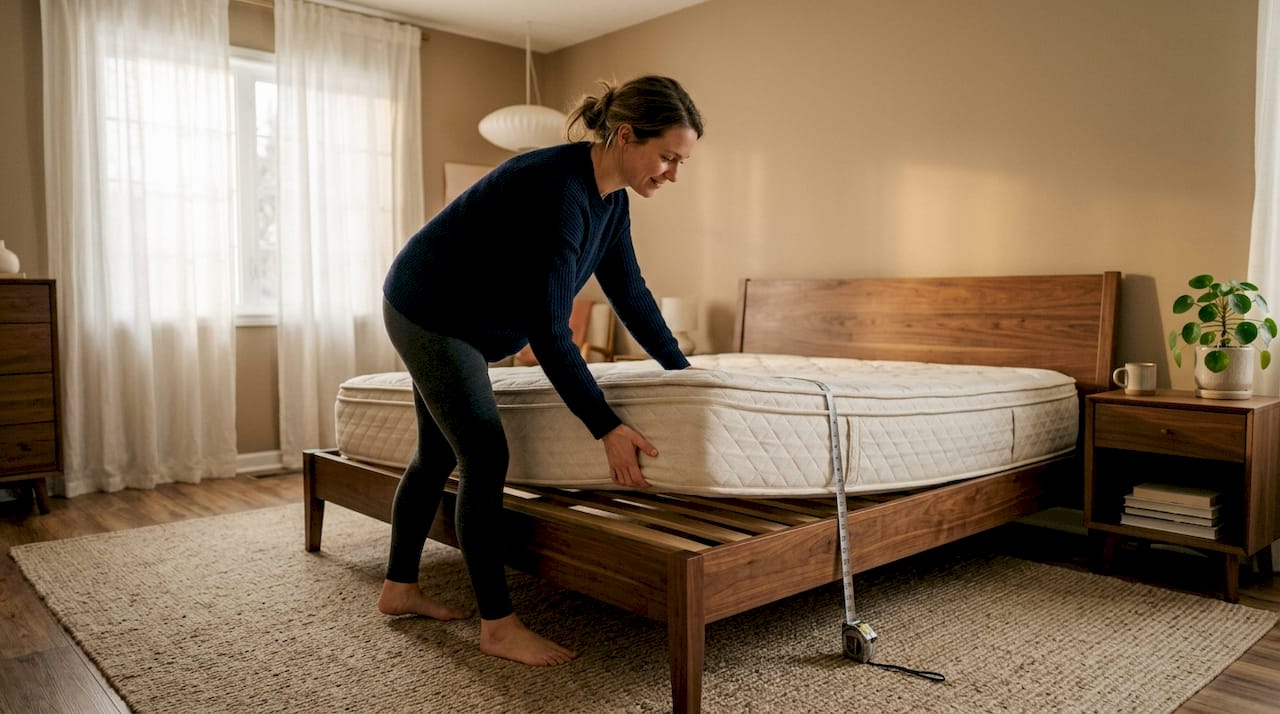
Circulation clearance is the third measurement most homeowners skip. Furniture functions as part of a system that interacts with walls, light, and movement paths, and circulation paths require 36–48 inches of clearance to feel open. A sofa that looks perfect in a showroom can block natural traffic flow entirely once it lands in your living room.
| Design Rule | Standard Measurement | Purpose |
|---|---|---|
| Two-thirds rule | 60–75% of wall length | Sets major furniture width |
| Seating floor coverage | 15–25% of floor area | Prevents overcrowding |
| King bed room minimum | 12x12 feet | Supports human scale comfort |
| Nightstand height | ~25 inches | Matches mattress height |
| Circulation clearance | 36–48 inches | Maintains safe traffic flow |
Pro Tip: Walk your room’s main traffic paths with a tape measure before buying any large piece. If you cannot maintain 36 inches of clearance on every route, the piece is too large for that configuration.
What is the relationship between scale, proportion, and visual weight?
Scale and proportion are related but distinct. Proportion relates parts of a furniture item to each other, while scale relates the item to the space and other furniture around it. A sofa can have perfect internal proportions and still be the wrong scale for a small apartment living room.
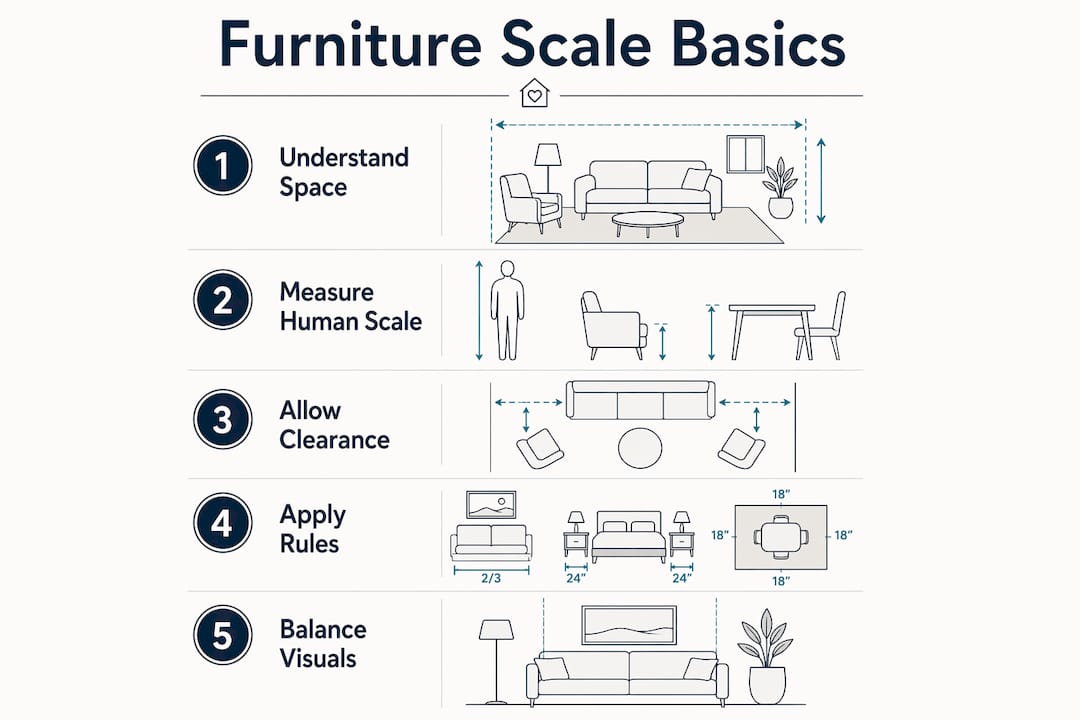
Visual weight is the third variable. Visual weight depends on color, material, and silhouette and can alter perceived scale without changing physical dimensions. A dark leather sectional reads as heavier and larger than a light linen sofa of identical size. This matters because you can adjust how a room feels without replacing furniture.
The practical difference shows up clearly when you compare furniture types:
- Bulky furniture (thick arms, solid bases, dark upholstery) increases visual weight and makes a room feel smaller than its measurements suggest.
- Leggy furniture (exposed legs, open bases, lighter fabrics) reduces visual weight and creates a sense of openness even in tight spaces.
- Material choices like glass, lucite, and light wood read as visually lighter than solid wood or upholstered panels of the same size.
- Color plays a direct role: deep tones advance visually, making pieces feel closer and larger, while pale tones recede.
When scale, proportion, and visual weight work together, a room feels cohesive. When one is off, the whole space feels unsettled even if you cannot immediately identify why.
How does furniture scale impact room perception and user experience?
Furniture scale directly shapes how a room feels to the people using it. Failure to match scale causes rooms to feel “mimsy” when pieces are too small, or “stifling” when pieces are too large. Both extremes reduce comfort and make the space harder to use.
The counterintuitive finding is that slightly larger furniture often improves perception. Scaling up rather than down can make a small room feel bigger by fooling the eye into reading the space as more intentional and complete. A small loveseat floating in a large living room signals emptiness. A properly scaled sofa anchors the room and makes it feel finished.
Correct scale humanizes spaces, promoting comfort and usability beyond decoration. This is why professional designers anchor rooms with the largest piece first, then build outward. The largest piece sets the scale tone for everything else that follows.
Pro Tip: Place your largest furniture piece first and measure circulation clearance before adding secondary pieces. This single step prevents the most common layout mistakes.
The functional effects of good scale include:
- Easier movement through the room without squeezing past furniture
- Seating that feels proportionate to the people using it
- A visual anchor that makes the room feel intentional
- Reduced eye fatigue from competing sizes and mismatched proportions
For bedroom scale specifically, the Watson King Bed in Walnut demonstrates how a well-proportioned bed frame relates to room dimensions without overwhelming the space.
Common mistakes when selecting furniture with the right scale
Homeowners often select furniture based on appearance alone, neglecting how pieces function as a spatial system. This is the most common and most costly mistake in furniture selection. A piece that looks beautiful in isolation can destroy the balance of an entire room.
The second mistake is choosing pieces that are too small. People instinctively gravitate toward smaller furniture because it feels “safe,” but experts find slightly larger scale improves spatial perception and cohesion. A small rug under a large sectional, or a tiny coffee table in front of a full sofa, creates visual disconnection that makes the whole room feel unresolved.
Common mistakes and their solutions:
- Buying without measuring: Always measure wall length, floor area, and circulation paths before shopping. Use painter’s tape on the floor to mock up furniture footprints.
- Ignoring the rug: A rug should hold at least two legs of key furniture pieces to anchor the grouping visually. An undersized rug is one of the fastest ways to break scale cohesion.
- Selecting pieces in isolation: View every piece as part of a system. A nightstand needs to relate to the bed height, the bed to the room size, and the room to the overall layout.
- Overlooking accessories: Art, lamps, and window treatments all carry visual weight. Oversized art on a small wall or tiny frames on a large wall both disrupt scale balance.
- Trusting showroom appearance: Showrooms use large, open floor plans that make furniture look smaller than it will in your home. Always bring your room measurements.
For bedroom scale, pairing a queen bed frame with a matching nightstand at the correct height is a practical way to apply the human scale standard directly. The nightstand height should align with the top of the mattress, creating a continuous visual line that feels natural and balanced.
Accessories and art follow the same logic. A single large piece of art reads better than a cluster of small frames on a large wall. Window treatments hung close to the ceiling and extending beyond the window frame make windows feel larger and rooms feel taller. These are scale decisions, not just style choices. For guidance on sizing decor for specific rooms, the same principles of proportion and visual weight apply to objects of any kind.
Key Takeaways
Furniture scale in design is the single most important variable for creating rooms that feel balanced, functional, and comfortable to live in.
| Point | Details |
|---|---|
| Scale is measurable | Apply the two-thirds rule and 15–25% floor coverage to set furniture size before buying. |
| Human scale sets the baseline | A king bed needs a 12x12 foot room minimum; nightstands should match mattress height at ~25 inches. |
| Visual weight changes perception | Leggy, light-colored furniture reduces visual weight and makes rooms feel more open. |
| Scale up, not down | Slightly larger furniture makes small rooms feel more complete and intentional. |
| Rugs anchor the system | A rug must hold at least two legs of key pieces to maintain visual cohesion across the grouping. |
Why I think “too big” furniture gets an unfair reputation
Every client I have worked with starts with the same instinct: go smaller to be safe. It makes sense on paper. A smaller sofa takes up less room. A smaller bed leaves more floor space. But in practice, undersized furniture is the most common reason a room never quite comes together.
The rooms that feel genuinely comfortable and well-designed almost always have furniture that fills the space with intention. A sofa that reaches 60–70% of the wall behind it looks placed. A sofa that reaches 40% looks forgotten. The difference is not the sofa. It is the relationship between the sofa and everything around it.
What I have found after years of observing how people actually live in their spaces is that circulation matters more than most homeowners expect. You can have perfect scale on paper and still create a room that feels cramped if you have not protected those 36–48 inches of clearance. Scale and flow are not separate problems. They are the same problem.
The practical lesson is this: measure first, visualize with tape on the floor, and resist the pull toward the smaller option. The room will thank you for it.
— Pecan
Well-scaled sofas and bedroom furniture at cozyhome furniture
Getting furniture scale right starts with pieces that are built to real dimensions, not showroom illusions.
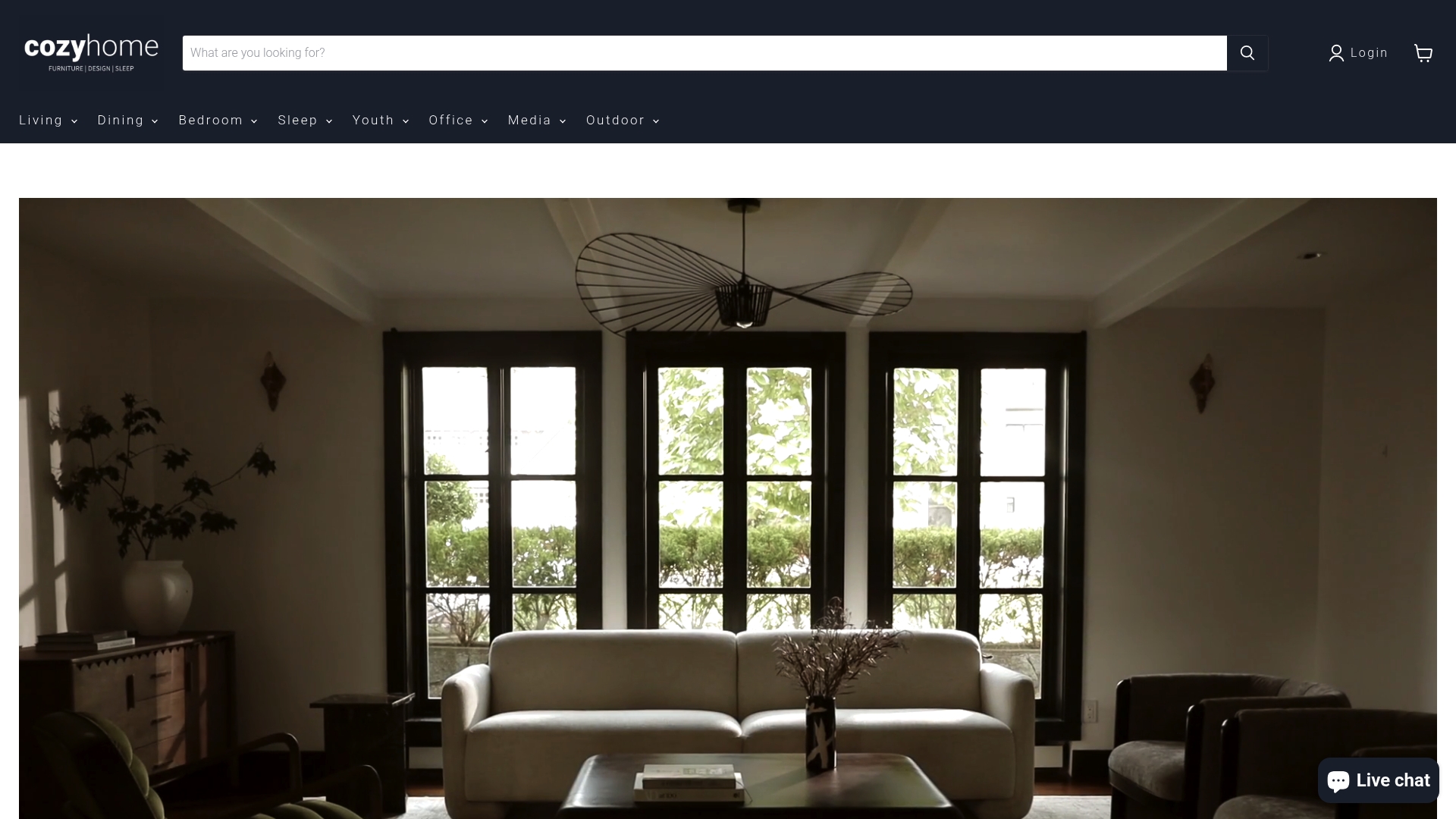
At cozyhome furniture, we carry sofas and bedroom furniture sized to work in actual homes. The Excelsior Sofa in Cream is a strong example of a well-proportioned living room anchor, with dimensions that follow the two-thirds rule in most standard living rooms. We also carry the Excelsior in Gray for homeowners who want a softer visual weight. Our Plano showroom lets you see pieces in a real setting, and our staff helps you match dimensions to your actual room measurements before you commit. Free local delivery and flexible financing make it easy to get the right piece without pressure.
FAQ
What is furniture scale in design?
Furniture scale in design is the size relationship between a furniture piece and the surrounding space. Practitioners use the two-thirds rule and floor coverage percentages to measure and apply it.
How is furniture scale different from proportion?
Scale relates a furniture piece to the room and other furniture around it. Proportion relates the parts of a single piece to each other, such as arm height to seat depth.
What is the two-thirds rule in furniture scale?
The two-thirds rule states that major furniture should occupy 60–75% of available wall length. This keeps the room feeling balanced without overcrowding the space.
Can furniture be too small for a room?
Yes. Undersized furniture makes rooms feel “mimsy” and unfinished. Designers recommend scaling up slightly in most rooms to create a more complete and intentional look.
How do rugs affect furniture scale?
A rug anchors the furniture grouping visually. It should be large enough to hold at least two legs of the key pieces, preventing a disconnected or floating appearance.