

What Is Bespoke Furniture Design? A Clear Guide
Bespoke furniture design is defined as the process of creating a piece entirely from scratch, built around one specific client’s style, space, and functional needs. Unlike mass-produced furniture or even modular systems, truly bespoke pieces start with a blank slate and fit architectural contours with zero wasted space. No standard cabinet widths. No imposed layouts. Every dimension, material, and detail is decided by you and the craftsman together. The result is furniture that could not exist in any other home, because it was never meant to.
What is bespoke furniture design, and how does it differ from custom and modular options?
Bespoke furniture design means starting with nothing and building everything. True bespoke design begins from a blank piece of paper, reflecting the client’s exact tastes and needs rather than adapting a fixed template. That distinction matters more than most shoppers realize.
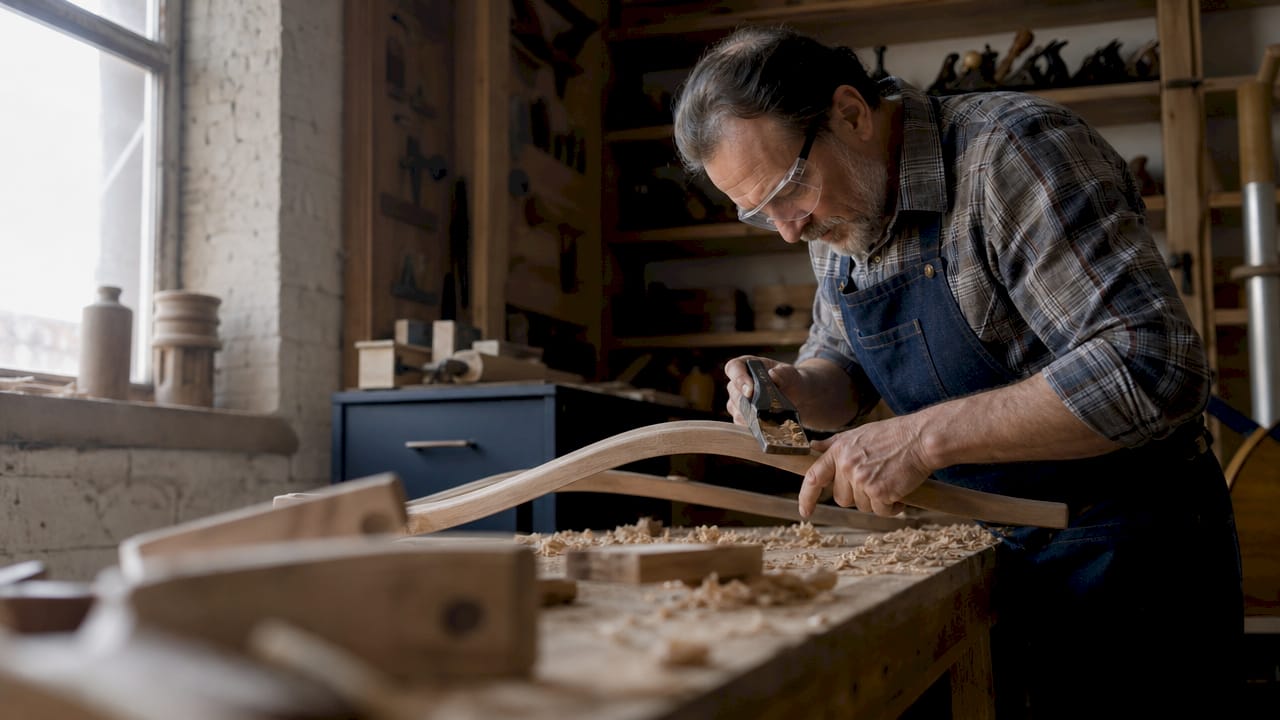
The word “bespoke” gets misused constantly in furniture marketing. A retailer offering three fabric choices on a standard sofa frame is not offering bespoke furniture. That is a customizable product. Bespoke means the structure itself, the proportions, the joinery, and the configuration are all designed specifically for you.
Modular furniture works differently still. Modular systems use pre-engineered components that snap or bolt together in different arrangements. They offer flexibility, and a modular sectional can be a practical choice for renters or those who move frequently. But modular pieces are constrained by the fixed sizes of their components. Bespoke furniture has no such constraint.
| Feature | Bespoke | Custom | Modular |
|---|---|---|---|
| Starting point | Blank design slate | Existing template | Pre-made components |
| Size flexibility | Fully variable | Limited to base model | Fixed module sizes |
| Structural design | Unique per client | Adapted from standard | Standardized |
| Lead time | Longest | Moderate | Shortest |
| Best for | Unique spaces, long-term investment | Preference tweaks | Flexibility and portability |
Pro Tip: Ask any furniture maker whether they work from fixed cabinet widths or plinth heights. If the answer is yes, the product is modular or custom, not truly bespoke.
What does the bespoke furniture design process look like?
The bespoke process typically moves through five clear stages: consultation, conceptualization, material selection, handcrafted manufacturing, and final inspection with delivery. Each stage builds on the last, and skipping any one of them usually shows up in the finished piece.
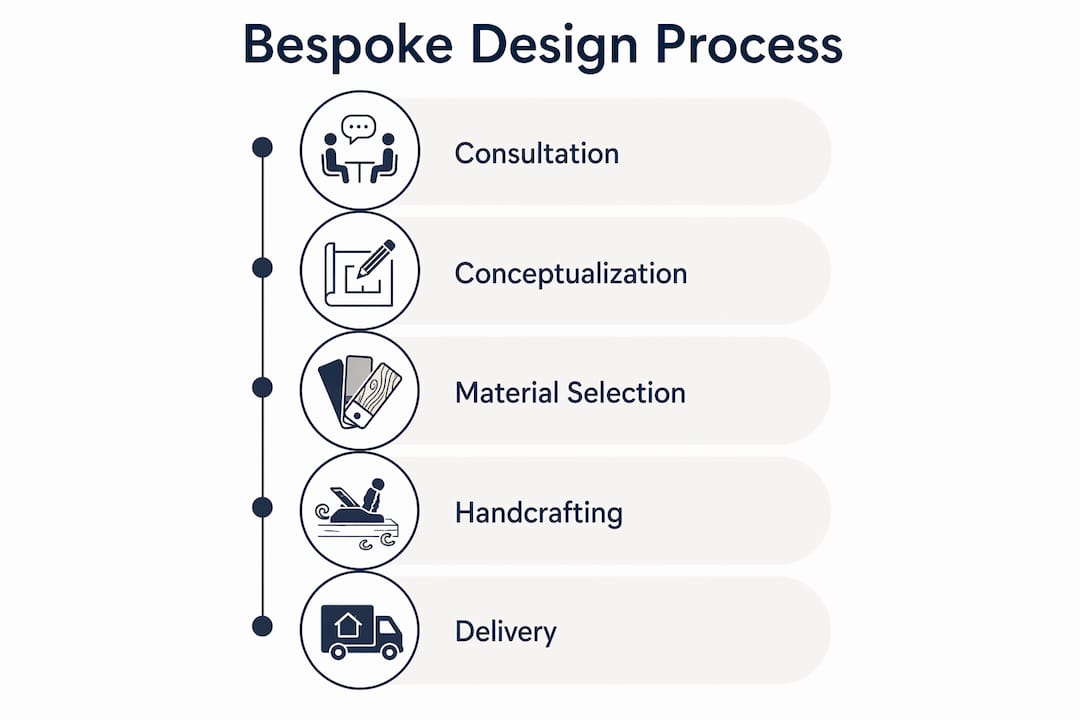
The process is collaborative by nature. Bespoke design requires close communication between the client, the designer, and the craftsmen, with technical validation happening at multiple points. Architectural constraints, lifestyle habits, and even future needs all get factored in during the early stages.
Here is what each stage involves:
- Consultation. The designer visits your space, takes detailed measurements, and asks about how you actually live in the room. This is where awkward alcoves, sloped ceilings, and unusual wall angles get documented.
- Conceptualization. The designer produces drawings or 3D renderings based on the consultation. You review, give feedback, and the design gets refined until it matches your vision.
- Material selection. You choose timber species, fabric, leather, hardware, and finish. These choices affect both aesthetics and durability, so a good designer walks you through the trade-offs.
- Handcrafted manufacturing. Skilled craftsmen build the piece by hand. This stage takes the longest, often several weeks, because quality joinery cannot be rushed.
- Final inspection and delivery. Site-specific irregularities like wall variance and uneven floors get addressed during installation. The piece is checked against the original specification before the job is signed off.
Pro Tip: Request a site visit before signing any contract. A maker who skips the site visit is likely working from standard dimensions, not your actual space.
What are the key advantages of bespoke furniture design?
Bespoke furniture fits uniquely into irregular spaces and architectural features, maximizing usable area and creating a cohesive look that can make a room feel larger and more organized. That spatial efficiency alone justifies the investment for many homeowners.
The advantages go well beyond fit, though. Here is what sets bespoke apart:
- Superior joinery and durability. Bespoke makers commonly use dovetail joints and mortise-and-tenon construction. These techniques produce furniture that lasts decades, not years.
- Long-term economic value. Bespoke furniture offers long-term economic and environmental benefits through superior materials and craftsmanship that outlast mass-produced alternatives, with the potential to increase home resale value.
- Environmental responsibility. Buying one well-made piece that lasts 30 years is far less wasteful than replacing flat-pack furniture every five. Bespoke represents a move away from throwaway culture toward intentional, long-term living.
- Complete material control. You choose every component, from the type of wood to the thread count of the upholstery fabric. Nothing is decided by a factory floor manager trying to cut costs.
- Emotional satisfaction. Co-creating bespoke furniture builds a genuine emotional connection, resulting in greater pride and satisfaction than any mass-produced piece can deliver. That connection enriches daily living in ways that are hard to quantify but easy to feel.
“Bespoke furniture is not just an object. It is the physical result of a conversation between a person and a craftsman, shaped by the specific life lived in a specific room. That is what makes it irreplaceable.”
The durability point deserves extra attention. A well-built bespoke dining table, for example, can be refinished and repaired rather than discarded. That repairability is built into the design from the start, which is rarely true of mass-market alternatives. You can read more about furniture care and home inspiration to understand how quality construction translates to long-term value.
How can you decide if bespoke furniture design is right for you?
Bespoke furniture is the right choice when your space, your standards, or your lifestyle cannot be satisfied by what is already on a showroom floor. The decision comes down to a few honest questions.
Ask yourself these before committing:
- Does your space have unusual dimensions? Alcoves, angled walls, low ceilings, and bay windows are exactly where bespoke furniture earns its cost. Standard pieces leave gaps, look awkward, or simply do not fit.
- How long do you plan to stay? Bespoke furniture is a long-term investment. If you move every two years, a modular or customizable option may serve you better.
- What is your quality threshold? If you have replaced the same type of piece twice in five years, bespoke is likely cheaper over a ten-year horizon than buying mass-market again.
- Are you prepared for the timeline? Bespoke furniture takes time. Expect several weeks from consultation to delivery, sometimes longer for complex pieces.
- Can you verify the maker’s process? Ask manufacturers about fixed cabinet widths, plinth heights, and internal layouts. A genuine bespoke maker has no fixed answers to those questions because every project is different.
Watch out for marketing language that misuses the word “bespoke.” Many retailers apply it to products that simply offer a color or fabric choice. Genuine bespoke craftsmanship means the structural design itself is unique to your order. If a maker cannot show you drawings or renderings specific to your space, the product is not truly bespoke.
My honest view on what bespoke furniture really delivers
I have spent years watching homeowners make furniture decisions, and the most common regret is not spending too much on bespoke. It is spending too little on something that never quite fit, then replacing it two years later.
The emotional dimension of bespoke furniture gets dismissed too often. Emotional satisfaction from co-creation is a significant and often overlooked benefit that enriches daily living far beyond the object itself. When you have sat with a designer, chosen the timber, approved the drawings, and watched the piece arrive built exactly as you imagined, you do not treat it the same way you treat something pulled off a warehouse shelf.
My caution is this: the word “bespoke” has been stretched so thin by marketing that it has almost lost meaning. Clients should be vigilant about marketing misuse of “bespoke” and seek detailed production information before committing. Ask to see the drawings. Ask whether the dimensions are fixed or variable. Ask who builds the piece and where.
The right bespoke maker welcomes those questions. The wrong one deflects them. That response alone tells you everything you need to know.
— Pecan
cozyhome furniture: tailored furniture built around your space
At cozyhome furniture, we believe furniture should work for your home, not the other way around. Our Plano, Texas showroom offers made-to-order sofas, sectionals, beds, and dining pieces with over 700 fabric and leather options, so every piece reflects your taste and fits your space the way it should.
Our in-store team guides you through sizing, fabric selection, and configuration from your first visit. Whether you are drawn to the clean lines of the Excelsior Sofa in Cream or want to build something entirely around your room’s dimensions, we are here to help you get it right. Free local delivery and flexible financing make the process straightforward from start to finish. Visit our Plano showroom and see what furniture built for you actually feels like.
Key takeaways
Bespoke furniture design delivers the best long-term value when your space, quality standards, or lifestyle cannot be met by mass-produced or modular alternatives.
| Point | Details |
|---|---|
| Bespoke starts from scratch | Every dimension and structural detail is designed specifically for the client, not adapted from a template. |
| The process has five stages | Consultation, conceptualization, material selection, manufacturing, and delivery each require active client involvement. |
| Fit and durability are the top benefits | Bespoke pieces maximize awkward spaces and use joinery methods that outlast mass-produced furniture by decades. |
| Verify before you buy | Ask makers about fixed cabinet sizes and site visits to confirm the product is genuinely bespoke, not relabeled modular. |
| Emotional value is real | Co-creating a piece builds lasting satisfaction that standard furniture purchases rarely produce. |
FAQ
What is bespoke furniture design in simple terms?
Bespoke furniture design is the process of creating a piece entirely from scratch for one specific client, with every dimension, material, and structural detail decided by that client and the craftsman together. No standard templates are used.
How is bespoke furniture different from custom furniture?
Custom furniture adapts an existing design with limited changes, such as fabric or color. Bespoke furniture starts with a blank design slate, meaning the structure, proportions, and configuration are unique to each order.
How long does bespoke furniture take to make?
Lead times vary by maker and complexity, but most bespoke furniture projects take several weeks from consultation to delivery. Complex or large pieces can take longer, and that timeline is built into the process by design.
Is bespoke furniture worth the higher cost?
Bespoke furniture offers long-term economic value through superior craftsmanship and materials that outlast mass-produced alternatives, and it can increase home resale value. Over a ten-year horizon, it is often the more cost-effective choice.
How do I know if a maker is truly bespoke?
Ask whether they work from fixed cabinet widths or standard plinth heights. A genuine bespoke maker designs every dimension from scratch and will show you drawings specific to your space before manufacturing begins.