

How to Source Unique Dining Furniture as a Conversation Piece
TL;DR:
- Unique dining furniture acts as a conversation starter when it features bold forms, exceptional craftsmanship, and surprising details.
- Sourcing such pieces requires effort, with options including artisan makers, curated showrooms, and online retailers suited to different budgets and timelines.
A dining furniture conversation piece is defined as a table, chair, or seating arrangement so visually distinct that guests naturally stop and ask about it. The design industry calls these “statement pieces,” and the demand for them is real. The luxury dining furniture market is valued at $4.2 billion, with statement dining tables accounting for 32% of all high-end purchases. That number tells you something important: homeowners are no longer treating the dining room as a purely functional space. They want it to reflect who they are.
When you source unique dining furniture as a conversation piece, you are making a deliberate choice to prioritize individuality over convention. The right piece does not just fill a room. It anchors it, gives guests something to talk about, and tells your story before you say a word.
What features define a unique dining furniture conversation piece?
The most compelling distinctive dining furniture shares three qualities: bold form, exceptional craftsmanship, and at least one detail that surprises the eye. These are not decorative extras. They are the reasons a piece earns attention.
Bold shapes and mixed materials are the clearest signal of a statement piece. Bold geometric shapes and mixed media in dining tables are among the top 2026 design trends, favoring artistic individuality over safe, neutral forms. A table that pairs a live-edge walnut slab with a blackened steel base, for example, creates visual tension that draws people in. The contrast between organic and industrial materials gives guests something to react to.
Sculptural bases and advanced engineering separate truly one-of-a-kind pieces from mass-produced imitations. Cantilever and multi-pedestal bases require advanced structural engineering, which is why they create lasting visual impact. A cantilevered base looks like it defies gravity. That impression alone starts conversations before anyone sits down.
Functional uniqueness adds another layer of interest. Kinetic bases and adjustable heights transform furniture into interactive art. Some bespoke tables feature mechanical height adjustments and reinforced supports built specifically for heavy stone or resin tops. Guests who can physically interact with a piece, even just by noticing how it moves or adjusts, engage with it differently than they would a static table.
Artisanal finishing techniques also matter more than most buyers realize. Venetian plaster surfaces, hand-applied metal patinas, and handwoven inlay components each add visible labor to a piece. Artisanal finishing commands significant price premiums because the work cannot be replicated by a machine. That handmade quality is exactly what makes a piece feel personal and worth discussing.
- Bold geometric or organic silhouettes that break from rectangular convention
- Mixed materials: stone paired with metal, wood paired with resin, or glass paired with concrete
- Sculptural bases using cantilever, multi-pedestal, or kinetic engineering
- Hand-applied surface finishes: metal patinas, Venetian plaster, or epoxy pours
- Functional features like adjustable height or integrated lighting
Pro Tip: Before you commit to a piece, photograph it from three angles: straight on, from above, and from the side. A true conversation starter looks interesting from every vantage point, not just the showroom’s preferred angle.
Where and how to source unique dining furniture conversation pieces
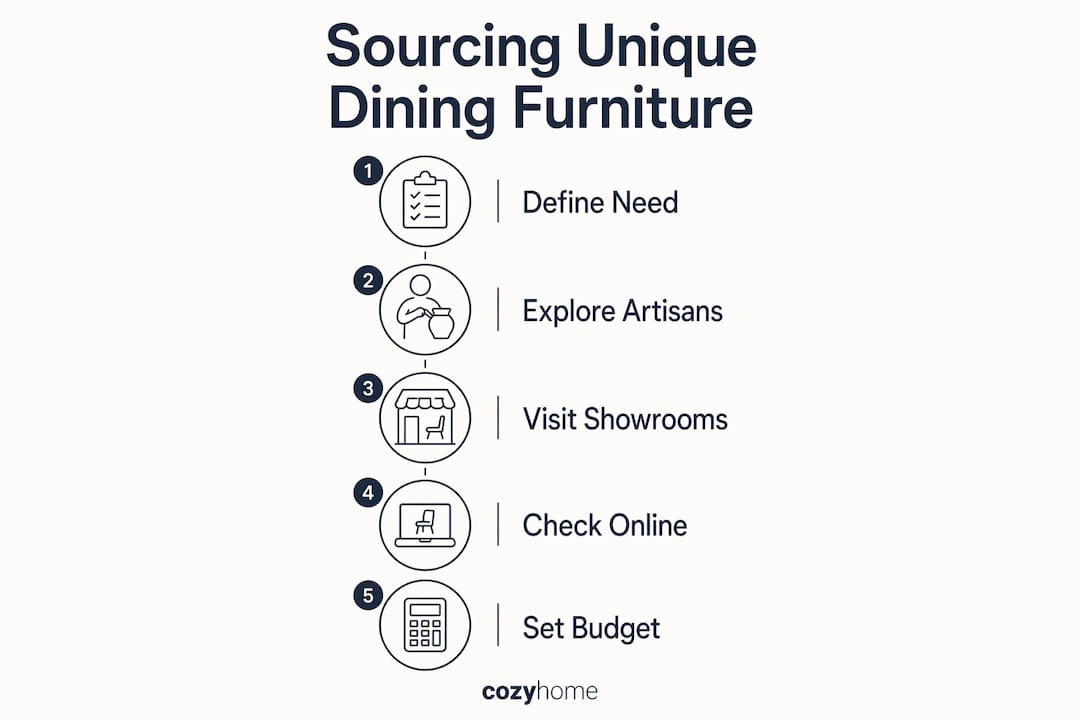
Finding a genuine one-of-a-kind dining chair or table takes more effort than browsing a big-box catalog. The best sources fall into three categories: artisan makers, curated local showrooms, and specialty online retailers.

1. Artisan makers and custom commissions
Custom commissions give you the most control over design, material, and scale. The tradeoff is time. High-end bespoke dining tables require 3–6 months lead time because complex epoxy work, metalwork, and handwoven components cannot be rushed. Contact your maker early, share your room dimensions and style references, and confirm the timeline in writing before any deposit changes hands.
2. Curated local showrooms
A local showroom lets you see and touch a piece before you buy. That matters enormously with statement furniture, where texture, weight, and finish quality are part of the appeal. cozyhome furniture in Plano, Texas, for example, offers custom, made-to-order dining furniture with over 700 fabric and leather options. Shoppers work directly with in-store staff who guide them through sizing, configuration, and material selection so the finished piece fits the actual room.
3. Specialty online retailers and design platforms
Online sourcing works best when you already know what you want. Look for retailers who publish detailed material specs, multiple photography angles, and clear return policies. For modern spiritual home decor and sculptural dining pieces that prioritize calm, intentional design, curated online platforms can surface makers you would not find locally.
Pricing and budget expectations
| Source type | Typical price range | Lead time |
|---|---|---|
| Mass-market retailers | Under $2,000 | In stock or 2–4 weeks |
| Curated showrooms (custom) | $2,000–$8,000 | 6–12 weeks |
| Artisan bespoke commissions | $6,000–$10,000+ | 3–6 months |
| Luxury integrated tech pieces | $25,000+ | 4–8 months |
Budget shapes your options, but it does not determine whether a piece becomes a conversation starter. A well-chosen walnut table from a local craftsperson at $3,500 will generate more genuine interest than a $15,000 piece that feels cold or out of place.
How to style and arrange unique dining furniture to enhance conversation
Placement determines whether a statement piece actually sparks conversation or just sits there looking expensive. The goal is to create a room where people face each other comfortably and the furniture gives them something to react to.
Clearance and spacing set the foundation. Maintaining 18 inches of clearance between seating and the dining surface keeps guests comfortable and prevents the cramped feeling that shuts conversation down. When people feel physically at ease, they talk more freely.
Complementary seating should support the statement piece without competing with it. If your table has a bold sculptural base, choose chairs with a clean, simple profile. The Myron Dining Table in Dark Sheesham pairs well with upholstered chairs that add softness without visual noise. A small marble dining table in black, on the other hand, benefits from chairs with warm wood tones that balance the cool stone.
Acoustic comfort is a detail most homeowners overlook entirely. Reflective materials like glass and metal bounce sound around a room, which raises the ambient noise level and makes conversation feel like work. Pairing a glass or metal table with a wool rug, upholstered chairs, and curtains absorbs that reflected sound and keeps the room comfortable for long dinners.
- Position the table so all seats have a clear sightline to each other, not just to the head of the table
- Use pendant lighting centered directly over the table to draw the eye and define the social zone
- Keep the surrounding décor quieter than the statement piece so it reads as the focal point
- Add a textured rug beneath the table to anchor the arrangement and absorb sound
- Choose movable side chairs over fixed benches when possible so guests can shift and turn toward each other
Pro Tip: Hang a pendant light 30–36 inches above the tabletop. That height illuminates faces rather than the ceiling, which makes the space feel intimate and encourages people to linger.
Common challenges when integrating conversation-piece furniture into your home
Even the most beautiful piece can create problems if it does not fit the room well. These are the four most common issues and how to handle each one.
-
Scale and proportion mismatches. A table that seats eight in a room designed for six will dominate the space and block traffic flow. Measure your room, subtract 36 inches from each wall for circulation, and confirm the table fits within what remains before you order. The Godenza Dining Table in Natural Walnut is a good example of a piece that reads as substantial without overwhelming a mid-sized dining room.
-
Maintenance demands for artisan materials. Stone tops require sealing. Raw metal patinas need occasional waxing. Epoxy surfaces scratch if you use abrasive cleaners. Ask your maker or retailer for a written care guide before delivery, and factor that maintenance into your decision. A piece you cannot care for properly will lose its appeal quickly.
-
Coordinating with existing décor. A sculptural concrete table looks out of place in a room full of traditional cherry wood furniture. Before you buy, photograph your existing dining room and bring those photos to the showroom or share them with your artisan. The goal is contrast that feels intentional, not conflict that feels accidental.
-
Avoiding visual overload. One statement piece per room is the rule. If your table is the conversation starter, the chairs, rug, and lighting should support it rather than compete. A room with three bold statement pieces reads as chaotic, not curated. The Jedrik Outdoor Dining Table in Cement demonstrates how a single strong material choice carries a room without needing additional drama.
Key Takeaways
Sourcing distinctive dining furniture that sparks conversation requires understanding bold design features, choosing the right source for your budget and timeline, and arranging the piece so the room supports it.
| Point | Details |
|---|---|
| Define what makes it unique | Look for bold shapes, mixed materials, sculptural bases, and artisanal finishing techniques. |
| Match source to budget and timeline | Bespoke commissions start around $6,000 and require 3–6 months; curated showrooms offer faster custom options. |
| Prioritize clearance and acoustics | Keep 18 inches between seat and surface; add soft furnishings to absorb sound from reflective materials. |
| One statement piece per room | Let the dining table lead; keep chairs, rugs, and lighting as supporting elements. |
| Ask about maintenance upfront | Stone, metal, and epoxy each require specific care; get written instructions before delivery. |
Why I think most people buy the wrong statement piece
I have spent years watching homeowners fall in love with a table in a showroom and then feel disappointed when it arrives home. The piece itself is usually fine. The problem is that they chose it for how it looked in isolation rather than how it would live in their actual room.
The most effective conversation starter furniture I have seen is not always the most dramatic piece in the catalog. It is the piece that fits the room’s scale, works with the existing light, and has at least one detail that rewards a closer look. A natural walnut grain that shifts color across the surface. A base weld that shows the maker’s hand. A stone top with a vein pattern that runs the full length of the table. Those details are what guests actually comment on.
My honest advice: spend more time thinking about the room than the piece. Bring your room dimensions, your existing furniture photos, and a clear sense of how many people you regularly host. Then find a piece that answers those specific conditions. A table that fits your life will always outperform a table that just looks good in a photograph.
Investing in a true statement dining piece is worthwhile. It changes how you use the room and how guests experience your home. But the investment pays off only when the piece belongs there.
— Dean P.
cozyhome furniture’s collection of distinctive dining pieces
cozyhome furniture carries a curated selection of dining tables and chairs built for homeowners who want something more than what a warehouse floor offers. Each piece is chosen for its material quality, visual character, and ability to hold its own as the focal point of a dining room.
From the bold grain of the Godenza in Natural Walnut to the clean contrast of the Parson Marble Table in Black, cozyhome’s dining selection covers a range of styles and scales. The Plano showroom also carries leather dining chairs and complementary seating to help you build a complete dining room that feels cohesive. Visit cozyhomefurniture.com to browse the full collection or stop by the showroom in Plano for hands-on guidance.
FAQ
What makes dining furniture a conversation piece?
Dining furniture becomes a conversation piece when it features a bold or unexpected design element, such as a sculptural base, mixed materials, or an artisanal finish, that guests notice and ask about. The piece should look interesting from multiple angles and reward a closer look.
How much does a unique artisan dining table cost?
Unique artisan-crafted dining tables typically start around $6,000 and can exceed $10,000 depending on materials and craftsmanship. Custom commissions from bespoke makers often require a deposit upfront and a 3–6 month lead time.
How do I keep a statement dining table from overwhelming my room?
Choose one statement piece and keep everything else in the room quieter in color and form. Maintain proper clearance around the table and use a rug and soft seating to ground the arrangement visually.
What materials are most common in conversation-starter dining furniture?
The most common materials in distinctive dining furniture include live-edge wood, marble, concrete, resin, and blackened or patinated metal. Mixed-material combinations, such as stone tops on steel bases, are especially popular because the contrast between materials creates visual interest.
Do I need to visit a showroom to buy custom dining furniture?
Visiting a showroom is strongly recommended for custom or artisan pieces because texture, scale, and finish quality are difficult to assess from photographs alone. A showroom visit also lets you work directly with staff who can help match the piece to your room’s specific dimensions and style.