

Sofa Buyers: 1.8 to 2.5 pcf Foam Density, Science and Showroom Tests
For most everyday sofas, we recommend looking for a foam density around 1.8 to 2.5 pcf, since foams at this range tend to hold their shape well over years of regular use. Higher density usually means a longer-lasting cushion, though it does not automatically mean a firmer feel: firmness is a separate measurement. We test cushions in real living rooms, not just on paper, because a sofa’s comfort depends on the whole seating system, not the foam number alone.
TL;DR:
- Foam densities between 1.8 and 2.5 pcf are recommended for durability in daily-use sofas, with higher densities offering better shape retention over time.
- Density indicates weight per volume, which correlates with wear resistance, but does not directly determine cushion firmness or comfort.
- Two cushions with the same density can feel different due to layering and internal foam construction, making full cushion build assessment crucial.
- In households with heavy daily use, high resilience foam and layered cushions help resist sagging and maintain support for years.
- Custom cushions are often worth the investment when specific seat dimensions, firmness, or long-term durability are priorities.
Table of Contents
- What foam density means and how it gets measured
- Common foam density ranges and what they mean for your sofa
- Density versus firmness: why the same number can feel different
- How density shapes comfort, durability, and the ways cushions fail
- Choosing the right density for your household: a practical checklist
- What our showroom testing has shown about cushion builds
- Foam versus memory foam and latex: how they compare for sofa seating
- Sustainability considerations for foam density in sofas
- When custom cushions make more sense than stock options
- Getting the right foam density built into your next sofa
- FAQ
- Sources
What foam density means and how it gets measured
Density tells you how much a cushion’s foam weighs for its size, expressed in pounds per cubic foot, or pcf. Picture a one-foot cube of foam sitting on a scale: whatever that cube weighs is the density number you see on a spec sheet or furniture tag. Manufacturers typically list a nominal density with a small tolerance, often around plus or minus 0.1 pcf, since no production batch comes out perfectly uniform.
This number matters because it correlates with how well a cushion resists wear over time, but it has real limits as a shopping tool:
- Density describes weight per volume, not how soft or firm a cushion feels when you sit down.
- A tag reading “1.8 pcf” tells you about expected durability, not comfort.
- Two cushions with identical density can feel completely different depending on how the foam is built and layered.
Reading a density number on its own only tells part of the story, which is why we look at the full cushion build before recommending a sofa to a shopper.
Common foam density ranges and what they mean for your sofa
Most residential seating foam falls between roughly 1.5 and 2.5 pcf, and where a cushion lands in that range gives you a rough sense of what to expect day to day.
- Low density, around 1.5 to 1.7 pcf, shows up in budget furniture and lighter-use pieces; cushions in this band tend to soften and lose loft faster under daily sitting.
- Medium density, around 1.8 to 2.0 pcf, is the band most manufacturers treat as the working standard for everyday sofas, balancing comfort with a reasonable lifespan.
- High density, 2.0 pcf and above, includes high resilience (HR) foams often used in better-built pieces meant for heavy daily use, family rooms, or formal seating expected to last for years.
Industry guidance points to 1.8 pcf as a common benchmark where foam starts performing noticeably better in seating applications. Below that line, cushions can still feel comfortable when new, but they tend to flatten sooner under regular use. Above it, you’re generally paying for a cushion built to hold its shape through years of sitting, naps, and the occasional pile of kids and pets.
Density versus firmness: why the same number can feel different
Density and firmness measure two completely different things, and confusing them is the most common mistake we see shoppers make. Firmness is captured by a number called IFD, or indentation force deflection, which measures how much force it takes to compress a foam sample by 25 percent of its height. A separate figure, compression modulus (also called support factor), describes how a foam’s resistance changes as you sink deeper into it, which affects whether a cushion cradles you gently or lets you “bottom out.”
Manufacturers often laminate layers of foam together: a softer layer on top for initial comfort, a firmer core underneath for support, so a cushion can feel plush at first touch while still holding its shape over time. This is why two cushions with the same density can feel noticeably different: the firmness and the internal layering do the work that density alone can’t explain.
A few things worth asking before you buy:
- Request both the pcf and the 25% IFD rating, since together they describe feel and expected lifespan far better than either number alone.
- Ask whether the cushion is a single foam type or a laminate of multiple layers.
- Check the compression modulus if it’s available, since a higher support factor generally means less chance of that sinking, hammock-like feeling over time.
How density shapes comfort, durability, and the ways cushions fail
Lower-density foams tend to show compression set sooner, that permanent flattening where a cushion no longer springs back to its original height after you stand up. Over time this can lead to dishing, where a visible body-shaped dip forms in the seat, or bagging, where the foam shifts and the cushion cover no longer fits snugly. Higher-density foams generally resist flex fatigue longer, meaning they can be compressed and released thousands more times before losing their shape.
That said, foam is only one part of a larger system. Guidance from the Polyurethane Foam Association frames seating comfort as a combination of the deck, the springs, and the cushioning layers working together, not the foam in isolation. A high-density cushion sitting on a weak or poorly sprung frame will still sag and feel unsupportive, no matter what the tag says. Our guide to quality furniture construction walks through what to check in the frame and suspension before you even get to the cushion itself.
As a rough guide, light-use sofas in guest rooms or formal living rooms can get by with lower-density foam, while sofas in family rooms or shared spaces generally benefit from higher-density cores paired with solid deck support.
Pro Tip: Press firmly into a floor-model cushion and hold for ten seconds before letting go: foam that springs back quickly and evenly is a good early sign of higher resilience.

Choosing the right density for your household: a practical checklist
Matching foam density to your life starts with being honest about how the sofa will actually get used, not how you imagine using it.
Before you shop, think through:
- How many people sit on this sofa daily, and are there kids or pets adding extra wear?
- What’s the average weight and activity level of the people using it most?
- Does the household include anyone who needs firmer support for getting in and out easily?
- How deep or thick are the cushions, and does that change how firm or soft they feel?
When you’re in a showroom, come prepared with a short list of questions:
- What is the pcf and the 25% IFD rating for this cushion?
- Is the cushion a single foam or a laminated build with a softer top and firmer core?
- Is the core a high resilience (HR) foam, and how does the warranty address sagging or compression set?
- Does the retailer have any testing data or showroom notes on how this build performs over time?
As a general starting point, light-use and guest spaces can work well with medium density around 1.8 pcf, while busy family rooms and heavily used sectionals tend to hold up better with high-density HR cores. If your household has unusual needs, like extra-deep seats, specific firmness preferences, or irregular dimensions, a layered or custom cushion build is usually worth the extra consideration over an off-the-shelf option.
What our showroom testing has shown about cushion builds
We’ve tested cushion builds across family rooms, formal living spaces, and pet-friendly homes to see how different density and wrap combinations actually hold up, not just on a spec sheet but under daily life. Our notes consistently point to one pattern: higher-density cores wrapped in a supportive fiber layer resisted dishing far better than lower-density foam alone, especially in homes with kids or pets adding extra wear.
A firmer HR core paired with a well-fitted fiber wrap held its shape noticeably longer in our family-room tests than lower-density foam used without that wrap.
We’ve detailed more of these findings, including which combinations performed best in formal versus high-traffic settings, in our showroom notes on sofa cushion fillings.
Foam versus memory foam and latex: how they compare for sofa seating
Standard polyurethane foam, memory foam, and latex all show up in sofa cushions, and each behaves differently once you sit down. Polyurethane foam, the most common choice, responds quickly: press in and it springs back right away, which is why it remains the standard for everyday seating where people are constantly sitting and standing.
Memory foam reacts to body heat and weight, slowly molding around you and releasing more gradually. That slow response feels plush for lounging but can feel sluggish in a seat you get in and out of often, like a family room sofa. It’s more commonly blended into a top layer over a firmer polyurethane core than used on its own for sofa seating.
Latex, whether natural or synthetic, tends to be more responsive than memory foam and often more durable than standard polyurethane, but it generally costs more and is less common in mainstream sofa cushions. It also tends to feel bouncier and cooler to the touch than either polyurethane or memory foam.
For most households, a well-built polyurethane foam cushion, chosen with the right density and IFD for your needs, gives the best balance of comfort, support, and value. Memory foam and latex both have their place as accent layers or specialty choices, but they’re rarely the full answer for a sofa that sees daily use.

Sustainability considerations for foam density in sofas
Higher-density foam generally means a longer-lasting cushion, and durability itself is one of the more practical sustainability choices you can make: a cushion that holds its shape for a decade avoids the waste of replacing a sagging one every few years. Choosing a higher-density core over a cheaper, lower-density one is often the simplest way to reduce how often a sofa ends up reupholstered or discarded.
Some foam manufacturers also now offer formulations with bio-based or recycled content, though availability and performance vary by supplier, so it’s worth asking directly rather than assuming a given cushion includes them. Beyond the foam itself, a sofa built with a repairable frame and replaceable cushion covers extends the life of the whole piece, which matters more for long-term impact than the foam formulation alone.
When custom cushions make more sense than stock options
Stock cushions work fine for straightforward rooms and typical body types. Custom builds earn their cost when seat depth, firmness, or dimensions need to fit a specific body, an unusually shaped room, or heavy daily family use. The trade-off is simple: custom work takes longer and costs more upfront, but it tends to fit better and last longer than a one-size-fits-all cushion.
— Dean P.
Getting the right foam density built into your next sofa
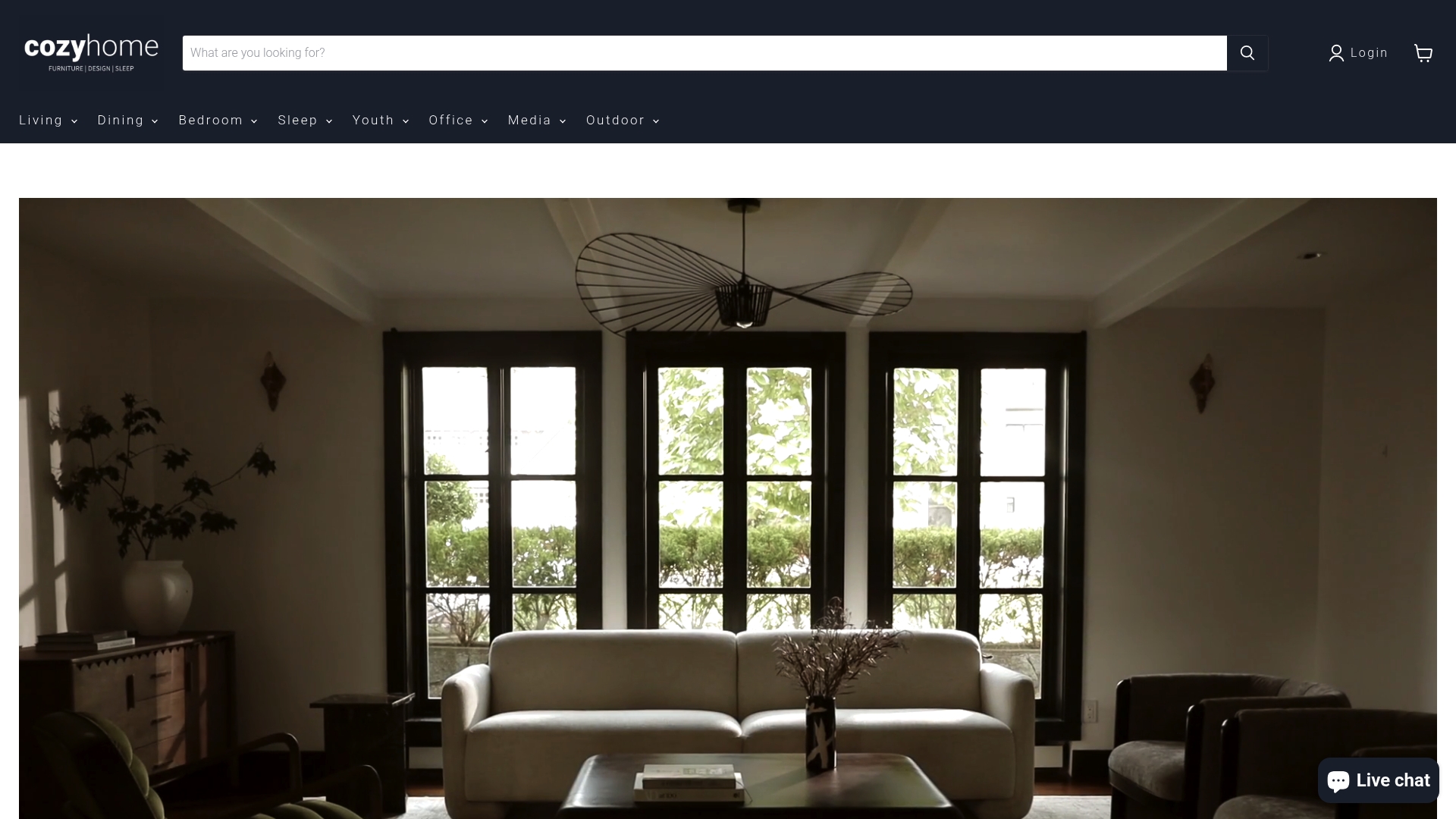
Picking the right pcf and IFD numbers is only half the job: getting them built into a cushion that fits your space and your life is the other half. We handle that through made-to-order custom furniture, where you work directly with our in-store team to choose density, firmness, and wrap construction around how your household actually uses the sofa.
A few ways we make that process easier:
- Choose from a wide variety of fabric and leather options alongside your cushion build.
- Walk through foam and firmness choices in person with knowledgeable showroom staff.
- See and feel showroom-tested cushion combinations to help decide before committing.
If you’re ready to start, visit our customizable sofas and sectionals page or stop by our Plano showroom to feel the difference between density bands yourself, then consider how to best display your new sofa by learning how high to hang wall art above a couch for perfect living room decor.
FAQ
What is a good foam density for a sofa?
A density of roughly 1.8 to 2.5 pcf is generally considered a solid range for everyday sofa cushions. Foams at or above 1.8 pcf tend to perform better in seating applications over time, though the right choice still depends on how heavily the sofa gets used.
Are high density foam couches comfortable?
High-density foam couches can be very comfortable, especially when the core is paired with a softer top layer or fiber wrap. Comfort comes from the combination of density, firmness (IFD), and cushion layering, not from density alone.
Is 40 density foam good for a sofa?
Foam density for furniture is measured in pounds per cubic foot, not a flat number like this, so this likely refers to a different foam type or measurement system, such as a firmness rating used in bedding. For sofa cushions, look for the pcf rating, where 1.8 pcf and above is the benchmark worth asking about.
Which high-density foam sofa is the best?
The best choice depends on your household’s specific use, body types, and desired firmness, since high-density foam performs differently depending on the IFD rating and cushion build around it. We build cushion options around these factors through our made-to-order custom furniture process, where density and firmness are matched to how you actually use your sofa.