

Showroom Tested Sofa Cushion Fillings for Family, Formal, Pet Homes
For most homes, a high density foam core or a foam core hybrid wrapped in down or fiber gives the best mix of durability and comfort. If durability tops your list, look for high resiliency foam. If plushness matters more, choose down or a down wrapped cushion. Tight budgets do well with polyester fiber, and anyone who wants a body hugging feel should look at memory foam.
TL;DR:
- Foam density is the most reliable indicator of cushion longevity, with 2.5 lb/ft³ and higher lasting over 15 years under typical use.
- High resiliency foam resists permanent impressions better than standard foam, making it a smart choice when durability is a priority.
- Memory foam offers a body-hugging feel but retains more heat and recovers slowly, so it is best used as a layer over a firmer core.
- Hybrid cushions with a foam core and a down or fiber wrap provide a balance of support and plushness, especially for households with frequent use.
- Regular in-person testing in a showroom helps ensure comfort and resiliency, as foam specs alone do not reveal the cushion’s real-world feel.
Table of Contents
- What Are Sofa Cushion Fillings, and Why Does the Fill Matter?
- Foam, Memory Foam, Latex, and Springs: How the Structural Cores Compare
- Down, Feather, Polyester Fiber, and Shredded Foam: Comparing the Soft Fills
- Why Hybrid Cushions (Foam Core Plus Wrap) Are the Industry Standard
- How to Choose the Right Sofa Cushion Filling for Your Home
- When Should You Restuff or Replace Your Sofa Cushions?
- Simple Habits That Add Years to Cushion Life
- Our Take: Why Showroom Testing Beats Guessing From a Spec Sheet
- See Custom Cushion Options at cozyhome furniture
- Sources
- FAQ
What Are Sofa Cushion Fillings, and Why Does the Fill Matter?
Sofa cushion fillings are the internal materials, foam, down, fiber, springs, or a blend of them, that give a cushion its shape, support, and feel. The fill you choose changes five things about how your sofa performs day to day, and most shoppers only think about one of them: how soft it feels in the showroom.
The other four matter just as much once the couch is in your living room. Support determines whether you sink to the frame or stay level after two years of use. Surface feel is the immediate softness your hand or seat notices first, separate from what’s holding you up underneath. Shape retention is whether the cushion bounces back after you stand up, or stays dented. Heat retention affects comfort on warm nights, since foam traps more body heat than fiber or down. Maintenance burden is the ongoing work, plumping, rotating, cleaning, that keeps the cushion looking full.
Seat cushions and back cushions don’t need the same fill. Seats carry your body weight for hours at a time, so they need a supportive core. Back cushions exist mostly to feel good against your spine, so they can lean softer and looser without sagging under load. That’s why many well-built sofas intentionally use different fillings for seat versus back, pairing a firm foam seat with a down filled back cushion.
You’ll run into three technical terms while shopping:
- Foam density (lb/ft³): how much material is packed into the foam, a rough proxy for how long it holds its shape.
- HR (high resiliency): a foam engineering standard that improves springback beyond what density alone predicts.
- Fill power: a measurement of how much loft an ounce of down produces, used to judge quality in down and down blend cushions.
Foam, Memory Foam, Latex, and Springs: How the Structural Cores Compare
The core is the structural heart of a seat cushion, and it’s where durability is won or lost. Get the core right and everything wrapped around it, fabric, fiber, down, lasts longer too. Get it wrong and no amount of surface plushness will save a cushion that’s flat within two years.
Foam density and what it actually buys you
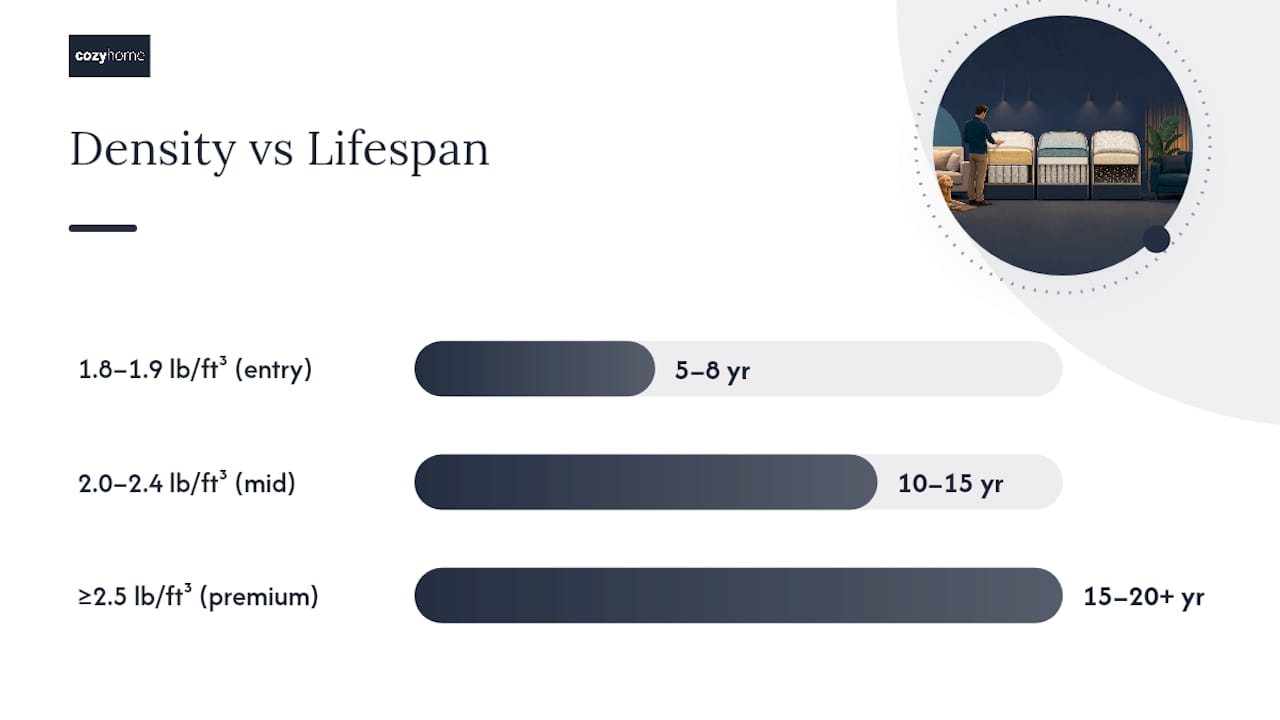
Foam is sold by density, measured in pounds per cubic foot, and that number predicts lifespan more reliably than almost anything else on a spec sheet. The bands break down clearly:
- 1.8 to 1.9 lb/ft³: entry-level foam, typically good for 5 to 8 years before noticeable softening.
- 2.0 to 2.4 lb/ft³: a solid mid-range choice, generally lasting 10 to 15 years under normal use.
- 2.5 lb/ft³ and higher: premium territory, often holding shape for 15 to 20 years or more.
That range comes from Stamps Home Furniture’s breakdown of foam lifespan by density, and it’s the single most useful number to ask about when you’re comparing sofas. A sofa priced like a bargain but built with 1.8 lb/ft³ foam is a sofa you’ll be shopping to replace again inside a decade.
Statistic to remember: the jump from 1.8 lb/ft³ to 2.5 lb/ft³ foam roughly doubles or triples expected cushion lifespan, according to the same density and lifespan bands. That’s the difference between refilling cushions before your kids finish elementary school and not thinking about it again until they’re in college.
Density alone doesn’t tell the whole story, though. Two foams at the same density can behave very differently depending on how they’re engineered.
HR foam versus standard foam
HR, or high resiliency, foam is manufactured with a different cell structure that improves springback compared to standard foam of the same density. Living Spaces recommends asking specifically for HR foam when durability matters, since it resists the permanent body impressions that make standard foam look tired years before it actually fails structurally. If a seller can’t tell you whether their foam is HR rated, that’s usually a sign they’re working from a generic supplier catalog rather than a considered spec.
Memory foam: the contouring trade-off
Memory foam earns its reputation for a body hugging feel that standard foam can’t replicate. It contours to pressure points, which makes it genuinely comfortable for reading nooks, media room loungers, and anyone who wants a sink-in seat after a long day.
The trade-off is heat and recovery speed. Memory foam retains body heat more than open cell foam, which can feel warm on summer evenings, and it springs back slower after you stand up. For a primary family room sofa that sees constant in-and-out traffic, that slow recovery can read as “worn out” even when the material is fine. Memory foam works best as a topper layer over a firmer core, not as the entire seat cushion.
Latex: durable, but priced accordingly
Natural and blended latex cushions offer excellent durability and a buoyant, responsive feel that sits between standard foam and memory foam. Latex resists dust mites and mold better than most fills, which makes it a strong pick for allergy sensitive households. The catch is price. Latex costs meaningfully more than polyurethane foam at comparable density, so it tends to show up in premium sofas rather than budget lines.
Pocket springs: when the upgrade is worth it
Pocket spring cores, individually wrapped coil springs set inside the cushion, deliver support that flexes independently across the seat rather than compressing as one solid block. They’re common in higher-end upholstery and excel at distributing weight for multiple sitters or heavier frames. The premium is real, but it’s justified for households where the sofa gets heavy daily use from more than one or two people, since springs resist the sagging that eventually catches up with foam-only cores.
Down, Feather, Polyester Fiber, and Shredded Foam: Comparing the Soft Fills
Structural cores hold a cushion’s shape. Soft fills decide how it feels against your skin, and they come with very different upkeep demands.
Down and feather
Down clusters, the soft plumage from ducks or geese, create the loftiest, most luxurious surface feel available in cushion filling. Fill power measures quality here: higher fill power means more loft per ounce, and better down blend cushions typically list this number on the product tag. Feather, coarser and heavier than down, is usually blended in to add body and reduce cost.
The catch is maintenance. Down compresses under body weight and needs regular fluffing to stay full, and pure down without a supportive core underneath is a poor choice for a high-traffic seat cushion. It flattens fast and offers little pushback for anyone getting up and down repeatedly through the day. Down performs best as a wrap over a foam core, or as the fill in back and throw cushions where daily plumping is a small habit rather than a chore.
Polyester fiber (polyfill)
Polyester fiber is the budget workhorse of cushion filling. It’s affordable, fully hypoallergenic since it’s synthetic through and through, and it has good loft right out of the factory. The downside shows up over time: as a primary seat fill, polyester fiber typically holds up for only 3 to 5 years before it compresses and loses its bounce.
That doesn’t make it a poor choice, it makes it the wrong choice for the wrong job. As a wrap layer over foam, or as the entire fill for back cushions and decorative pillows, polyester fiber performs exactly as intended for years. As the sole material inside a seat cushion that gets sat on daily, it’s going to need a top-up sooner than foam would.
Shredded foam
Shredded foam fill, small chunks of recycled or scrap foam packed into a cushion cover, has one advantage the solid fills can’t match: adjustability. You can add or remove shredded foam to dial in firmness, and topping it up yourself is a genuinely easy DIY task compared to replacing a solid foam block. It’s a common choice for floor cushions, bean bag style seating, and accent pieces where a slightly loose, moldable feel is part of the appeal rather than a flaw.
Where each soft fill actually belongs
- Down or feather blends: back cushions, throw pillows, or as a wrap over foam, not as a standalone seat fill.
- Polyester fiber: back cushions, budget accent pieces, or the outer wrap on a hybrid seat cushion.
- Shredded foam: accent seating and floor cushions where adjustable firmness matters more than long-term shape retention.
Why Hybrid Cushions (Foam Core Plus Wrap) Are the Industry Standard
Most well-made sofas today don’t rely on a single material. The most common and best-performing build pairs a foam core with a down or fiber wrap, and once you understand why, it’s obvious why this construction dominates the market.
The foam core does the heavy lifting, literally. It holds your body weight, resists sagging, and determines the cushion’s real lifespan. The wrap layer, whether down, feather blend, or fiber, sits on top and gives the cushion its immediate surface softness, the plush give you feel when you first sit down before your weight settles onto the supportive core underneath.
Common builds you’ll see on product pages include:
- Foam core plus polyester fiber wrap: the most affordable hybrid, solid durability with a soft top layer.
- Foam core plus down wrap: pricier, but delivers a genuinely luxurious feel without sacrificing the structural support foam provides.
- Foam core plus foam topper: a firmer overall feel, often used in more tailored, formal furniture.
Single-material cushions, all foam or all down, sit at two extremes. All-foam is durable but can feel flat or firm without a softer top layer. All-down is plush but collapses fast under regular use. Hybrids split the difference, and that’s precisely why designers consider them the best compromise for mixed-use living rooms where durability and comfort both matter.
If your household spends hours parked in front of the television, a foam core with a down wrap is worth the extra cost. You get a cushion that still feels inviting after a two-hour movie, backed by a core that won’t flatten out within a couple of years the way a down-only cushion would.
How to Choose the Right Sofa Cushion Filling for Your Home
Before you fall for a fabric swatch or a color, run through this short checklist:
- Define the primary use case. A formal living room that sees guests twice a month has very different needs than a family room where kids camp out daily.
- Identify who sits there most. Mobility limited users often do better with firmer, higher-density foam that’s easier to rise from than a deep, plush down cushion.
- Decide how much maintenance you’ll actually do. Down and loose fiber need regular plumping. If that’s not realistic for your household, lean toward foam or a foam-heavy hybrid.
- Set a budget with lifespan in mind. A cheaper cushion that needs replacing in five years often costs more over a decade than a pricier one built to last fifteen.
- Consider pets and spills. Households with pets benefit from denser foam cores that resist matting and covers that come off easily for cleaning.
When you’re actually standing in front of a sofa, ask the seller these questions directly: What’s the foam density in pounds per cubic foot? Is it HR rated? What’s the fill power if down is involved, and what’s the down-to-feather ratio? Is the cushion a foam core with a wrap, or something else entirely? Is it reversible? What does the warranty cover?
Watch for red flags: sellers who can’t answer a density question, product listings with no fill specs at all, and any cushion described only as “plush” or “premium” with no material details behind it.
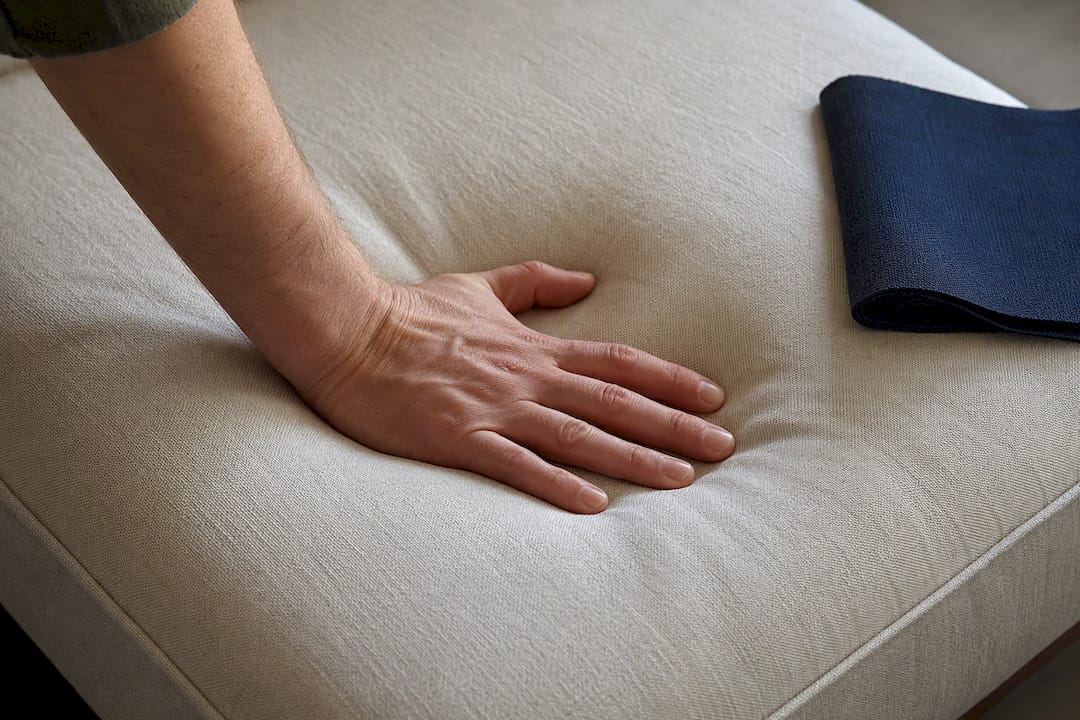
Pro Tip: Press your palm flat into a floor model cushion and hold it for ten seconds. If it doesn’t spring back within a few seconds of you lifting your hand, that’s a low-resiliency fill, not the sign of a comfortable cushion.
When Should You Restuff or Replace Your Sofa Cushions?
Cushions send fairly obvious signals when they’re done. Watch for sagging that doesn’t bounce back after a few hours, permanent body impressions you can see even with no one sitting there, a core that feels broken or crunchy through the fabric, or a cushion that’s noticeably thinner than it was when new.
If you catch these early, restuffing is usually the right move rather than full replacement.
- Measure the existing cushion carefully, including thickness, width, and depth, before ordering anything.
- Order cut-to-size foam or a foam and fiber combination sized to those exact measurements, sized slightly larger than the old foam since it will compress slightly once wrapped.
- Wrap the new foam in a fresh layer of dacron or polyfill batting to restore that soft outer feel.
- Reinsert into the cover, working the corners fully before zipping, and sit on it to test evenness before calling it done.
Common pitfalls include ordering foam that’s too soft for a seat cushion, skipping the wrap layer entirely, or forgetting that covers stretch slightly with age, so a snug fit when new might need slightly denser foam now.
If the frame or springs underneath are also failing, or you don’t have the time or patience for DIY, call a professional upholsterer. Restuffing a full set of sofa cushions typically runs in the range of a modest investment for basic foam swaps up to a more significant cost for premium HR foam with a down wrap, generally cheaper than buying an entirely new sofa. New cushions from the manufacturer, when available, usually cost less than a full sofa replacement but more than a basic DIY restuffing.
Simple Habits That Add Years to Cushion Life
A little routine care goes a long way toward keeping cushions full and even. Rotating cushions every two to four weeks prevents the same spot from taking all the wear, and it’s genuinely the single easiest habit to build.
- Daily or weekly: plump down and fiber cushions by hand, and avoid always sitting in the exact same seat.
- Monthly: flip reversible cushions, vacuum underneath removable covers, and check seams and zippers for early wear.
- Yearly: top up fiber wraps that have started compressing, inspect foam for impressions that no longer spring back, and schedule professional cleaning if your fabric label calls for it.
Always check the manufacturer’s cleaning code before treating a stain yourself. A quick do and don’t: do spot clean with a manufacturer-approved method, don’t soak foam cushions since trapped moisture leads to mildew.
Pro Tip: Set a recurring reminder on your phone for cushion rotation. It sounds trivial, but it’s the single habit that most reliably prevents the “one flat cushion” look on an otherwise good sofa.
Our Take: Why Showroom Testing Beats Guessing From a Spec Sheet
Reading foam density numbers off a product page only gets you so far. Two cushions can list the same 2.0 lb/ft³ foam and feel completely different depending on the wrap layer, the cover fabric’s give, and how the cushion is cut. That gap between what a spec sheet promises and what your body actually feels is where a lot of furniture disappointments start.
Some sofa manufacturers make sofas to order, including cushion construction. Some offer multiple fabric and leather options and let customers sit on density and wrap combinations in a showroom before committing, rather than relying on swatches and spec sheets. Custom cushions earn their cost in specific situations: nonstandard sofa dimensions where off-the-shelf cushions never fit right, a firmness preference that off-the-shelf options don’t quite match, or a household that wants a core built to outlast the fabric on top of it.
Testing in person also solves the biggest blind spot in online shopping: you can’t feel resiliency through a photo. A quick sit test in a custom-designed sofa tells you in ten seconds what a paragraph of foam specs can only approximate.
— Dean P.
See Custom Cushion Options at cozyhome furniture
Off-the-shelf sofas often come with predetermined foam density and wrap combinations selected by the manufacturer. Some furniture retailers build sofas to spec, allowing customers to choose core density, wrap material, and firmness according to their needs, often with in-person guidance from staff.

If you’re weighing a foam-core hybrid against a plusher down wrap, the Excelsior sofa in cream is a good place to start comparing in person, or explore durable fabric pairings if pets or kids are part of the equation. Visit the Plano showroom or browse online to schedule a consultation and sit on the actual cushion builds discussed here before you decide.
FAQ
What is the best filling for couch cushions?
A high-density foam core, ideally HR rated at 2.0 lb/ft³ or higher, paired with a down or fiber wrap gives the best overall balance of durability and comfort for most households.
Is it worth restuffing sofa cushions?
Yes, restuffing is usually worth it when the sofa frame and springs are still solid. New foam and a fresh wrap can restore a worn cushion’s shape for a fraction of the cost of a new sofa.
How much does it cost to get couch cushions restuffed?
Restuffing typically costs a modest amount for basic foam swaps and rises for premium HR foam with a down wrap, generally far less than replacing the entire sofa.
What are the best fillings for cushions?
For seat cushions, high-density or HR foam and foam-core hybrids perform best; for back cushions and accent pillows, down, feather blends, or polyester fiber offer better surface softness with less structural demand.
How long do sofa cushion fillings actually last?
Foam lifespan tracks closely with density: expect roughly 5 to 8 years from 1.8 to 1.9 lb/ft³ foam, 10 to 15 years from 2.0 to 2.4 lb/ft³, and 15 to 20 years or more from foam at 2.5 lb/ft³ and above.