

King Duvet Insert: What DFW Homeowners Need to Know
TL;DR:
- Most homeowners in Plano and DFW should start with a mid-weight down insert featuring baffle-box construction and corner loops for a king bed. Choosing the right size, fill type, and construction ensures comfort and durability, especially considering climate and personal sleep preferences. Proper care, including regular washing and protective covers, extends the lifespan of the duvet insert, with typical replacement intervals ranging from five to fifteen years based on material.
For most Plano and DFW homeowners, a mid-weight, 650-fill-power down insert with baffle-box construction and corner loops is the best starting point for a king bed. It balances loft, breathability, and year-round comfort without running too warm in Texas summers or too cool on those occasional cold snaps.
Two solid alternatives worth knowing:
- Hot sleepers: A lightweight down or silk insert offers moisture-wicking breathability that keeps you comfortable without overheating.
- Allergy sufferers or families: A medium-weight down-alternative (siliconized polyester fiberfill) is machine-washable, hypoallergenic, and available in multiple loft levels.
Quick buying checklist before you order:
- Confirm your exact mattress size (standard king vs. California king)
- Choose your preferred loft (lightweight, all-season, or ultra-warm)
- Pick baffle-box construction for better loft retention
- Look for corner loops to prevent shifting inside the cover
- Check the return policy before purchasing, especially for king-size bedding
Table of Contents
- What size is a king duvet insert, and how do you measure for a custom bed?
- Which fill material is right for your sleep style?
- How do fill power, fill weight, and construction affect warmth?
- How long does a king duvet insert last, and how do you care for it?
- What should your buying checklist include, and what should you expect to pay?
- How do you choose the right weight and warmth for your sleep style and climate?
- What are your options for summer, winter, and all-season use?
- cozyhome furniture is your local resource for custom king beds and bedding fit
- Key Takeaways
- What we’ve learned from pairing custom beds with the right insert
- FAQ
What size is a king duvet insert, and how do you measure for a custom bed?
Standard king mattresses measure 76 inches wide by 80 inches long. A typical king duvet insert runs slightly larger to allow for overhang on the sides and foot of the bed. California king mattresses are narrower and longer and take a California king insert sized to fit their dimensions. Ordering the wrong size is one of the most common bedding mistakes, and it’s especially easy to make when you’re working with a custom king bed frame that sits higher or wider than standard.
To measure correctly, start with your mattress dimensions, then add the drop you want on each side. A 10–12 inch drop on each side is typical for a clean, hotel-style look. If your bed has a thick mattress topper or a tall platform frame like the Madagascar king platform bed, size up to maintain that visual proportion.
| Bed Type | Mattress Size | Typical Insert Size |
|---|---|---|
| Standard King | 76" × 80" | 104" × 90" |
| California King | 72" × 84" | 104" × 96" |
| King with thick topper | 76" × 80"+ | Consider sizing up |
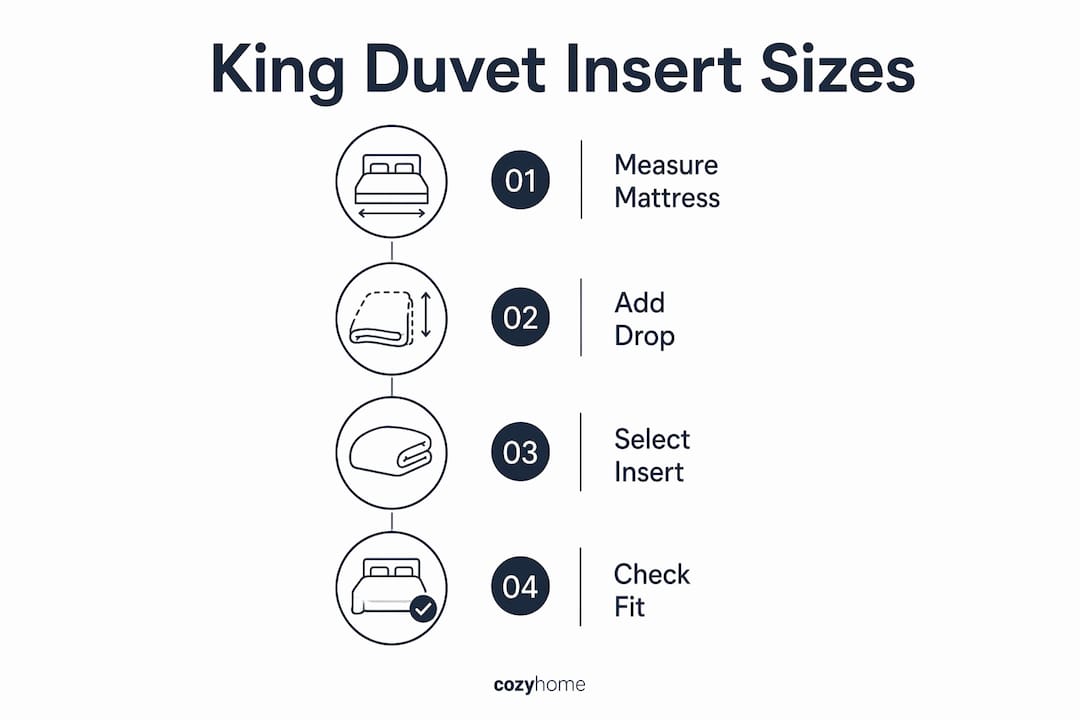
Pro Tip: If your custom bed frame has a footboard taller than 12 inches, measure from the top of the mattress to the floor and subtract the footboard height. That gives you the actual visible drop, which determines whether a standard insert size will look proportional.
Which fill material is right for your sleep style?
Matching fill type to your thermal needs matters more than picking a popular brand. Here’s how each material stacks up:
- Down: Lightweight, high-loft, and excellent at trapping warmth without bulk. Best for cold sleepers who want a cloud-like feel. Premium down carries a higher price and usually requires professional cleaning.
- Down-alternative (polyester/siliconized fiberfill): Machine-washable, budget-friendly, and available in multiple weights. Great for families, allergy sufferers, and anyone who prefers easy home care. Quality varies widely, so look for cluster-fiber descriptions and heavier fill weights per square foot.
- Silk: Naturally moisture-wicking and hypoallergenic, silk suits hot sleepers and those with sensitivities. It’s breathable in summer and surprisingly warm in winter. The trade-off is a higher price and delicate care requirements.
- Wool: Temperature-regulating and naturally resistant to dust mites. Wool works well for sleepers who run warm but still want some insulation. It tends to feel denser than down, which some people love and others find heavy.
- Synthetic/polyester: The most affordable option. Consistent loft, easy to wash, and widely available. It doesn’t breathe as well as natural fills, so it can run warm for hot sleepers.
Pro Tip: When evaluating a down-alternative without fill-power ratings, check the fill weight per square foot and look for “cluster fiber” or “3D fiber” descriptions. These indicate a more lofted, down-like feel compared to flat polyester batting.
Pairing your fill choice with the right thermal layer is worth thinking through. If you tend to sleep warm, natural fibers like silk or lightweight wool are worth the investment, and the same logic applies to choosing natural fiber bed socks for cold nights when you want warmth without a heavier insert.

How do fill power, fill weight, and construction affect warmth?
Fill power measures how much space one ounce of down occupies. Down with mid-range fill power is positioned as an all-season choice, balancing loft and breathability in a cotton sateen shell. Higher numbers, like 700 or 800, mean more loft per ounce, so the insert feels lighter while still trapping heat effectively.
Fill weight is the total amount of fill inside the insert. You need both numbers to understand what you’re getting. High fill power with low fill weight produces a lightweight, lofty insert. High fill power with high fill weight creates an ultra-warm option that still feels relatively light. Low fill power with high fill weight tends to be dense and heavy.
Construction type makes a real difference in how warmth distributes across the insert:
- Baffle-box construction uses fabric walls sewn between the top and bottom shell, creating individual pockets that let fill expand fully. This prevents cold spots and maintains even loft across the entire insert.
- Sewn-through construction stitches the top and bottom layers directly together. It’s lighter and less expensive, but the stitching lines compress the fill and can create cooler channels across the insert.
For a king-size insert, baffle-box is worth the extra cost. The larger surface area means cold spots are more noticeable, and baffle-box construction keeps the fill distributed evenly from edge to edge.
How long does a king duvet insert last, and how do you care for it?
Down inserts can last many years when well maintained. Down-alternative inserts generally hold up for several years before the fill begins to compress permanently. Silk and wool inserts can last a decade or more with proper care.
Care by material:
- Down: Many quality down inserts are machine-washable on a gentle cycle with a mild detergent. Use a large-capacity washer and two clean tennis balls in the dryer to restore loft. Some premium down inserts recommend dry cleaning.
- Down-alternative: Machine-washable in most cases. Wash on warm, tumble dry low, and fluff periodically during drying to prevent clumping.
- Silk and wool: Usually require hand washing or professional cleaning. Check the care label carefully before washing at home.
Using a duvet cover is the single best thing you can do to extend your insert’s life. It protects against body oils, dust, and wear, and it means you’re washing the cover weekly instead of the insert. Aim to wash the insert itself two to four times per year.
Signs it’s time to replace your insert: persistent clumping that doesn’t fluff out after washing, noticeable loss of loft, lingering odor after cleaning, or visible thin spots in the fill.
Pro Tip: Store a seasonal insert in a breathable cotton bag, never a plastic bin. Plastic traps moisture and can lead to mildew and odor. Lay it flat or loosely roll it rather than compressing it tightly, which permanently damages the fill clusters.
What should your buying checklist include, and what should you expect to pay?
Before you purchase a king size duvet insert, run through these criteria:
- Size compatibility: Confirm standard king vs. California king and your desired overhang
- Fill type: Match to your sleep style (hot/cold sleeper, allergy concerns, care preferences)
- Fill power or fill weight: Look for 600–700 fill power for down; check fill weight for down-alternative
- Construction: Baffle-box for loft retention; sewn-through for budget-friendly lighter options
- Corner loops: Secure the insert to your duvet cover’s interior ties to prevent shifting
- Shell fabric: Cotton percale breathes well; cotton sateen feels softer; microfiber is budget-friendly
- Return policy and warranty: King inserts are bulky and expensive to return; confirm the policy before ordering
- Shipping: Some king inserts ship compressed; allow 24–48 hours for full loft to restore
Typical U.S. price ranges:
For DFW homeowners with custom beds, spending more on fill power makes sense if you run cold. For families with kids or pets, a washable down-alternative in the $60–$120 range is a practical, durable choice.
How do you choose the right weight and warmth for your sleep style and climate?
DFW winters are mild compared to northern states, but the region does see cold stretches from November through February. That means most Plano homeowners do well with an all-season insert rather than a heavy winter-weight option.
A good rule of thumb: if your bedroom stays between 65°F and 72°F year-round with air conditioning and heat, an all-season insert handles most nights comfortably. If you sleep warm, go lighter. If you sleep cold or keep the thermostat low, add weight.
Firmness in a duvet insert refers to how dense and heavy the fill feels against your body. Heavier fill weight creates a more grounding, weighted sensation. Lighter fill weight with high fill power gives a lofty, airy feel. Neither is objectively better. It comes down to whether you prefer the sensation of weight or the feeling of floating under a cloud.
What are your options for summer, winter, and all-season use?
A single all-season insert works for most DFW homeowners. But if you want to optimize by season, a two-insert system gives you flexibility.
Summer: A lightweight down or silk insert with low fill weight keeps things breathable. Some sleepers prefer just a duvet cover with no insert during peak Texas heat.
Winter: A heavier down insert with high fill weight and baffle-box construction holds warmth on cold nights. Wool is another solid winter option for sleepers who want natural temperature regulation.
All-season: A mid-weight insert with 650 fill power and moderate fill weight covers most nights in a climate-controlled DFW home. This is the most practical choice for homeowners who don’t want to swap bedding twice a year.
cozyhome furniture is your local resource for custom king beds and bedding fit
When your bed is made to order, the insert size and overhang aren’t guesswork. At cozyhome furniture’s Plano showroom, we help DFW homeowners get the sizing right from the start, whether you’re choosing a custom king bed with a tall headboard or a lower-profile platform frame that changes your ideal duvet drop.
Our in-store team walks you through frame dimensions, mattress height, and how your bedding choices will look in proportion to the room. And while you’re here, you’ll find our full range of custom sofas, including the Excelsior sofa, to complete the look of your home. Stop by the showroom in Plano, or browse our king bed collection online to start planning your custom setup.
Key Takeaways
Choose your king duvet insert based on fill type and weight first, then confirm dimensions against your actual bed frame before ordering.
| Point | Details |
|---|---|
| Match fill to sleep style | Hot sleepers do best with lightweight down or silk; cold sleepers need higher fill weight. |
| Size up for custom beds | Standard king inserts run 104" × 90"; measure your frame and desired overhang before ordering. |
| Baffle-box beats sewn-through | Baffle-box construction prevents cold spots and holds loft across a king-size surface. |
| Care extends lifespan | Down lasts 10–15 years with proper washing and a duvet cover; down-alternative lasts 5–8 years. |
| cozyhome furniture fits your frame | The Plano showroom helps DFW homeowners match insert sizing to custom king bed dimensions in person. |
What we’ve learned from pairing custom beds with the right insert
The conversation about duvet inserts usually focuses on fill power and thread count, but the detail most people overlook is proportion. A standard insert on a custom king bed with an extra-tall headboard or a thick platform base can look undersized, even if the dimensions technically match. In DFW homes, where rooms tend to run larger and beds are often the visual anchor of the space, that proportion matters more than most buyers expect.
The other thing worth saying plainly: fill type is a personal comfort decision, not a hierarchy. Silk isn’t better than down-alternative for everyone. The right insert is the one that matches how you actually sleep, how warm your room runs, and how much time you want to spend on care. Getting that match right from the start saves money and frustration down the road.
FAQ
What is the standard size for a king duvet insert?
A standard king duvet insert typically measures 104 inches wide by 90 inches long, which provides adequate overhang on a 76" × 80" king mattress. California king inserts run approximately 104" × 96" to fit the longer 72" × 84" mattress.
What fill power is best for an all-season king insert?
A 650-fill-power down insert is a well-regarded all-season choice, balancing loft and breathability for most climates. It performs well in climate-controlled DFW homes year-round.
How do corner loops help with a king duvet insert?
Corner loops attach to the interior ties of a duvet cover, keeping the insert from shifting or bunching inside. On a king-size insert, they’re especially useful because the larger surface area gives the fill more room to migrate.
How often should you wash a king duvet insert?
Regular washing two to four times per year is typical for a king insert used with a duvet cover. Down-alternative inserts are generally machine-washable; many down inserts can also be washed at home in a large-capacity machine on a gentle cycle.
When should you replace a king duvet insert?
Replace a down insert after 10–15 years or when it loses loft and clumps despite washing. Down-alternative inserts typically need replacing after 5–8 years when the fill compresses permanently.