

Best Small-Space Sofas: Why 31-inch Depths and Modular Delivery Matter
For most cramped living rooms, a modular sectional or low-profile loveseat is your best bet, since both maximize seating without eating up walking space. When your room has an odd angle, a narrow doorway, or an awkward length, a made-to-order sofa becomes the more reliable fix. Everything below walks you through which type fits which situation, and how to measure before you buy.
TL;DR:
- Modular sectionals offer flexible configurations and flat-pack delivery, making them ideal for tight stairways and irregular doorways.
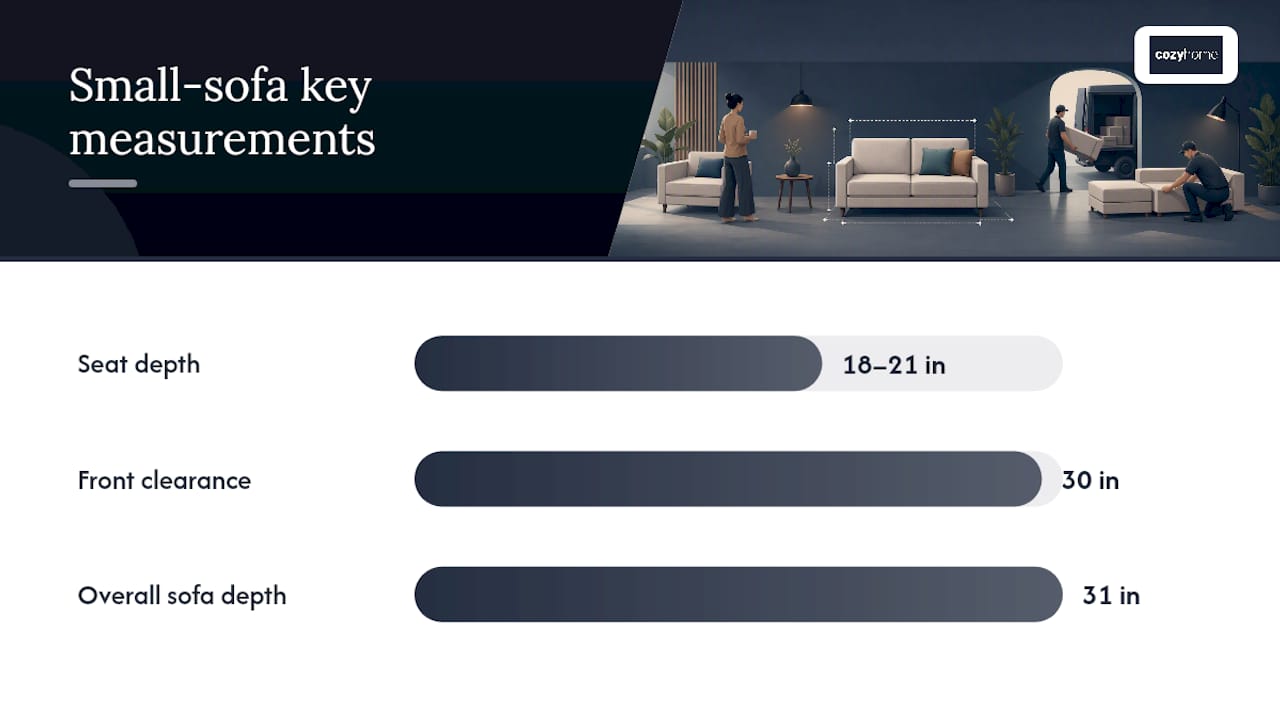
- For small rooms, seat depth around 18 to 21 inches and overall sofa depth near 31 inches optimize walkability without sacrificing comfort.
- Measuring all entry points, hallways, and the room’s usable space is crucial to prevent fit issues during delivery, especially in awkward or narrow layouts.
- Customized sofas are cost-effective for irregular rooms, providing exact dimensions and slim arms to maximize seating while maintaining clearance.
- Prioritize fit and function over style and opt for performance fabrics if the space is heavily used by pets or children.
Table of Contents
- What Are the Best Small Space Sofas to Consider?
- How Do You Choose the Right Small-Space Sofa?
- Which Sofa Type Fits Your Actual Living Situation?
- How Do You Measure and Prepare for Sofa Delivery?
- When Does a Custom or Made-to-Order Sofa Make Sense?
- A Showroom Perspective on Small-Space Sofa Shopping
- Get a Sofa Built Around Your Exact Room, Not a Warehouse Floor Plan
- Sources
- FAQ
What Are the Best Small Space Sofas to Consider?
Not every compact sofa solves the same problem. A studio apartment and a small family room need different things from the same square footage, so the smartest approach is matching the sofa type to the actual constraint, whether that’s floor space, guest capacity, or a hallway that barely fits a mattress sideways.
Here’s how the main categories stack up:
- Modular small sectionals. These arrive in individually boxed pieces you can reconfigure as an L shape, a straight run, or two separate loveseats. That flexibility, plus boxed delivery that clears tight stairways and hallways, makes them a favorite for walk-up apartments where a one-piece sofa would never make it through the door.
- Low-profile two-seaters and loveseats. Cutting overall depth and keeping the back cushions slim reduces visual weight even when the footprint isn’t dramatically smaller. Design classics like the Eames Sofa Compact show how careful proportion and leg clearance keep a small piece from feeling cramped in a room.
- Sleeper and convertible sofas. A pull-out or fold-flat frame turns a home office or living room into a guest room overnight, which matters most in true one-bedroom setups where a dedicated guest space isn’t realistic.
- Storage-enabled sofas and ottomans. Lift-top seating and hollow ottomans hide linens, blankets, and remote controls, which frees up closet space you don’t have.
- Slim-framed, mid-century-inspired designs. Tapered legs and narrow arms shave inches off total depth without cutting into seat width, so you keep the same number of usable cushions.
Retailers now build compact versions of standard models specifically for this problem. IKEA’s compact two-seat sofa line is one example, with published dimensions built around shallower depth and narrower overall width. That’s the detail worth checking before you fall for a photo: the spec sheet, not the marketing shot, tells you whether a “compact” sofa will actually clear your space.
How Do You Choose the Right Small-Space Sofa?
Start with the tape measure, not the fabric swatch. Fit determines whether a sofa works at all; comfort and style only matter once fit is settled.
- Measure the room’s usable footprint, not just the wall length. Subtract space for walking paths (aim for at least 30 inches of clearance in front of the sofa) and any door swing.
- Measure every doorway, hallway turn, and stairwell the sofa has to pass through, including diagonal clearance around tight corners.
- Check seat depth before overall depth. Shallower seat depths in the 18 to 21 inch range, and overall sofa depths around 31 inches, tend to work best in small rooms because they preserve walking space without sacrificing a place to sit.
- Look at arm and leg style. Slim or tapered arms and exposed wood or metal legs make a sofa read lighter in a room, even at the same width as a boxier model.
- Ask retailers directly about modularity and delivery logistics — can pieces ship separately, and will the delivery team assemble in place?
- Choose fabric for how the room actually gets used. Performance and washable textiles show up constantly in small-sofa recommendations for households with pets, kids, or heavy daily use. Our fabric durability guide breaks down which weaves hold up best.
- Prioritize in this order: fit, then function, then comfort, then style. A gorgeous sofa that doesn’t clear your stairwell is not a small-space sofa. It’s a return.
Pro Tip: Cushion fill matters more in a small sofa than a large one. A dense foam or down-alternative blend keeps a shallow seat from feeling flimsy, since seat support has more to do with fill than overall size.
Before you shop, run your numbers through our apartment size sofa checklist. It catches the measurements people forget until delivery day.
Which Sofa Type Fits Your Actual Living Situation?
The right sofa depends less on square footage and more on how the room gets used day to day.
- Studio and micro-apartments. A storage sleeper or a compact loveseat does double duty as a couch, guest bed, and linen closet. Since the sofa is often the only large furniture piece in the room, prioritize one that reads light rather than boxy.
- Small family living rooms. Modular sectionals in a performance fabric handle daily wear from kids and pets while letting you rearrange the layout as furniture needs change. You get sectional-level seating without committing to one fixed shape.
- Awkward or narrow rooms. Rooms with an odd bump-out, a radiator, or an unusually long, skinny footprint rarely match off-the-shelf dimensions. This is where a custom length or an armless design earns its cost, since even 2 to 3 inches of extra clearance can be the difference between a sofa that fits and one that blocks a doorway.
- Renters. Modular, boxed-delivery pieces travel well between apartments and don’t require permanent commitment to one configuration. A temporary loveseat works for a short lease, but it rarely survives more than one move without looking worn.
If you’re weighing several layouts before committing, a room-planning tool like Spaceplanner can help you visualize sofa placement and walking paths before anything ships. It’s a cheap way to catch a bad fit before it becomes an expensive one.
How Do You Measure and Prepare for Sofa Delivery?
Fit problems usually show up on delivery day, not in the showroom. A few extra minutes with a tape measure before you order prevents the worst surprises.
- Measure every doorway width and height the sofa will pass through, including any interior doors between the entrance and the final room.
- Check stairwell width and turn angles. A straight stairwell is easy; a stairwell with a landing turn needs diagonal clearance measured, not just the width of each flight.
- Confirm elevator interior dimensions if you’re in a building with one, since freight elevators and passenger elevators often have very different capacities.
- Ask the retailer for both assembled and boxed dimensions. Manufacturer product pages typically list both, and the gap between the two numbers tells you whether modular delivery is even necessary.
- Choose your delivery type. Options usually include carried-in delivery for smaller pieces, threshold delivery where the crew leaves it at your door, or full room-in-place assembly for modular sectionals.
- Clear a path before the crew arrives and confirm parking or loading dock access if you’re in a multi-unit building.
When Does a Custom or Made-to-Order Sofa Make Sense?
Once you’ve measured a genuinely irregular room, the limits of off-the-shelf sizing become obvious fast. Standard sofas come in a handful of fixed widths and depths. A made-to-order sofa lets you specify exact length, seat depth, arm width, and cushion fill to match the room instead of hoping the room matches the sofa.
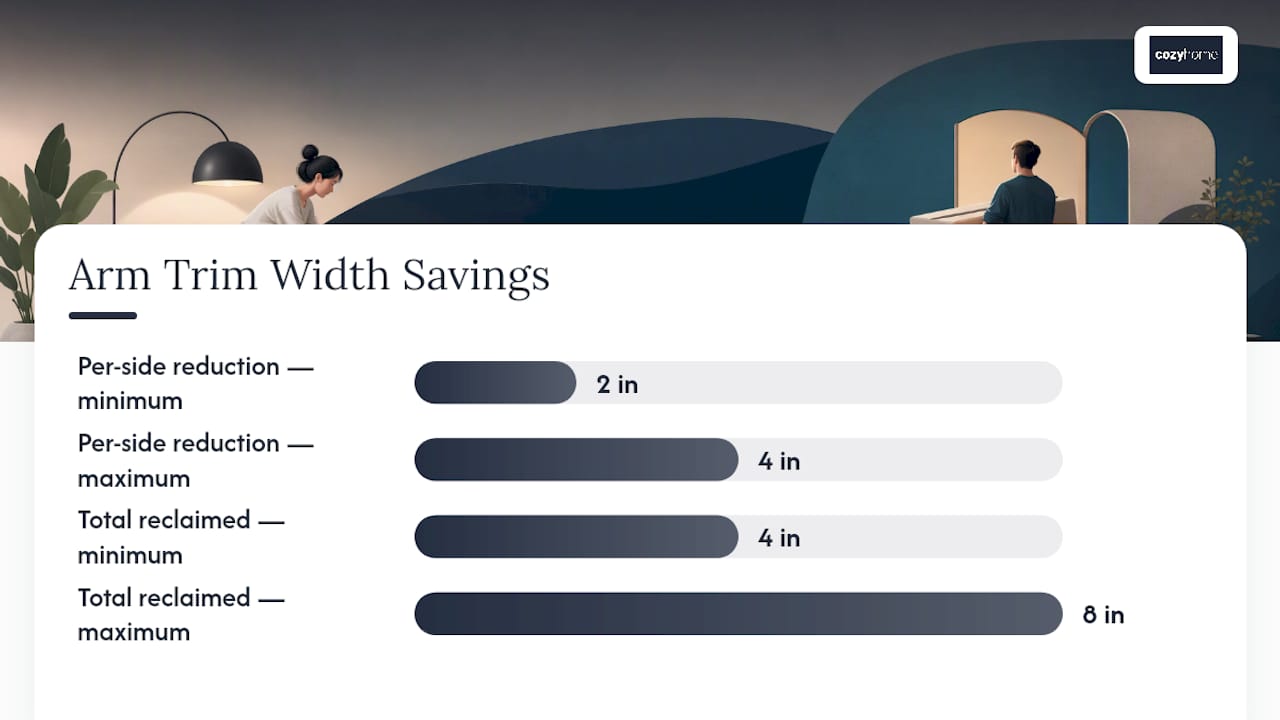
The math on arm width alone makes the case: trimming arms by 2 to 4 inches per side often recovers 4 to 8 inches of total width while keeping the same seating capacity. That’s frequently the exact margin between a sofa that clears a doorway and one that gets sent back.
A typical showroom consultation covers:
- Exact dimensions, built around your measured space rather than a standard size chart.
- Narrow or slim arm options that reclaim width without shrinking the seat.
- Removable, washable covers for households with pets or kids.
- Swatch selection from a wide range of fabric and leather options, so you can test durability and color against your actual room lighting.
The tradeoff is real: custom pieces cost more and take longer to build than a floor-model sofa you can carry home the same day. For a room where standard dimensions simply don’t work, that lead time buys you a piece that fits the first time, instead of a return-and-reorder cycle that costs more in the end.
A Showroom Perspective on Small-Space Sofa Shopping
Homeowners almost always underestimate how much 2 or 3 inches matters until they’re standing in a doorway with a sofa that won’t turn the corner. The tradeoff I see most often is between a lower price on a ready-made piece and the exact fit a custom order provides. My rule of thumb: if your room is a standard rectangle, shop ready-made. If it has any quirk at all, measure twice and go custom.
— Dean P.
Get a Sofa Built Around Your Exact Room, Not a Warehouse Floor Plan
cozyhome furniture solves the problem this guide keeps circling back to: standard sofas are built for standard rooms, and most small spaces aren’t standard. Our made-to-order sofas and sectionals let you specify exact length, seat depth, and arm width, then choose from over 700 fabric and leather options so the piece matches how your household actually lives.
Getting started is straightforward. Bring your room measurements into our Plano showroom, or book a consultation where our staff walks you through configuration and swatches in person. If you already know the general shape you want, browse a modular option like the Ramsay Signature Modular Sectional or the Form Signature Modular Sectional to see how modular pieces work in person before you customize. For homeowners in Plano, Frisco, Allen, and McKinney, a made-to-order sofa means one delivery, one piece, and no guessing whether it will actually fit.
Sources
The measuring and material advice in this guide draws on the sofa-buying research and manufacturer specs below, along with cozyhome’s own how-to resources for custom ordering.
- The Best Sofas for Small Spaces of 2025 (Editor Tested and Rated) | Apartment Therapy
- The 10 Best Sofas of 2026 | Reviews by Wirecutter
- Eames Sofa Compact | Herman Miller
- KIVIK compact 2-seat sofa — IKEA
FAQ
What Is the Comfiest Small Sofa for a Small Space?
Comfort in a small sofa comes down to cushion fill rather than overall size. A dense foam or down-alternative fill supports the body well even at a shallower seat depth, so look for described fill material before assuming a compact sofa will feel thin.
What Is a Good Sofa for a Small Space?
A modular small sectional or a low-profile loveseat with a depth around 31 inches typically works best, since it preserves seating without blocking walking paths. If your room has an unusual angle or narrow entry, a made-to-order sofa built to your exact measurements solves problems standard sizes can’t.
What Is a Good Small, Comfy Couch for a Small Space?
Look for a two-seater or loveseat with tapered legs and slim arms, paired with a supportive cushion fill. Storage-enabled models add practical value by hiding blankets or linens without needing extra furniture.
What Is the Best Sofa for a Small Room?
There’s no single best sofa for every small room, since layout and use matter more than square footage alone. Studios often do best with a storage sleeper, family rooms with a modular sectional in performance fabric, and awkward layouts with a custom-sized piece built around the exact space.