

Repairable or Tough? Table Finish Durability for Daily Use
Polyurethane and professional catalyzed finishes deliver the best table finish durability for everyday moisture, chemical, and abrasion resistance. Epoxy or resin coatings go even further for surface protection, but both trade off against ease of repair. Lacquer and hard-wax oils sacrifice some resistance for finishes you can touch up in an afternoon instead of refinishing the whole top. The right choice depends on whether you’d rather prevent damage or fix it quickly when it happens.
TL;DR:
- Polyurethane finishes, especially water-based, resist moisture and chemicals well, making them suitable for high-use tables like kitchen surfaces.
- Catalyzed finishes offer professional-grade durability but require application with spray equipment and proper ventilation.
- Spot repairs are easier with lacquer or hard-wax oils, which can be blended or reapplied locally, unlike epoxy that needs full surface recoating.
- Application technique, including thin coats, proper sanding, and curing time, significantly affects the longevity of the finish.
- Daily habits such as immediate spill cleanup, avoiding abrasive cleaners, and controlling room humidity help extend the finish’s lifespan.
Table of Contents
- Which Finish Types Hold Up Best on a Table?
- How Much Does Application Technique Affect Durability?
- Everyday Habits That Keep a Finish Looking New
- Choosing the Right Finish for Your Table
- Why Trust This Guidance
- A Practical Take on Durability Versus Repairability
- Sources
- FAQ
Which Finish Types Hold Up Best on a Table?
Every finish on the market solves the durability problem a little differently, and none of them solve it perfectly. Some build a hard shell on top of the wood. Others soak in and let you patch trouble spots without stripping the whole surface. Knowing which category you’re looking at tells you almost everything about how that table will age.
Polyurethane (water-based and oil-based) sits at the top of most durability rankings for good reason. WOOD Magazine places polyurethane varnish highest for moisture and chemical resistance and specifically recommends it for high-wear projects like kitchen tables. Water-based poly dries fast, stays clear over pale woods, and cleans up with soap and water. Oil-based poly ambers slightly over time, takes longer to cure, but many woodworkers feel it lays down a marginally tougher film. Neither is fragile. Both shrug off spilled coffee, wine rings, and the occasional hot plate better than almost anything else you’ll put on a tabletop.
Catalyzed and conversion finishes are the professional-shop upgrade. These systems mix a hardener into the finish right before application, triggering a chemical cure that produces a denser, more chemical-resistant film than a standard varnish. Furniture makers and refinishing shops use them on pieces expected to survive restaurant-level abuse. If you’re commissioning a table built for heavy daily use, this is the category to ask about.
Pre-catalyzed lacquer takes a different path. The catalyst reacts as the finish cures, making it noticeably tougher than traditional lacquer, and WOOD Magazine notes it resists most food, water, and alcohol once fully dry. It still falls short of polyurethane’s overall resistance. What it gives back is repairability: a scuffed lacquer finish can often be blended and re-sprayed in one spot, where a poly repair usually means sanding back a much larger area.
Hard-wax oils and penetrating oil finishes work by soaking into the wood fibers rather than sitting on top as a film. That makes local repair almost effortless. Sand a scratch, wipe on more oil, and it disappears into the surrounding finish instead of leaving a visible patch. The tradeoff is real: film finishes protect better against moisture and chemicals, according to WOOD Magazine, so an oil-finished table needs more frequent attention and will show water rings faster if you’re not careful.
Epoxy and resin finishes belong in their own category entirely. Poured on thick and self-leveling, epoxy creates a glass-hard, nearly waterproof surface that resists almost anything short of a knife blade. It’s the choice for river tables, bar tops, and pieces that need to survive restaurant traffic. The catches: it can yellow under UV exposure, it’s notably heat-sensitive (a hot pan can leave a permanent mark), and repairing a damaged spot usually means recoating the entire surface rather than a quick touch-up.
A few things to keep straight when comparing these categories:
- Water-based polyurethane resists chemicals and moisture well and stays clear over light wood tones.
- Catalyzed finishes offer near-professional durability but usually require spray equipment and ventilation.
- Pre-catalyzed lacquer repairs more easily than polyurethane but resists less overall.
- Hard-wax oil is the easiest finish to spot-repair but needs the most frequent maintenance.
- Epoxy delivers the highest surface protection available but is the hardest and most expensive to fix once damaged.
One myth worth killing here: sheen has nothing to do with durability. A matte finish and a high-gloss finish built from the same product resist scratches and spills identically. Fine Finish Woodworking points out that sheen is purely an appearance choice, so comparing a cured sample under your own dining room lighting tells you more than the label on the can. If you’re weighing a lower-sheen option like this white wax dining table finish, don’t assume the softer look means a softer finish.
How Much Does Application Technique Affect Durability?
The finish you choose only accounts for part of how a table performs over the next ten years. Application quality often matters just as much, and it’s the part most people skip past.
Thin, even coats consistently outperform one thick coat, because thick applications trap solvent underneath and cure unevenly, leaving soft spots that dent and scratch faster. Dust control matters too. Denibbing between coats, meaning a light hand-sand to knock down raised grain and debris, keeps a finish smooth and prevents small particles from becoming permanent texture under the topcoat.
For polyurethane specifically, WOOD Magazine’s application guidance recommends this sequence:
- Apply a thin first coat and let it dry fully.
- Lightly sand with fine-grit paper to knock down nibs and dust, then wipe clean.
- Apply a second thin coat, sand again once dry.
- Apply a third thin coat for a durable, professional-grade result.
Skipping the sanding steps between coats is one of the most common reasons a high-performance product still fails early.
Cure time trips up more people than any other step. “Dry to touch” and “fully cured” are not the same thing. General Finishes’ technical data sheet for its Enduro 2K Clear Poly shows a five-day cure window under stated lab conditions, and putting the table back into daily use before that window closes risks imprinting, chemical softening, or coatings that never fully bond to the wood. Temperature and humidity stretch that timeline further in cooler or damper rooms.
Pro Tip: Ask any finish manufacturer for the product’s Koenig hardness and Taber wear loss figures before you commit. General Finishes reports a Koenig hardness of 59 and Taber wear loss of 34.40 mg for its High Performance water-based polyurethane, along with water and chemical resistance scores. Numbers like these tell you more than a marketing label ever will.
Lacquer and catalyzed systems also release solvents as they cure, so proper ventilation isn’t optional. It’s part of getting a safe, fully hardened finish.
Everyday Habits That Keep a Finish Looking New
Durability on paper only gets you so far. What actually extends a finish’s life is what happens at the table every single day.
Wipe up spills immediately, especially wine, coffee, and anything acidic like citrus or tomato. Use coasters and placemats as a habit, not an afterthought, and skip abrasive cleaners or scouring pads on any finish. General Finishes cautions that even fine dust or silicone contamination from certain sprays can scratch a finish or cause problems if you ever need to touch it up later.
Cleaning method depends on what you’re dealing with:
- Film finishes like polyurethane and lacquer clean up with a damp cloth and mild soap, then a dry cloth to prevent water spotting.
- Oil finishes need a dry or barely damp cloth. Soap can strip the oil’s protective layer over time.
- Never use furniture polish with silicone on a table you might refinish someday. It leaves a residue that fights adhesion.
Small damage doesn’t always mean a full refinish. Lacquer takes spot repairs well. Polyurethane usually needs a light sanding and recoat of the affected area. Penetrating oils just need a fresh coat rubbed into the worn spot. Keeping the room’s relative humidity in a stable range also limits the wood movement that stresses any finish, film or oil, over time. When damage runs deeper than the surface, cracked wood, warping, or finish failure across a large area, call a professional refinisher rather than making it worse.
Choosing the Right Finish for Your Table
Match the finish to how the table actually gets used, not to how it looks in a showroom photo. Start with a few honest questions:
- How heavy is daily use? A family kitchen table with kids and homework sees more abuse than a formal dining table used twice a week.
- Are heat and moisture constant issues? Frequent hot dishes and drink rings point toward polyurethane or a catalyzed finish.
- Do you want to fix scratches yourself? If yes, lean toward lacquer or hard-wax oil over a film finish.
- Are you refinishing an older piece? Test compatibility on a hidden spot first. Solvent-based lacquer applied over an existing water-based finish can wrinkle the old coating.
Before buying, request the product’s technical data sheet, test a cured sample under your own lighting since sheen won’t tell you about durability, and confirm the manufacturer’s recommended care routine matches what you’re willing to do. Choosing the right wood species alongside the finish matters too, since a soft wood under a thin finish dents faster than the same finish over a hardwood.
Why Trust This Guidance
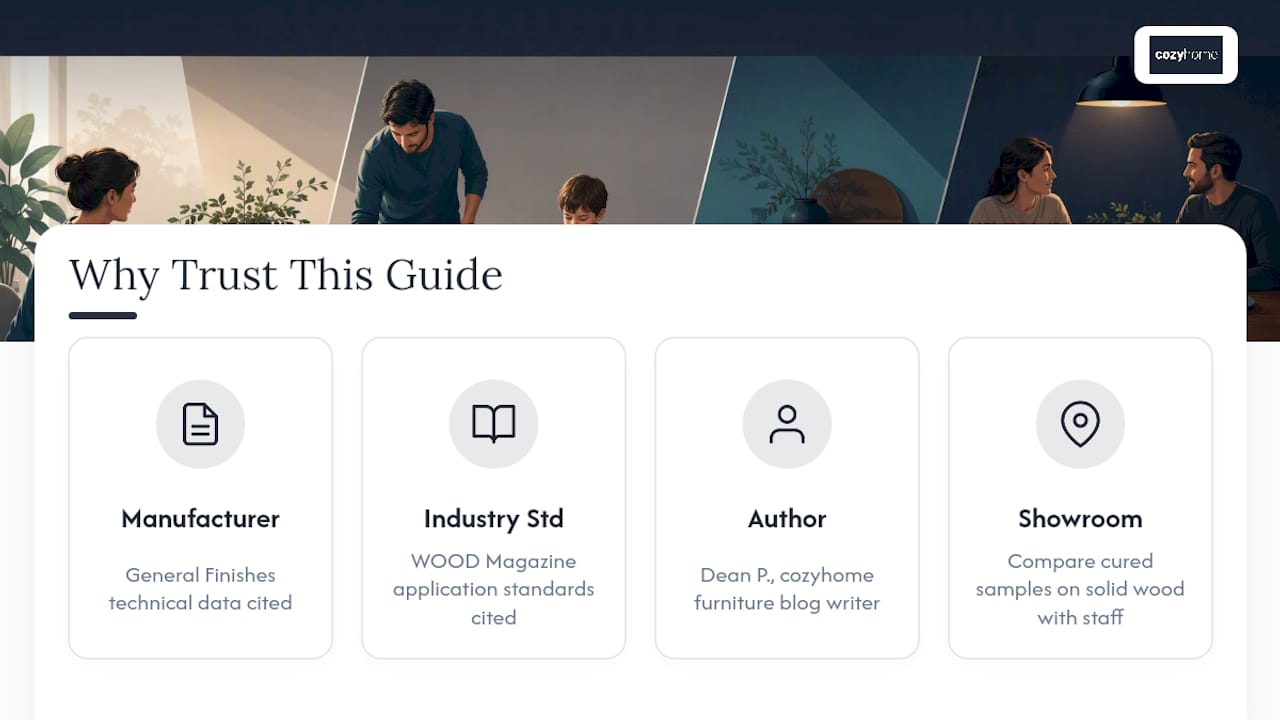
This guide draws on manufacturer technical data from General Finishes and application standards published by WOOD Magazine, two of the most cited references in the woodworking industry for finish performance and procedure. Dean P. covers furniture materials and craftsmanship for cozyhome furniture’s blog. If you’d rather see finish options in person, a local showroom can let you compare cured samples on solid wood tables under real lighting, with staff on hand to talk through construction and customization options.
A Practical Take on Durability Versus Repairability
Most families are better served picking a good water-based polyurethane and living with the eventual touch-up than chasing the toughest possible epoxy shell. Test a cured sample first, follow the maker’s care sheet to the letter, and if you want a second opinion before you decide. Showroom staff at a local furniture store can walk through it with you in person.
— Dean P.
FAQ
What Is the Most Durable Finish for Tabletops?
Water-based or oil-based polyurethane and professional catalyzed finishes offer the best overall resistance to moisture, chemicals, and daily wear, according to WOOD Magazine. Epoxy goes further for pure surface protection but sacrifices easy repairability.
What Is the Most Durable Finish for Wood in General?
Polyurethane consistently ranks highest for general wood durability because it forms a hard, moisture and chemical-resistant film over the surface. Catalyzed finishes push that resistance even further but usually require professional spray application.
What Is the Best Type of Finish for a Wood Table?
For most households, a water-based polyurethane balances strong resistance with manageable maintenance and a clear, non-yellowing look. If you’d rather patch small scratches yourself instead of sanding a wider area, pre-catalyzed lacquer or a hard-wax oil finish trades some resistance for much easier spot repairs.
What Finish Is Best for a Dining Table?
A dining table sees frequent spills, hot dishes, and daily wiping, so polyurethane or a catalyzed finish handles that load best. Families who prioritize easy touch-ups over maximum resistance often choose hard-wax oil instead, accepting more frequent maintenance in exchange for simpler repairs.