

Best Wood Species for Tables: Matching Material to Your Life
For everyday family use, oak or hard maple will outlast the chaos. For a showpiece meant to age into an heirloom, walnut or mahogany wins. For a humid kitchen or a covered patio, teak or acacia shrugs off moisture that would warp softer woods. Mango and sheesham fill the budget slot with real hardwood character at a friendlier price.
The single factor that should drive your decision isn’t which wood looks best in a showroom photo. It’s whether you’re optimizing for daily-use hardness or for the kind of patina that gets better with age. A table that survives toddlers, board games, and dropped keys needs different DNA than one destined for holiday dinners and careful hands.
- Heavy daily use: oak or hard maple, sealed with a durable water-based polyurethane
- Design-forward or heirloom pieces: walnut or mahogany, finished in oil or an oil-varnish blend
- Moisture-prone rooms: teak or acacia, which need only light maintenance thanks to natural oils
- Budget-conscious hardwood: mango or sheesham, usually finished to resemble walnut for a similar appearance
Pro Tip: A $40 finish upgrade often does more for a table’s lifespan than a $400 species upgrade. Ask about the finish before you fall in love with the wood.
Key Takeaways
The best wood for a table depends on how the table will actually be used, with hardness and finish quality mattering more than species alone.
| Point | Details |
|---|---|
| Match hardness to lifestyle | Choose white oak or hard maple for families and daily use; walnut or mahogany for lower-traffic showpieces. |
| Finish matters as much as species | A quality oil-varnish or water-based poly finish can make a softer wood outlast a poorly finished hard one. |
| Ask about grading and moisture | Request species, grade, kiln-drying details, and quartersawn status before you buy or commission. |
| Budget hardwoods still perform | Acacia, mango, and sheesham offer real hardwood durability and grain character at lower price points. |
| See samples in person | cozyhome furniture’s Plano showroom lets you compare walnut, oak, and acacia samples with staff guidance before ordering. |
Table of Contents
- Wood Species for Tables: A Practical Comparison
- How to Choose the Right Table Wood for Your Home
- Which Finish Works Best for Each Wood Species
- How cozyhome Furniture Guides This Decision in Plano
- Why the “Best Wood” Question Is the Wrong One
- Find Your Table Wood at cozyhome Furniture in Plano
- Sources
- FAQ
Wood Species for Tables: A Practical Comparison
Species selection comes down to grain, hardness, and how each wood ages under real use, not just how it photographs in a showroom.
Walnut (American black walnut) carries a Janka hardness around 1010, softer than oak or maple, which means it dents more easily under heavy use. What it trades in toughness it makes up in looks: rich chocolate-brown heartwood and a grain pattern that few other domestic species match, according to the Wood Database. Grading matters more with walnut than with most species. Purdue Extension’s hardwood series notes that top-grade walnut (FAS to F1F) has fewer defects and costs noticeably more per board foot, so a quote that seems high for “just walnut” may reflect the grade, not markup. Best finish: oil or an oil-varnish blend that deepens the color rather than masking it. Best for design-driven dining tables, coffee tables, and pieces meant to be handed down. cozyhome’s Rowan walnut coffee table and Otago walnut coffee table show how this grain reads in a finished piece.
White oak is a durable and genuinely moisture resistant hardwood, with an open grain that needs grain filler or a few extra sealer passes for a glassy finish, per Artisan Furniture Makers. For wide tabletops, quartersawn white oak is worth the upcharge. It resists the seasonal cupping that flat-sawn boards are prone to, especially in homes with big humidity swings between summer and winter. This is the workhorse pick for busy family dining tables.
Red oak shares oak’s open grain and general toughness but trades some of white oak’s moisture resistance for a lower price tag and wider availability. It’s the classic, budget-friendly oak. If you want the look without the top-tier durability premium, red oak gets you most of the way there.
Hard maple is a very hard hardwood with a tight, closed grain that resists dents better than many other woods. That same tight grain makes it excellent for painted finishes or minimal-grain modern looks, since there’s little pore texture to fight against.
Hickory ranks among the hardest domestic species available for furniture, tougher even than maple in most tests. The tradeoff is a busier, more rustic grain and a wood that’s genuinely harder to work with in the shop, which can show up as a higher price for skilled joinery.
Teak’s natural oils give it dimensional stability and real moisture resistance, SICOTAS notes, making it a strong pick for humid kitchens or covered outdoor dining. Genuine teak tends to require very little upkeep.
Acacia offers density and moisture resistance close to teak’s at a friendlier price, with grain character that varies piece to piece. cozyhome’s Freed acacia dining table is a good look at how that grain shows up finished.
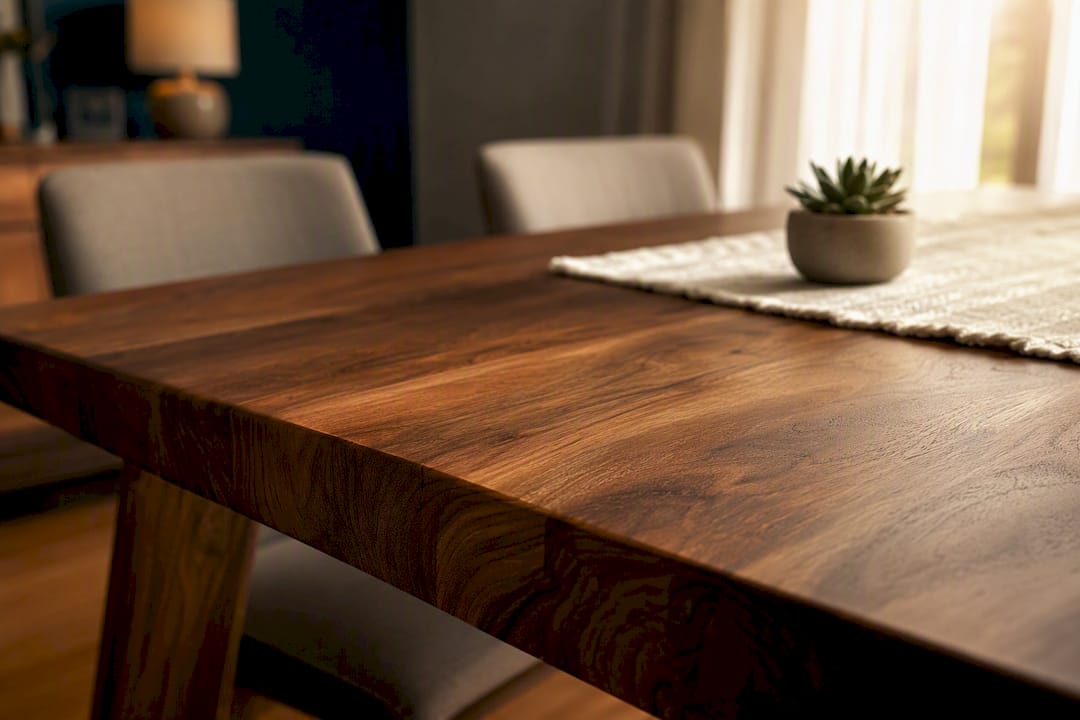
Cherry develops a warm reddish patina faster than almost any other furniture wood, but it’s softer and better suited to formal, lower-traffic tables than a daily-use kitchen surface.
Mahogany brings a classic warm tone and fine, even grain, softer than oak or maple but prized for formal, heirloom-style dining tables where looks outrank abuse resistance.
Mango and sheesham round out the budget tropical tier. Both are durable hardwoods with expressive grain, though grading and availability vary more than with domestic species, so inspect boards in person when you can. cozyhome’s Myron dining table in dark sheesham shows the depth of color this wood can carry.
How to Choose the Right Table Wood for Your Home
Start with an honest usage profile before you fall for a grain pattern.
- Define your usage profile. Kids, pets, and daily meals call for a harder species and a tougher finish. A formal dining room used twice a month can afford a softer, more decorative wood.
- Set your budget range. Domestic hardwoods like oak and maple typically undercut walnut and teak; mango and sheesham undercut nearly everything.
- Decide your finish tolerance. Are you comfortable re-oiling every year, or do you want a set-it-and-forget-it poly topcoat?
- Check your environment. A sunroom or a home with big humidity swings favors moisture-stable species and quartersawn stock over flat-sawn boards.
When you’re talking to a maker or seller, ask these questions directly:
- What’s the exact species and Latin name, not just a trade name?
- What grade is this lumber (FAS, No. 1 Common)?
- Was it kiln-dried, and to what moisture content?
- Is this quartersawn or flat-sawn stock?
- What finish is being applied, and what’s the maintenance routine?
- Does the finish carry any kind of warranty?
- Can this piece be refinished later, or is the finish a one-time application?
Be wary of vague species claims (“mixed hardwood”), no mention of drying or moisture content, or a finish described only as “durable” with no product name behind it.
Pro Tip: Ask to see a finished sample under the same lighting your table will actually live in. Showroom spotlights flatter every wood; your dining room’s overhead fixture won’t.
Which Finish Works Best for Each Wood Species
Species gets the attention, but finish quality often determines how a table performs day to day more than the wood underneath it. A well-finished softer wood can outlast a poorly finished hard one.
- Hard-wax oil: low sheen, easy to spot-repair, needs periodic reapplication. Suits walnut, cherry, and mahogany.
- Oil-varnish blends (like Waterlox): deepens color, moderate durability, simple to maintain. A classic walnut pairing.
- Water-based polyurethane: strong resistance to heat and stains, best on grain-filled open-pore woods like white oak.
- Conversion varnish: the toughest commercial option, common on hard maple tables built for restaurant-grade abuse.
Teak and acacia need the least finish maintenance thanks to natural oils and density, though even they benefit from an occasional oil refresh. Day to day, use coasters and trivets, wipe spills before they set, and address small dents while the wood is still soft enough to steam out. Plan on re-oiling oiled finishes every 6 to 12 months and expect a full refinish on any table roughly once a decade under normal family use.
How cozyhome Furniture Guides This Decision in Plano
cozyhome furniture built its Plano showroom around exactly this kind of decision. Our in-store team walks customers through species samples side by side, from walnut and acacia to sheesham, so you’re comparing grain and color in person rather than guessing from a photo.
- American-made craftsmanship across every custom, made-to-order dining piece
- 700+ fabric and finish combinations, plus real wood samples like our Rowan walnut coffee table and Freed acacia dining table
- Free local delivery and flexible financing across Plano, Frisco, Allen, and McKinney
- Customer reviews that consistently cite craftsmanship quality and hands-on staff guidance
Why the “Best Wood” Question Is the Wrong One
Most articles on this topic chase a single winner, and that’s the wrong frame. The research on hardness, grain, and finishing behavior points the same direction every time: species is only half the equation. A softer wood like walnut with a proper oil-varnish finish will outlast a hard maple table with a cheap, thin topcoat.
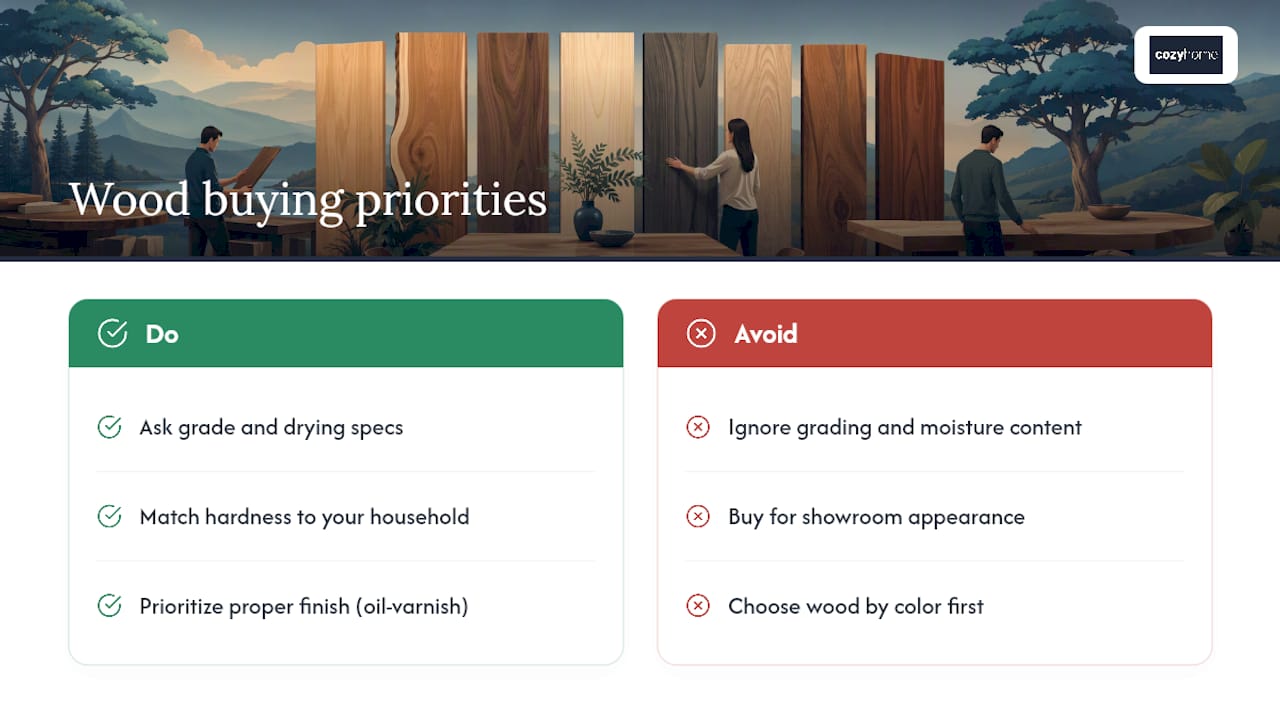
What gets underrated is grading and moisture content, the boring paperwork side of buying wood. A board sold as “walnut” with no grade, no kiln-drying spec, and no mention of whether it’s quartersawn is a bigger risk than choosing between walnut and oak in the first place. Ask the drying and grading questions before you ask about color.
If you take one thing from this guide, prioritize matching hardness to your actual household, not your aspirational one. Buy for the table you’ll have in five years, with the kids, the dog, and the weeknight dinners, not the staged version you picture in the showroom.
— Dean P.
Find Your Table Wood at cozyhome Furniture in Plano
cozyhome furniture turns everything in this guide into an in-person decision instead of a guessing game. Our Plano showroom lets you handle walnut, oak, acacia, and sheesham samples side by side under real light, then work with staff who know exactly which finish family fits your household and your budget.
That direct guidance is the difference between ordering a table online and building one that actually fits how your family lives. Every dining piece is made-to-order and American-made, with 700+ fabric and finish options if you’re furnishing the whole room, not just the table. If a sofa or seating piece is next on your list, our Excelsior sofa shows the same made-to-order approach applied to upholstery. Visit the Plano showroom or start browsing dining collections at Cozyhomefurniture to get a quote on the species and finish that fit your space.
Sources
See the Wood Database, Purdue Extension’s walnut guide, and Centennial Woods’ finish guide for deeper technical detail. For wood countertop and species behavior in adjacent applications, see this remodeling resource.
- Black Walnut | The Wood Database (Hardwood)
- Choosing the Right Wood for a Dining Table Top - Artisan Furniture Makers
- Types of wood finishes — Centennial Woods blog
- Best Wood for Dining Table: 8 Solid Picks – SICOTAS
- Hardwood Lumber and Veneer Series: Black Walnut — Purdue Extension
FAQ
What type of wood is best for tables overall?
There’s no single best wood. Oak and hard maple suit heavy daily use, walnut and mahogany suit design-focused or heirloom pieces, and teak or acacia handle moisture-prone spaces best.
What type of wood is best for dining tables specifically?
For most households, white oak or hard maple offers the best balance of durability and price for a daily-use dining table. For a formal dining room used less often, walnut or mahogany delivers more visual character with less abuse resistance needed.
What are the top types of wood used for furniture?
Walnut, white oak, red oak, hard maple, hickory, teak, acacia, cherry, mahogany, mango, and sheesham cover the range from premium heirloom woods to budget-friendly hardwoods.
How can I identify wood species in furniture?
Look at grain pattern, color, and pore size: oak shows large open pores and prominent grain, maple has a tight closed grain, and walnut shows a chocolate-brown heartwood with a straighter, finer grain than oak. When in doubt, ask the seller for the species and grade directly, or compare against samples in person, as you can at cozyhome furniture’s Plano showroom.