

Sofa Seat Height: 17–19 Inches, Ergonomics Backed and Showroom Tested
Most people are comfortable with a sofa seat height between 17 and 19 inches, measured from the floor to the top of the cushion. Taller folks or anyone with knee or hip issues often do better at 19 to 21 inches, while low-slung lounge sofas around 15 to 17 inches look great but can be tough to rise from. The fastest way to confirm your number is the 90-degree sit test, which we’ll walk through below.
TL;DR:
- Seat heights between 17 and 19 inches suit most adults, but taller or mobility-impaired individuals often prefer 19 to 21 inches for easier standing.
- Cushions compress over time, so selecting a slightly higher seat measurement accounts for long-term sinking and maintains comfort.
- Accurate measurement involves the popliteal height and the 90-degree sit test, with prolonged sitting better revealing comfort and support levels.
- Seat depth and back angle significantly influence perceived height and comfort, requiring tailored combinations for different usage and body types.
- Custom-built sofas based on actual sit tests ensure better adaptation to individual needs, rather than relying on standard catalog measurements.
Table of Contents
- Sofa Seat Height Ranges and Who Each One Fits
- How Do I Measure My Ideal Sofa Height?
- Why Seat Depth and Back Angle Change the Math
- Does Upholstery Change How High a Sofa Feels?
- Getting Your Coffee Table and Armrests Right
- How cozyhome Gets Your Seat Height Right the First Time
- What We See Go Wrong on the Showroom Floor
- Get a Sofa Built Around Your Actual Seat Height
- Sources
- FAQ
Sofa Seat Height Ranges and Who Each One Fits
Eighteen inches is the sweet spot for the average adult body, and most standard sofas sit in the 17 to 19 inch range for exactly that reason. But “average” doesn’t describe everyone in your living room, and a single household often needs to compromise across a few different body types.
Here’s how the range breaks down by who’s actually sitting down:
- Shorter adults (under 5’4"): 15 to 17 inches keeps feet flat without dangling.
- Average height adults: 17 to 19 inches, with 18 inches as the most universally comfortable middle ground.
- Taller adults (over 6’0"): 19 to 20 inches prevents knees from riding up above hip level.
- Mobility needs or seniors: 19 to 21 inches makes standing up dramatically easier since less leg power is needed to push off.
One detail that trips people up: the number on a spec sheet isn’t what you’ll feel after six months of use. Cushions compress. A listed 18 inch seat height can drop by roughly an inch depending on foam density and fill, so if you’re right on the border between two ranges, lean toward the higher one.
How Do I Measure My Ideal Sofa Height?
Your body has its own built-in measuring stick, and it’s called popliteal height. That’s the distance from the floor to the back of your knee when you’re standing with your leg bent at 90 degrees. Measure it while wearing the shoes or socks you’d normally wear at home, and you’ve got a solid starting number for seat height, since your feet should rest flat when seated.
From there, the 90-degree sit test confirms whether a specific sofa works for your frame. Sit all the way back, feet flat on the floor, and check your knee angle. If your knees point upward higher than your hips, the seat is too low. If your feet barely reach the floor or your thighs feel like they’re dangling, it’s too high. Both extremes strain your lower back over time, which lines up with what Mayo Clinic says about keeping knees roughly level with hips to reduce pressure and support circulation.
Measuring the sofa itself is simple: run a tape measure from the floor straight up to the top of the seat cushion, not the frame underneath it. Press down gently first, since an uncompressed cushion will read taller than it sits once you’re actually on it.
Pro Tip: Don’t just perch for thirty seconds in a showroom. Sit for at least three to five minutes, lean back, cross your legs, then stand up the way you would at home. Compression and sliding issues only show up after the first minute or two.
A quick checklist for testing any sofa:
- Measure your popliteal height at home before you shop.
- Sit back fully and check your knee angle against your hips.
- Press the cushion to test for compression before measuring.
- Sit for several minutes, not seconds, to feel how the foam settles.
- Stand up from the seat to judge how much effort it takes.
Why Seat Depth and Back Angle Change the Math
Seat height doesn’t work alone. Seat depth (the distance from the front edge of the cushion to the backrest) and back angle both shift how a given height actually feels once you sit down. A sofa listed at 18 inches can feel completely different depending on whether the seat is 20 inches deep or 26 inches deep.
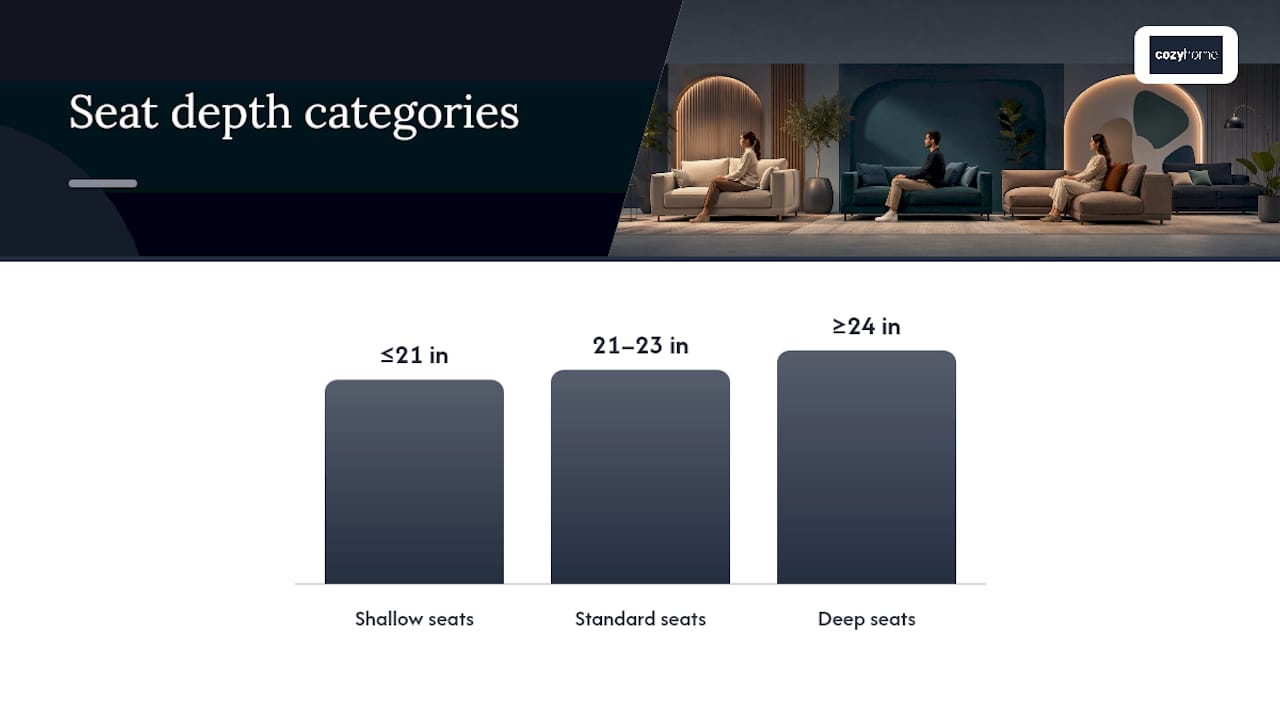
Shallow seats, generally under 21 inches, pair well with a slightly higher seat height because they let shorter people keep their back against the cushion while still touching the floor. Standard depths between 21 and 23 inches work for most body types and most living rooms. Deep seats over 24 inches are built for lounging, stretching out, or curling up with a blanket, but they demand a trade off: if the seat is too deep for your leg length, your feet lift off the floor and your lower back loses contact with support.
A few combinations that tend to work well:
- Standard height with standard depth, for households that use the sofa for everything from dinner to movie night.
- Higher seat with shallower depth, for older adults or anyone prioritizing ease of standing.
- Lower seat with deep cushions and reclined back angle, for dedicated lounging spaces.
Reclined back angles also change how deep a seat can comfortably be, since a more laid-back angle lets your body sink further without losing lumbar contact, something Cleveland Clinic ties directly to reduced back pain risk during long stretches of sitting.
Does Upholstery Change How High a Sofa Feels?
Cushion fill matters more than most shoppers expect. High-density foam holds its shape and keeps you closer to the listed seat height for years. Softer down-blend cushions feel plush at first but compress faster, quietly lowering your effective seat height every month you own the sofa.
Material affects things too. Fabric creates more friction against clothing, which helps you stay put at your intended sitting position. Leather is slicker, and that slide can nudge you into a lower, more reclined posture than the seat height suggests on paper, which matters if you’re already picking a taller seat for mobility reasons.
Before buying, whether online or in a showroom, ask about:
- Foam density (higher density numbers mean less long-term compression).
- Fill type (foam core versus down-wrapped versus fiber blend).
- Expected compression range for that specific cushion construction.
If sliding and material feel matter to your decision, our guide on choosing fabric or leather for custom upholstery breaks down how each option behaves under daily use.
Getting Your Coffee Table and Armrests Right
Seat height doesn’t exist in isolation from the rest of your living room. A coffee table that sits at the same height as your seat cushion, or an inch or two lower, keeps reaching for a drink or a remote easy instead of awkward. Armrests work best 6 to 8 inches above the seat cushion; much higher and your shoulders hike up when you rest an arm, much lower and you lose support entirely. If you’re furnishing a smaller space, our apartment sofa sizing guide covers how these proportions shift in tighter rooms, and pairing scale with your wall art sizing keeps the whole room visually balanced.
How cozyhome Gets Your Seat Height Right the First Time
Guessing at seat height from a product photo is how most fit mistakes happen. At cozyhome furniture, every sofa is made-to-order, which means seat height, depth, and cushion firmness get dialed in around the people actually sitting on it, not a warehouse standard built for nobody in particular.
Dean P. and our Plano showroom team walk customers through real sit tests on floor samples before anything gets built, checking knee angle, standing ease, and cushion feel across different household members. If you’re weighing your options, our breakdown of custom versus stock sofas explains why that extra step matters. Before your visit, bring your popliteal measurement, a rough idea of your preferred firmness, and any mobility considerations for people who’ll use the sofa daily.

What We See Go Wrong on the Showroom Floor
The mistake we catch most often is buyers testing a sofa for ten seconds, deciding it feels fine, and ignoring cushion compression entirely. The second most common one is picking a gorgeous low-profile sofa without checking whether the household’s oldest or least mobile member can actually get out of it.
Our advice stays the same every time: measure your popliteal height first, sit for several minutes instead of a quick perch, and physically stand up the way you would after dinner. If two people in your home have very different proportions, plan for that difference before you fall in love with a fabric.
— Dean P.
Get a Sofa Built Around Your Actual Seat Height
Off-the-shelf sofas force you to accept whatever height the manufacturer picked for an average buyer who isn’t you. cozyhome furniture builds each piece to order, which means the seat height, depth, and cushion firmness you tested on our showroom floor is exactly what arrives at your door, not an approximation.

Our Plano showroom lets you run the full sit test on real samples like the Excelsior sofa in cream or the Excelsior in gray, so you know exactly how a seat height feels before committing to fabric and frame. Bring your popliteal measurement and a sense of your household’s mobility needs, and our team will help you land on the seat height, depth, and firmness that fits your actual body, not a catalog average. Stop by the showroom or start a fitting consult through our site to get your dimensions right from the first sketch.
Sources
- Back pain - Symptoms and causes | Mayo Clinic
- Lumbar spine - Cleveland Clinic
- Experts say this is the perfect sofa height for maximum comfort | Good Housekeeping
- Sofa ergonomics: seat height, depth and back angle – Maxi Home
FAQ
What is the best height for a sofa seat?
For most adults, 17 to 19 inches from floor to cushion top feels most comfortable, with 18 inches often cited as the ideal middle ground. Taller people or those with mobility needs typically do better at 19 to 21 inches.
What sofa has a 20 inch seat height?
Sofas built for taller adults or accessibility needs often use a 19 to 21 inch seat height, and cozyhome furniture can build a custom piece to that exact specification during a showroom fitting. Standard retail sofas rarely list heights this precise without custom sizing.
What is the most comfortable seat height?
Comfort depends on your popliteal height, the distance from floor to the back of your knee, more than any single universal number. The 90-degree sit test, where knees stay level with hips and feet rest flat, is the most reliable way to confirm what’s comfortable for your body.
Is 15 inches too low for a sofa?
Fifteen inches isn’t too low for lounging or for shorter adults, but it can make standing up harder for taller people or anyone with knee or hip limitations. If mobility is a concern in your household, a seat closer to 19 to 21 inches is a safer choice.