

Sofa for Tall People: The Real Dimensions That Matter
If you’re tall, prioritize seat depth first, then seat height and back height. Seat depth should be notably deeper than standard models, which are around 22 inches, to suit tall people. Extra deep seats are especially recommended for full-length lounging or very long legs. Once seat depth is addressed, look for a seat height generally in a higher range suitable for tall users, and a back height tall enough to support neck and head comfortably.
Here’s the short version of how to shop:
- Deep seat: preferred for comfortable thigh support
- Extra-deep seat: ideal for full-length lounging or very long legs
- Seat height: usually adjusted upward for longer legs
- Back height: important for head and neck support
- The fix when stock won’t fit: go custom, through cozyhome furniture or a comparable maker, rather than compromising on any of the above
Key Takeaways
Getting a sofa for tall people right comes down to seat depth first, seat height and back height second, and custom sizing whenever stock options can’t match all three.
| Point | Details |
|---|---|
| Prioritize seat depth | Target 28 inches minimum, 35 inches or more if you want full-length lounging room. |
| Get seat height right | Aim for 18 to 20 inches, adjusting upward for longer legs. |
| Back height for neck support | Look for 36 inches or more if head and neck support matters to you. |
| Measure before you shop | Record your inseam, torso length, room footprint, and doorway clearance first. |
| Go custom when stock falls short | cozyhome furniture builds sofas to exact seat depth, seat height, and back height with 700+ fabric and leather options. |
Table of Contents
- What Makes a Sofa for Tall People Actually Comfortable
- How to Measure Yourself and Your Room Before You Shop
- Frame, Suspension, and Cushions That Hold Up Over Time
- Sofa Styles Built for Taller Frames
- Should You Buy Stock or Go Custom?
- Testing Fit Before You Buy
- Sources
- FAQ
What Makes a Sofa for Tall People Actually Comfortable
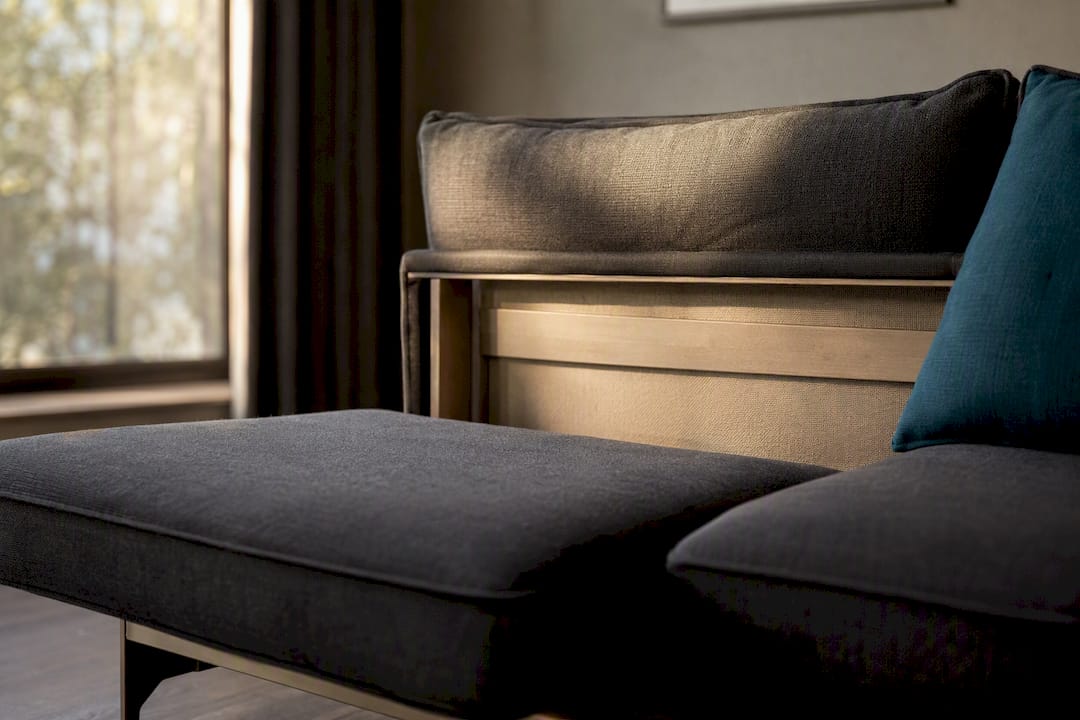
Seat depth is the dimension that decides whether a sofa works for a tall body, and it’s also the one most shoppers overlook. A standard sofa runs around 22 inches deep, which leaves your knees hanging past the front cushion edge the moment you sit back. Anything at 28 inches or more counts as deep. Cross 35 inches and you’re in extra-deep territory, built for people who want to stretch out fully rather than just sit upright.
Manufacturers list two different depth numbers, and mixing them up is the single most common shopping mistake. Seat depth is the usable space between the front edge of the cushion and where the back cushion starts. Overall depth includes the back cushion and frame, so it always reads larger. Compare seat depth, not overall depth, or you’ll end up with a sofa that measures great on paper and still feels cramped.
Pro Tip: A sofa listed at “38 inches deep” might only give you 24 inches of actual seat. Ask the retailer for the seat-depth number specifically, cushion front to backrest, before you order anything.
The other three measurements matter almost as much:
- Seat height of 18 to 20 inches keeps your knees roughly level with your hips. Taller legs benefit from the top of that range or slightly above it.
- Back height of 36 inches or more supports your neck and shoulders instead of stopping mid-back. Some big-and-tall sofa lines build in reinforced frames and taller backrests specifically for this reason, sometimes with per-seat weight ratings of 350 pounds or more.
- Overall sofa length matters if you plan to stretch out fully. A sofa around 90 inches or longer, or a sectional with a chaise, gives you room to lie down without your feet dangling off the arm.
Room size will push back against all of this, and that tension is real. A 96-inch sofa doesn’t fit every living room, which is one reason sectionals and modular pieces come up so often in tall-people buying guides.
How to Measure Yourself and Your Room Before You Shop
Grab a tape measure and give yourself fifteen minutes before you start browsing. Skipping this step is how people end up with a beautiful sofa that doesn’t fit their body or their doorway.
- Measure your inseam and torso length. Your inseam tells you roughly how much seat depth you need; your torso length tells you how high the backrest should go.
- Measure the intended footprint in your room, including walkways, so the sofa doesn’t block traffic once it’s in place.
- Measure every doorway, hallway turn, and stairwell the sofa has to pass through, plus elevator dimensions if you live in a building with one.
- Write down manufacturer specs side by side: seat depth, seat height, cushion thickness, and overall depth for each model you’re considering.
- Call ahead if you’re unsure about clearance. Delivery teams can often provide dimension drawings or confirm tight spots before the truck shows up.
Pro Tip: Cut a piece of cardboard or painter’s tape to your target seat depth and sit on a hard chair with it under your legs. It sounds low-tech, but it’s the fastest way to feel whether 28 inches or 35 inches is right for your build. For a full checklist before placing an order, cozyhome’s dimensions guide for custom sofa orders walks through exactly what to record.
Frame, Suspension, and Cushions That Hold Up Over Time
A deep seat only stays comfortable if what’s underneath it can support the added length and the added weight that often comes with a taller frame. Three things decide that.
- Frame: Kiln-dried hardwood with corner blocking resists sagging far longer than softwood or particleboard. Ask about warranty length. It’s one of the clearest indicators of how the frame was actually built.
- Suspension: Sinuous springs are common and comfortable for standard use, but pocket coils generally hold their shape longer under sustained weight and deep seating.
- Cushions: High-resilience foam, layered over a coil or foam core, keeps a deep seat from feeling like a pit. Ask for the foam density number rather than trusting how it feels in the showroom that day. It softens.
Pro Tip: Press your palm into the cushion and count how long it takes to spring back. Under two or three seconds is a good sign; foam that stays dented is foam that will sag within a year or two.
Sofa Styles Built for Taller Frames
Different formats solve different parts of the tall-person problem, and picking the right one depends on what you need most: legroom, head support, or flexibility in a tight room.
- Extra-deep sofas are the go-to for full-length lounging, though a wide extra-deep piece can dominate a smaller room, so measure your footprint first.
- Sectionals with a chaise let you add legroom exactly where you need it, a solution editorial buying guides return to often because a chaise solves length without forcing an oversized single sofa into the room.
- High-back sofas and recliners matter most if neck and head support is your priority. Confirm back height specifically, since “tall” in a product name doesn’t always mean the backrest actually is.
- Modular pieces combine a deep seating module with a chaise, giving you legroom and walkway clearance at the same time. If your space is oddly shaped, this is often the format worth exploring.
Should You Buy Stock or Go Custom?
Run this quick check before you commit: do your body measurements and your room match an available deep or extra-deep stock sofa? If yes, buying off the floor is faster and usually cheaper. If your proportions fall outside typical ranges, or your room has an unusual layout, custom is the more reliable path.
Stock sofas like IKEA’s KIVIK, with a seat depth around 23.6 inches, land in solid deep territory for a budget-friendly option, though seat height around 17.75 inches may need adjusting for very long legs. That’s the trade-off with stock: you’re accepting someone else’s compromise on at least one dimension.
Custom removes that compromise entirely. It solves exact seat depth, seat height, and back height simultaneously, along with fabric, leg style, and delivery timing built around your home. Some custom makers use a rough rule of thumb, adding about an inch of backrest height for every three inches of a customer’s height above average, to keep neck support proportional as the sofa scales up.
- Stock: faster, generally cheaper, limited to existing size ranges
- Custom: precise fit on every dimension, more control over materials, longer lead time
Pro Tip: If two out of your three key measurements, seat depth, seat height, back height, don’t match a stock option, don’t force it. That’s your signal to go custom rather than settle. You can start by reviewing how the custom sofa design process works before booking a showroom visit.
Testing Fit Before You Buy
Whether you’re shopping in person or online, a few concrete checks separate a sofa that fits from one that just looks right in a photo.
- Sit all the way back with your feet flat and check whether your knees bend comfortably; then lie fully across the seat to test length and head support.
- Press on the cushion and watch how quickly it rebounds, a fast recovery signals durable foam.
- Online, request the seat-depth figure specifically (not overall depth), along with frame material, suspension type, and foam density.
- Confirm shipping dimensions and doorway clearance before you order, not after delivery is scheduled.
- Ask about warranty length and cushion replaceability. Vague answers on either one are a red flag worth walking away from.
Why Custom Sizing Tends to Win for Taller Bodies
Stock sofas ask you to compromise on at least one dimension, usually seat depth or back height, because they’re built around average proportions. Custom sizing removes that trade-off entirely, letting style and comfort coexist instead of competing. If you’re serious about getting this right, measure your body and your room first, then bring those numbers into a showroom and test them against something real.
— Dean P.
Get a Sofa Built Around Your Actual Height
Stock deep sofas solve part of the problem; they rarely solve all three dimensions at once. cozyhome furniture builds sofas to your exact seat depth, seat height, and back height, with more than 700 fabric and leather options and in-store guidance to walk you through sizing before anything gets built.
Every piece is American made and delivered locally at no charge, with financing available if you’d rather spread out the cost. A good starting point is the Excelsior sofa in cream, which shows the kind of deep-seat silhouette that adapts well to custom sizing. If your room runs small, pairing a deeper sofa with a lighter visual approach, like removable wallpaper for tight spaces, keeps the room from feeling boxed in. Bring your measurements into the Plano showroom, or start browsing options online, and let’s build the sofa that actually fits you.
Sources
FAQ
What Is the Best Sofa for a Tall Person?
The best option is a deep or extra-deep sofa, seat depth of 28 inches or more, paired with a back height of 36 inches or more; when stock models don’t match your exact proportions, a custom build from a maker like cozyhome furniture solves all three dimensions at once.
What Is the Best Sofa Height for Tall People?
A seat height between 18 and 20 inches works for most tall adults, with people who have longer legs often preferring the higher end of that range or slightly above it.
Do They Make Couches for Tall People?
Yes. Several manufacturers offer deep and extra-deep sofas, and big-and-tall specialty lines build in reinforced frames and taller backrests specifically for larger or taller users.
Who Makes Furniture for Tall People?
Big-and-tall specialty brands cover general size ranges, while custom furniture makers like cozyhome furniture build sofas to a customer’s exact seat depth, seat height, and back height rather than fitting them into a preset size.