

Homeowners: Sofa Arm Styles That Save 8–12 Inches of Seat Width
Rolled and English arms suit lounging and traditional rooms, track and tuxedo arms fit modern or small spaces, and shelter or padded arms create cozy, media-room seating. The one-line rule: pick your arm style based on how you sit, not how it looks in a showroom photo. The rest comes down to inside-arm height, seat-width loss, and how the upholstery reads on curves versus straight lines.
TL;DR:
- The inside-arm height is more important than overall sofa width for comfort, with 2 to 3 inches above the cushion being ideal for lounging.
- Bulky rolled or overstuffed arms can reduce seat capacity by up to 12 inches per side, affecting how many people can sit comfortably.
- The room’s style and layout dictate the best arm profile, with formal spaces favoring English roll or tuxedo arms and small spaces benefiting from track or recessed arms.
- Upholstery choices like leather and fabric influence visual appeal and wear, with leather highlighting curves and fabric patterns being more prominent on flat or squared arms.
- Testing sofa comfort in-store, especially the arm height and seat width, is crucial for ensuring the piece suits your habits and space conditions.
Table of Contents
- What Are the Different Sofa Arm Styles?
- How Arm Height and Width Affect Comfort
- Matching Arm Styles to Your Room and Lifestyle
- How Fabric and Leather Change the Way an Arm Looks and Wears
- Your In-Store Measure-and-Test Checklist
- Why a Custom Showroom Makes Arm-Style Decisions Easier
- What Actually Matters When You’re Choosing Sofa Arm Styles
- Sources
- FAQ
What Are the Different Sofa Arm Styles?
Sofa arm styles fall into a handful of recognizable families, and once you know what to look for, you’ll spot them instantly in any showroom or catalog photo. Furniture insiders sometimes call this part of the frame the “arm” or the “sofa arm,” though you’ll occasionally hear it referred to informally as the sofa’s “handrest,” especially in older upholstery trade language.
Here’s what to look for in each profile:
- Rolled/English roll: A curved top that scrolls outward or inward, softening the whole silhouette. Best for traditional living rooms and lounging.
- Track/straight: A narrow, clean rectangular arm with no curves. Best for modern rooms and tight floor plans, since it saves usable seating width in small spaces.
- Tuxedo: The arm sits level with the back cushion, creating a boxy, tailored line. Best for formal or contemporary spaces.
- Shelter/high-sided: A tall, wraparound arm that curves into the back. Best for media rooms and reading nooks where you want to sink in.
- Panel/box: A flat, squared-off arm with sharp corners, similar to tuxedo but often slightly shorter. Best for transitional or minimalist interiors.
- Flared: The arm widens as it rises, like a trumpet shape. Best for eclectic or vintage-inspired rooms.
- Pillow/pillowtop: A loose or attached cushion sits on top of a simple frame. Best for casual family rooms.
- Pleated/ruched: Fabric gathers in folds along the arm front. Best for rooms with soft, textured decor.
- Sock/sleeve: A slim, slipcover-style arm with no wood frame showing. Best for relaxed, farmhouse, or coastal spaces.
- Recessed: The arm sits lower than the back, almost disappearing visually. Best for small apartments where every inch counts.
Several named variants, including the key arm, the Lawson arm, and the parachute arm, are close cousins of these core shapes, and LuxDeco’s rundown of arm and leg types is worth a look if you want to go deeper on naming conventions.
How Arm Height and Width Affect Comfort
The single most useful measurement in this whole shopping process isn’t the sofa’s overall width, it’s the inside-arm height, meaning the distance from the top of the seat cushion to the top of the arm. This number tells you whether you can actually lean or nap against that arm comfortably, and it matters far more than how tall the arm looks from across the room, according to Houzz’s arm-style breakdown.
A padded arm sitting a few inches above the cushion supports your head and neck well for napping. Arms much lower than that usually need a throw pillow to feel supportive; arms much higher can crowd your shoulder when you sit upright.
- Low inside-arm height can be less supportive for lounging and often benefits from added pillows for comfort.
- A medium inside-arm height generally provides comfort suitable for sitting and light reclining.
- High inside-arm heights typically provide good support for napping and reading activities.
Width matters just as much. Bulky rolled or overstuffed arms can eat 8 to 12 inches of seat width per side, while slim track arms typically take up only a couple of inches. That difference can mean losing an entire seat on a three-cushion sofa without anyone noticing until moving day.
Pro Tip: Measure the seat width between the arms, not the sofa’s total outside width. That inside number is what actually determines how many people fit.
Matching Arm Styles to Your Room and Lifestyle
The room dictates the arm as much as your taste does. A formal living room built for entertaining calls for a different profile than a family room built for Sunday football.
- Formal living room: English roll or tuxedo arms read polished and pull double duty as a visual anchor.
- Family room: Pillowtop or sock arms feel forgiving and hold up to daily use.
- Apartment or small space: Track, recessed, or tuxedo arms save width and keep sightlines open, a point echoed in AllModern’s modern sofa design guide.
- Media room: Shelter arms create a cocooning feel, though they can block sightlines in an open floor plan.
- Sunroom: Flared or rolled arms suit a relaxed, airier aesthetic without feeling heavy.
Ceiling height plays a role too. A low-ceilinged room can feel cramped with tall shelter arms, while a sofa with track arms tucked under an eight-foot ceiling breathes easier. If you’re weighing scale decisions across the whole room, choosing a rug size and placement alongside your sofa footprint keeps proportions honest. The same logic that guides matching interior door styles to a room’s formality applies here: an arm’s visual weight should match the trim and scale already in the space.
How Fabric and Leather Change the Way an Arm Looks and Wears
Upholstery choice changes an arm’s whole personality. Busy patterns tend to get lost on curved rolled arms, where the fabric bends and shifts the print, but they read cleanly on flat track or panel arms. Solid fabrics and leather, on the other hand, show off a curved profile’s shape instead of fighting it.
- Leather on rolled arms highlights the curve but needs firmer padding underneath to avoid sagging over time.
- Leather on track arms looks crisp and tailored with minimal upkeep beyond regular conditioning.
- Sock or slipcover arms offer washable, casual styling but require re-tucking the fabric periodically to keep a neat shape.
- Pleated arms show off texture and seam detail better than a loud print, a point worth remembering if you’re drawn to patterned fabric, according to LuxDeco.
Wear shows up first at the top edge of the arm, where hands and elbows land most often, so a durable performance fabric there pays off no matter which silhouette you choose.
Your In-Store Measure-and-Test Checklist
Before you commit, walk through these steps in the showroom rather than guessing from a photo online.
- Measure your room’s opening, including doorways and hallways the sofa needs to pass through.
- Measure the sofa’s overall width, then subtract the arm width on each side to find usable seat width.
- Check inside-arm height by sitting down and resting your arm or head against it.
- Sit, lean, and pretend to nap in the actual spot you’d use most, not just the center cushion.
- Count usable seats based on that inside seat width. A cushion needs roughly 20 to 22 inches per person to feel comfortable, so measuring between the arms rather than the outside edges prevents an unpleasant surprise later.
- Ask the retailer about padding type, custom arm width or height options, and available leg or foot styles.
Pro Tip: If two people in your household have very different comfort preferences, test the same sofa model with different arm heights side by side. A couple of inches makes a bigger difference than most shoppers expect.
Why a Custom Showroom Makes Arm-Style Decisions Easier
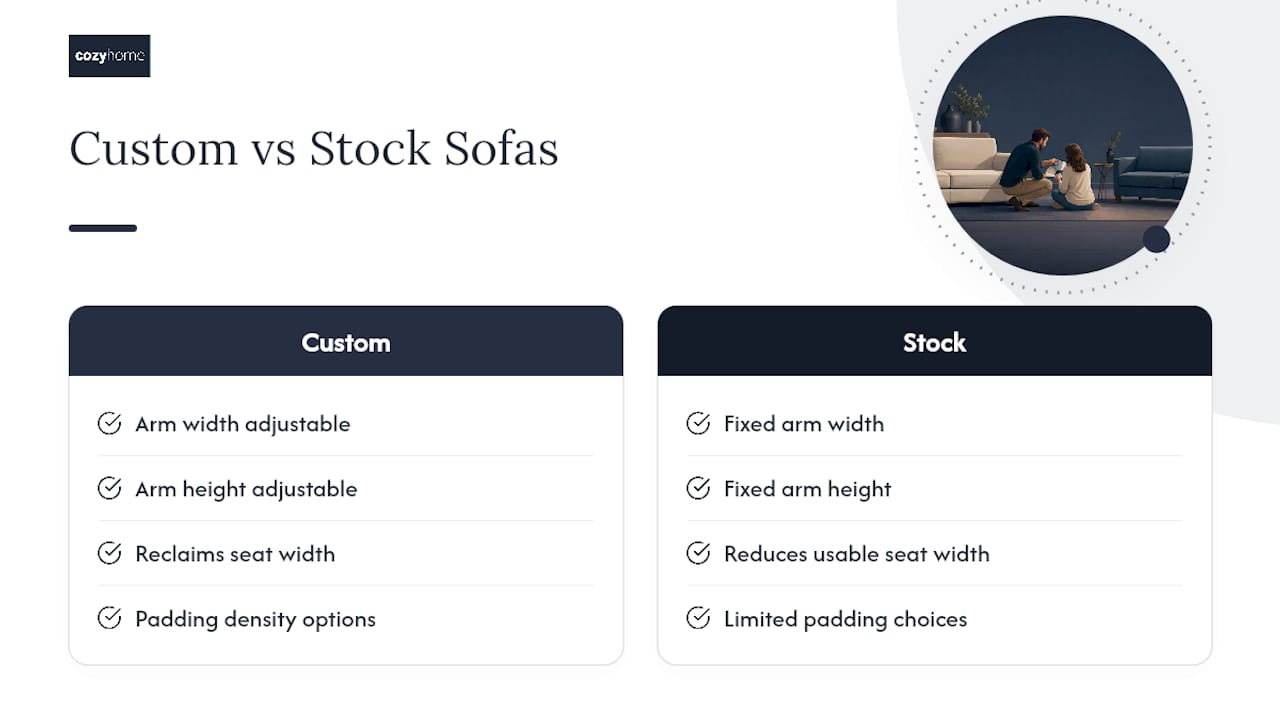
Some custom furniture makers build sofas to fit the room and the people using it, not the other way around. That means arm width and height aren’t fixed decisions you’re stuck with. If your space is narrow, arm profiles can be adjusted to reclaim seat width without giving up the look you want. If your household needs a mix of loungers and upright sitters, they can guide you through padding density and inside-arm height options across fabric and leather selections.
Our guide to designing a custom sofa from scratch covers how these choices come together, and our comparison of custom versus stock sofas explains why off-the-shelf arm dimensions rarely fit every room the same way.
What Actually Matters When You’re Choosing Sofa Arm Styles
Most furniture guides treat arm style as a purely visual decision, ranking profiles by how they photograph. That’s backward. The rolled English arm and the track arm can look equally beautiful in a showroom and behave completely differently once you live with them for six months.
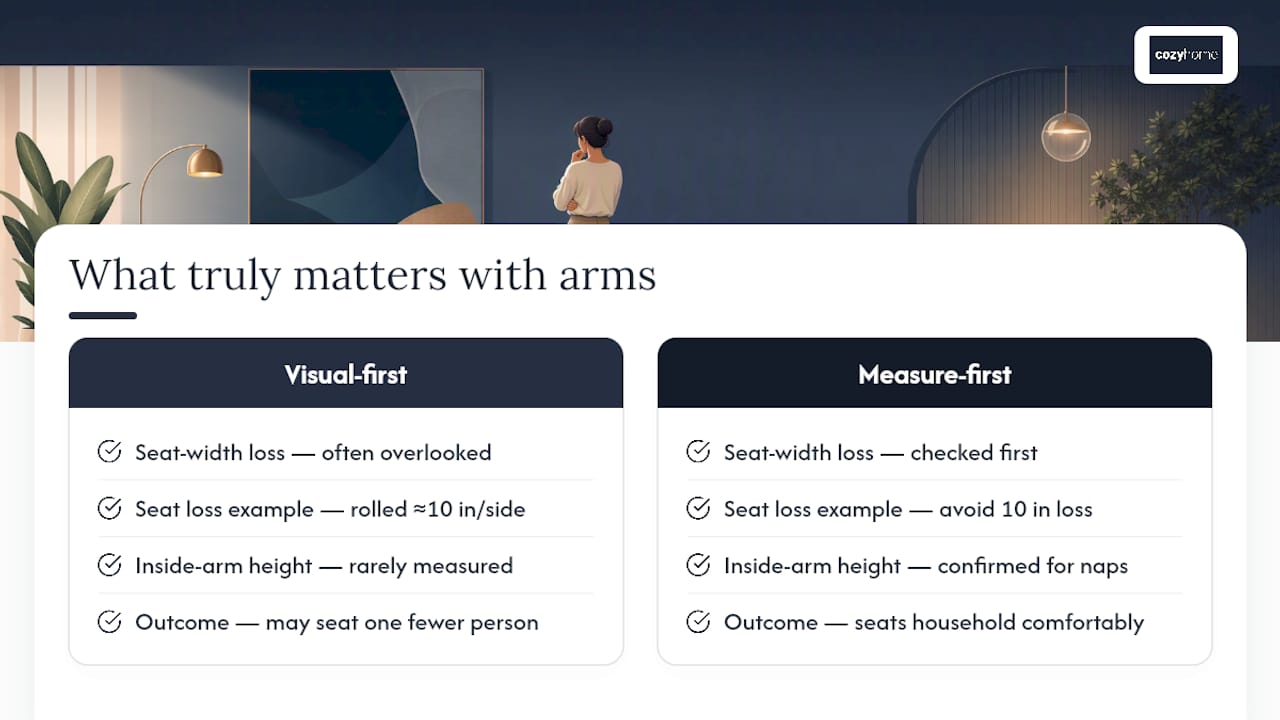
The real gap in conventional advice is that it skips seat-width loss almost entirely. A rolled arm eating 10 inches per side isn’t a minor styling detail. It’s the difference between hosting five people comfortably and squeezing in four with someone perched on the ottoman. Inside-arm height gets even less attention, despite being the number that determines whether the sofa actually gets used for napping or just sits there looking nice.
If you take one thing from this guide, prioritize the tape measure over the swatch book. Pick your fabric and finish after you’ve confirmed the arm height feels right against your body and the seat width still fits your household. Style should be the tiebreaker, not the starting point.
— Dean P.
Sources
- Sofa Secrets: How to Choose the Right Arm Style — Houzz
- Understanding sofa arm styles when choosing your next couch — Build & Construct
- Types of sofa arms & sofa legs — LuxDeco
- Modern sofa designs 101 — AllModern
FAQ
What Are the Different Types of Sofa Arms?
The main families are rolled or English roll, track or straight, tuxedo, shelter or high-sided, panel or box, flared, pillowtop, pleated, sock or sleeve, and recessed arms, each suited to a different room style and comfort level.
What Type of Sofa Arm Is the Most Comfortable?
Padded arms with an inside-arm height of about 2 to 3 inches above the seat cushion tend to feel the most comfortable for leaning and napping, since that height supports the head and neck without extra pillows.
What Is the 2 2 1 Rule for Sofas?
This isn’t a standard arm-style measurement; definitions vary depending on the source, so it’s best treated as informal shorthand rather than an industry rule.
What Are the Arms of a Sofa Called?
They’re simply called the sofa’s arms, though the specific shape often gets its own name, such as rolled, track, tuxedo, or shelter arm, depending on the profile.