

The Role of a Rug in Smart Furniture Arrangement
A rug anchors furniture, defines separate zones in a room, and balances scale, color, and texture so a layout feels finished instead of scattered. Three rules make that happen every time:
- Zone first, rug second. Decide what each seating or dining area needs to do before you shop for a rug size.
- Follow the furniture. Use front-legs-on or all-legs-on placement depending on your room’s proportions, not the other way around.
- Leave a perimeter gap. Keep exposed floor around the edges so the rug reads as a design choice, not wall-to-wall carpet.
Keep reading for exact measurements, room-by-room layouts, and the mistakes that trip up even careful homeowners.
Key Takeaways
A rug’s core job in any furniture arrangement is to anchor the pieces, define the zone, and size correctly enough that nothing looks disconnected from the floor.
| Point | Details |
|---|---|
| Zone before size | Decide what furniture grouping the rug needs to define before shopping for dimensions. |
| Leave 18 to 24 inches | Keep this perimeter gap of exposed floor in most rooms so the rug doesn’t read as carpet. |
| Dining rugs need 3 feet | Extend the rug about 3 feet beyond the table edge so chairs stay on it when pulled out. |
| Size up, not down | A slightly larger rug almost always reads better than one that’s a size too small. |
| Layer with intention | Keep the base rug larger and quieter, the top rug smaller and more dominant in pattern. |
Table of Contents
- Why Rugs Change How Furniture Relates to a Room
- What Size Rug Do You Actually Need?
- How Do You Place a Rug in Each Room?
- Should Your Rug Be Round, Rectangular, or Layered?
- Which Rug Material Holds Up Under Furniture?
- What’s the Biggest Mistake in Furniture and Rug Placement?
- Coordinating Rugs With Custom Furniture at cozyhome
- An Editor’s Take on Rugs and Intentional Rooms
- Sources
- FAQ
Why Rugs Change How Furniture Relates to a Room
A rug does real work before it does anything decorative. It anchors a sofa and chairs into a single grouping, keeps a dining table from feeling like it’s floating in open space, and in an open floor plan, it draws an invisible wall between the living area and the kitchen without you ever picking up a hammer.
The functional list is longer than most people expect:
- Anchors furniture groupings so they read as one arrangement instead of separate pieces
- Defines zones in open-concept layouts
- Adds acoustic damping and floor insulation, which matters more in rooms with hard flooring and tall ceilings
- Unifies color and texture across a room, tying together a sofa, drapes, and accent chairs that might not otherwise talk to each other with coordinated trim and door colors What is the best color to paint interior doors? | One Day Doors & Closets
Treat the rug as architecture. Decide the zone you want to define first, then size the rug to the furniture, not the other way around.
We’ve seen the same 9x12 rug make one living room feel like a cohesive lounge and, in a different home, split a great room into a clear “sit here to talk” zone and a “walk through here” hallway. The rug didn’t change. The furniture arrangement around it did.
What Size Rug Do You Actually Need?
Size decides everything else. Go too small and even beautiful furniture looks like it’s floating on an island; go slightly larger than feels comfortable and the room reads bigger, calmer, and more finished, which is why designers consistently advise sizing up rather than down.
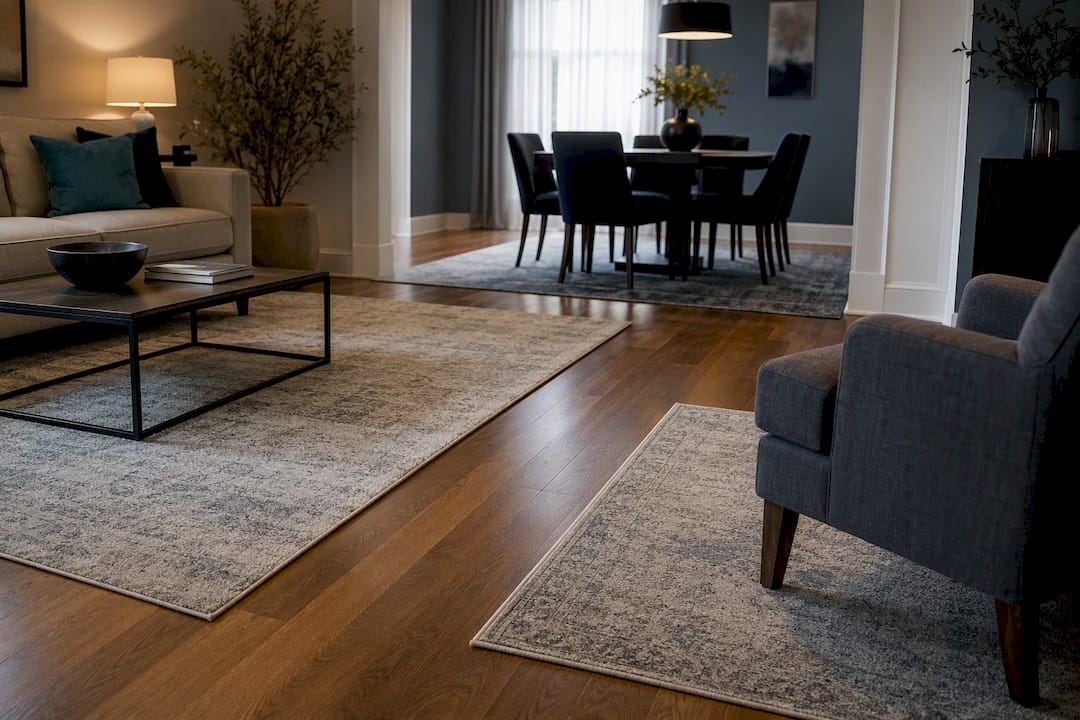
Living room: For a standard sofa-and-two-chairs grouping, 8x10 works for smaller rooms, 9x12 fits most standard living rooms, and 10x14 suits larger open-concept spaces. Choose front-legs-on when the rug can’t cover the whole seating group, and all-legs-on when it can. Both are considered standard designer layouts, not compromises.
Dining room: The rug needs to extend far enough that chairs stay on it even when pulled out to sit down, which typically means roughly 3 feet beyond each edge of the table, per widely cited designer guidance.
Bedroom: For a queen or king bed, the rug should extend at least 18 to 24 inches past the sides and foot of the bed, enough to catch bare feet getting in and out. Twin and double beds can work with a smaller overhang, sometimes just a runner on each side.
Perimeter gap: Leave 18 to 24 inches of exposed floor around the rug in most rooms; go wider in oversized rooms so the rug doesn’t look undersized by comparison.
| Room | Common Size | Placement Rule |
|---|---|---|
| Living room (small) | 8x10 | Front-legs-on for sofa and chairs |
| Living room (standard) | 9x12 | All-legs-on where space allows |
| Living room (large/open) | 10x14 | All-legs-on, defines full seating zone |
| Dining room | Table size plus 3 feet per side | Chairs stay on rug when pulled out |
| Bedroom (queen/king) | Extends 18 to 24 inches past sides and foot | Nightstands can sit on or off the rug |
Pro Tip: Measure your dining table’s length and width, then add 6 feet to each dimension. That’s your minimum rug size, and it’s the single most common mistake homeowners make when shopping for a dining rug.
How Do You Place a Rug in Each Room?
Rules only help once you can picture them in your own floor plan. Here’s how they play out room by room.
- Living room, sofa and chairs: Front two legs of the sofa on the rug, back legs off, if the rug can’t cover the whole grouping. If you’ve upgraded to a larger rug, all four legs of every piece sit on it.
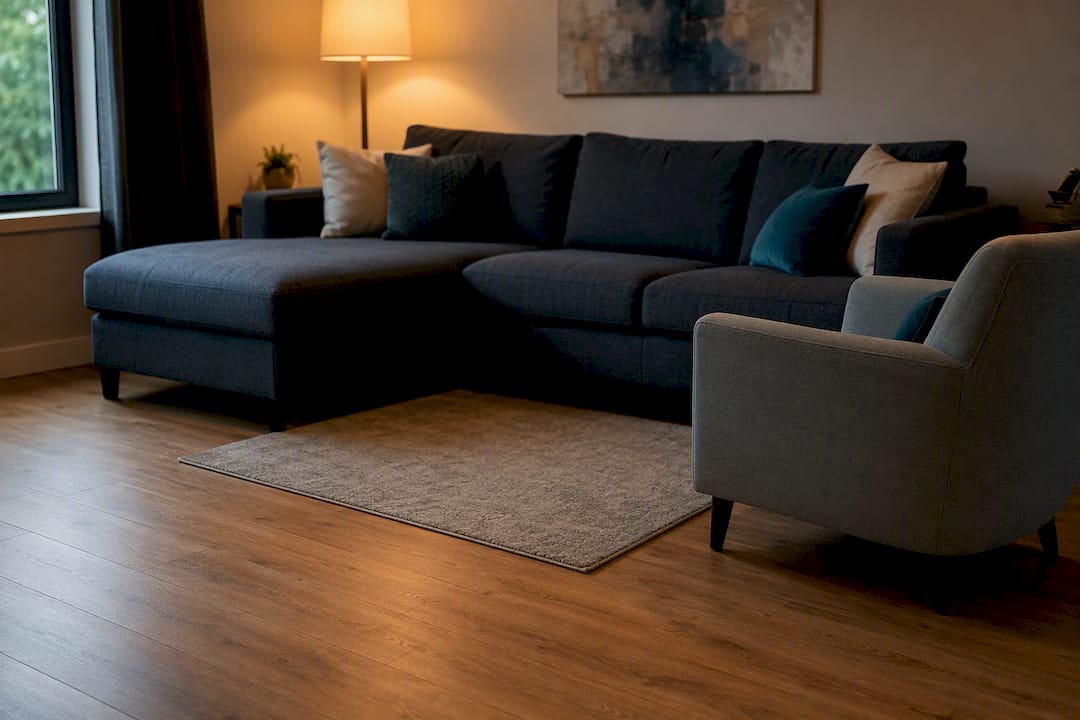
- Living room, sectional: Treat the sectional as one long piece. The rug should extend under the front legs of the entire footprint, chaise included, so the whole shape feels grounded.
- Small seating nooks: A 5x7 or 6x9 rug works if it comfortably fits two chairs’ front legs, even in a tight reading corner.
- Dining room: Measure your table, add roughly 3 feet on all sides, then test it by pulling every chair out fully. If a chair leg slides off the rug, size up.
- Bedroom: Full coverage (rug extends under the bed and nightstands) reads more luxurious; partial coverage (rug starts at the foot of the bed, nightstands stay on the floor) works fine in smaller rooms and costs less.
- Entry and hallway: A runner should leave a few inches of floor visible on each side rather than touching baseboard to baseboard, and a wider entry can handle a small area rug instead of a runner.
- Home office: A rug under a desk defines the work zone, protects hardwood from a rolling chair, and cuts down on the hollow acoustics of a bare-floor room. Size it so the chair can roll fully without leaving the rug in any direction.
Should Your Rug Be Round, Rectangular, or Layered?
Shape follows furniture shape more often than people realize. A round dining table generally looks best on a round rug, since the curves echo each other and the overhang stays even on all sides. A rectangular table calls for a rectangular rug for the same reason.
Layering solves two problems at once: it adds texture and lets you use a smaller, more expensive statement rug without it looking undersized.
- Choose a base rug that’s larger, quieter in pattern, and made from a natural fiber like jute or sisal.
- Size the top rug at roughly half to two-thirds the base rug’s footprint so it reads as intentional layering, not a mistake.
- Align at least one edge of the top rug with a piece of furniture, a sofa’s front edge or a coffee table’s corner, so the layering looks anchored rather than randomly dropped.
- Keep the top rug visually dominant in color or pattern; the base rug’s job is to support it, not compete with it.
Sketch it before you buy: trace your furniture footprint on paper, then draw the base rug boundary and the top rug boundary inside it. If the top rug’s edges land near a chair leg or table corner, you’ve found the right size.
Which Rug Material Holds Up Under Furniture?
Material and pile height decide how well a rug survives daily life with furniture sitting on it, chairs sliding across it, and feet crossing it a hundred times a day.
- Flatweave and natural fibers (wool flatweave, jute, sisal) hold up best in high-traffic zones like living rooms and dining rooms, and they resist the flattening that happens under heavy furniture legs, a point designers and stylists agree on.
- Cut pile or shag feels great underfoot in a bedroom where furniture traffic is lighter, but deep pile under a heavy dresser or bed frame can compress unevenly and make legs sink.
- Rug pads should extend about 1 inch smaller than the rug on all sides, and a pad with real grip underneath prevents furniture legs from creeping the rug out of position over time.
- Vacuum weekly in furniture-heavy rooms, spot-clean spills immediately, and plan on professional cleaning every 12 to 18 months for wool or natural fiber rugs.
Pro Tip: If you’re mixing a patterned rug with upholstery, pull one dominant color from the rug and repeat it in a throw pillow or two. It’s a small trick that makes an entire room feel coordinated instead of matched by accident. You can see how this plays out with fabric pattern pairing on custom pieces.
What’s the Biggest Mistake in Furniture and Rug Placement?
The single most common error is choosing a rug too small for the furniture it’s supposed to anchor, which leaves everything looking like it’s floating on a raft in the middle of the room. Close behind: rugs sized so large they touch every wall and start looking like carpet instead of a considered layout choice.
Fixes that actually work:
- Rug too small: size up, even one size larger than feels intuitive.
- Rug too large or touching walls: pull it in until you have a real perimeter gap.
- Wrong shape: match the rug’s shape to your table or seating arrangement, not just what’s on sale.
- Furniture floating without contact: apply the front-legs-on minimum before anything else.
- No idea what size to test: lay down painter’s tape or newspaper in the exact rug footprint before you buy, then live with it for a day.
Coordinating Rugs With Custom Furniture at cozyhome
When you’re building a room around custom furniture, the rug and the furniture footprint need to get decided together, not sequentially. Bring your fabric swatches into the showroom and measure the full furniture footprint, seat depth, leg span, and overall width, so the rug you choose matches the actual scale sitting in the room, not just the scale on a tape measure.
Before you order, record these on a simple checklist:
- Total footprint width and depth of your seating or dining arrangement
- Leg style and placement (tapered legs need less rug coverage than a wide platform base)
- Dominant tonal family you want the rug to echo, warm neutrals, cool grays, or a bold accent
- Whether you’re pairing a rounder silhouette, like our Excelsior sofa, with a larger rug to balance its visual weight
Our in-store team walks through this with every custom order, because a rug picked in isolation rarely matches furniture picked in isolation.
An Editor’s Take on Rugs and Intentional Rooms
The zone-first approach separates rooms that feel designed from rooms that feel arranged by accident. Measure the furniture group you’re trying to define, then size the rug to it. If you want to see this worked out in person rather than on paper, cozyhome furniture’s Plano showroom staff will walk the measurements with you before you commit to either piece.
Sources
- Rug Rules Designers Swear By
- Area rug dos and don’ts
- Rug Placement Rules Every Interior Designer Should Know | Kapetto
- Rug and Roll: How a Well-Placed Floor Covering Can Revive Any Space | Vogue
FAQ
What Is the Biggest Mistake in Furniture Placement?
Choosing a rug that’s too small for the furniture grouping is the most common error, since it leaves sofas, chairs, or tables looking disconnected from each other and the floor.
What Is the Rug Rule for Sofas?
Use front-legs-on placement when the rug can’t cover the entire seating group, and all-legs-on when it can, which is the standard designer approach to anchoring a sofa and chairs together.
How Do You Arrange Furniture With a Rug?
Decide on the zone and furniture layout first, then size the rug to that footprint, leaving 18 to 24 inches of exposed floor around the edges in most rooms.
What Is the Purpose of Rugs in Home Decor?
Rugs anchor furniture groupings, define zones in open floor plans, add acoustic softness and warmth, and unify the color and texture of a room.
How Big Should a Dining Room Rug Be?
Size it to extend roughly 3 feet beyond each edge of the table so every chair stays fully on the rug when pulled out for someone to sit down.