

Performance Velvet vs Microfiber: Which Sofa Fabric Wins?
For most busy households, microfiber or a tightly woven performance fabric is the safer everyday choice for a primary sofa. Choose performance velvet instead when the look and feel of velvet matter to you and you’re willing to accept a bit more visible surface aging in exchange for that richer texture. The evidence on both fabrics backs this up, and we’ll walk through exactly why below.
TL;DR:
- Microfiber generally resists snagging and shows wear mainly as thinning of the weave, while velvet’s fibers crush and shade faster in high-traffic areas.
- A high-quality microfiber fabric typically endures over 30,000 double rubs, whereas performance velvet also rates similarly but requires careful handling to maintain its appearance.
- Microfiber’s flat, water-repellent surface makes spills easier to clean quickly, while velvet’s pile traps spills longer but can be refreshed with annual professional steaming.
- Pet households should favor microfiber for its hair and claw resistance, but synthetic performance velvet can work with regular brushing and cleaning if it’s short-piled.
- Always verify the fabric’s actual Martindale rub count and cleaning code before purchase to ensure long-term durability and maintainability.
Table of Contents
- Performance Velvet vs Microfiber: A Side-By-Side Look
- How Do These Fabrics Hold Up Over Years of Use?
- What Cleaning Codes Mean and How to Care for Each Fabric
- How Pile and Weave Change the Way Light Hits a Sofa
- Which Fabric Fits Your Household Best?
- What Should You Check Before You Buy a Sofa?
- How Custom Upholstery Solves the Velvet-vs-Microfiber Tradeoff
- Sustainability: What Goes Into Each Fabric
- A Simple Rule of Thumb for Choosing Your Fabric
- Ready to Choose the Right Fabric for Your Sofa?
- Sources
- FAQ
Performance Velvet vs Microfiber: A Side-By-Side Look
Performance velvet is a synthetic take on classic velvet: it keeps the raised pile and light-catching sheen but swaps cotton or silk fibers for polyester or blended synthetics treated to resist stains and matting. Microfiber is a densely woven synthetic fabric, usually polyester, with a flat, non-directional surface built for wipeability rather than visual depth.
Here’s how they stack up on the factors that matter most for family living rooms:
- Durability: Both hold up well when made with quality synthetic fibers, but microfiber’s tight weave resists snagging better than velvet’s raised pile, which can crush or shade with heavy use.
- Stain resistance: Microfiber sheds liquid on contact thanks to its flat construction; performance velvet resists stains too, but the pile can trap spills longer before you notice them.
- Pet-friendliness: Microfiber’s smooth surface makes pet hair easier to lift off, while velvet’s texture can grab hair and show claw marks more readily.
- Cleaning ease: Microfiber typically just needs a damp cloth and a vacuum; velvet often needs brushing and occasional professional steaming to keep the pile looking fresh.
- Appearance: Velvet offers depth, sheen, and a formal or cozy look depending on the room; microfiber reads more casual and uniform, with less light play.
The takeaway echoes what fabric experts have been saying for years: performance velvet is a genuine middle ground between old-school velvet’s fragility and microfiber’s practicality, but it still asks more of you in day-to-day upkeep. If you want the lowest-maintenance option, microfiber wins. If you want a sofa that looks like a statement piece and you’re prepared to do a little more care, performance velvet earns its keep.
How Do These Fabrics Hold Up Over Years of Use?
Durability comes down to more than gut feeling. The textile industry measures wear resistance with the Martindale test, which counts how many “double rubs” (a back-and-forth motion simulating friction) a fabric can survive before it visibly wears through.
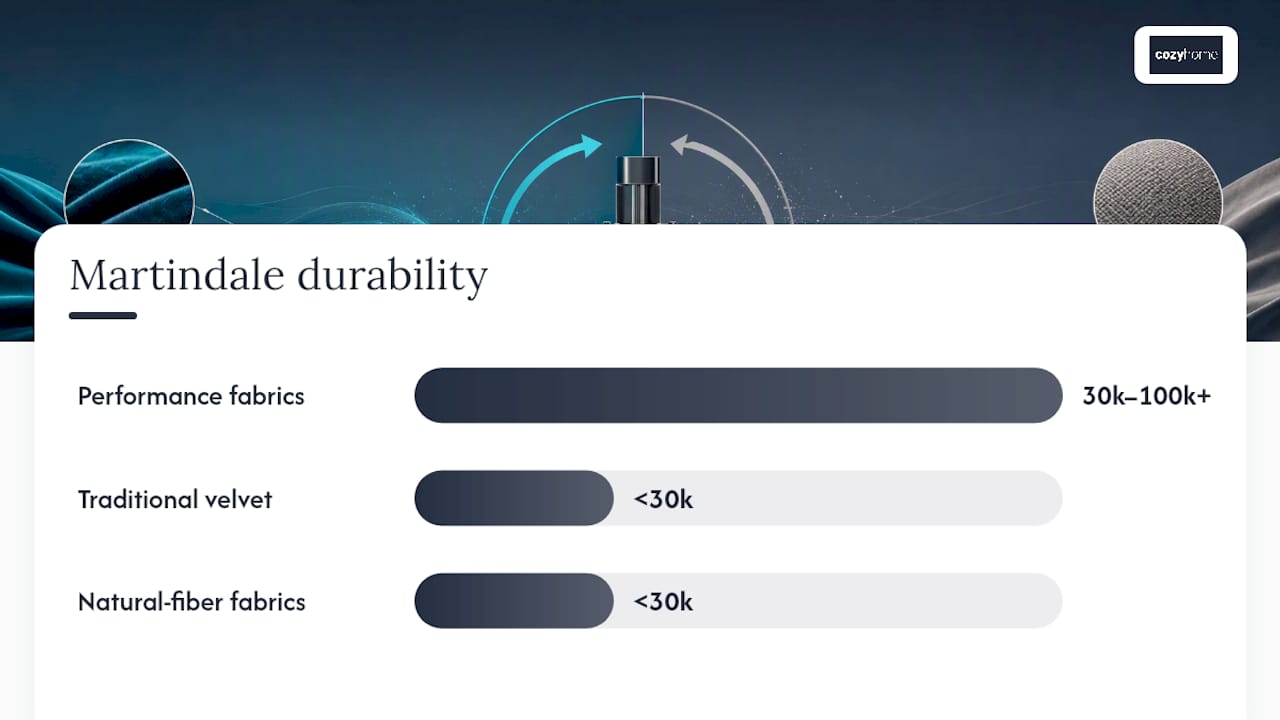
Quality performance fabrics, including many performance velvets and microfibers, often rate between 30,000 and 100,000+ double rubs, while traditional velvets and many natural-fiber fabrics fall well below that range. That gap explains why a synthetic performance fabric on a family sofa can look presentable years after a natural-fiber equivalent has thinned or flattened.
Pro Tip: Never take “performance” on a tag at face value. Ask the salesperson for the actual Martindale number in writing, and compare it against the fabric’s cleaning code before you decide.
The two fabrics fail differently, though, and knowing the difference changes what you watch for:
- Velvet’s failure mode is visual before it’s structural. Pile crushing, shading, and pressure marks show up in high-traffic spots (armrests, the edge of a cushion) long before the fabric actually wears through.
- Microfiber’s failure mode is more forgiving to the eye. It resists snagging and rarely shows crush marks, so wear tends to stay invisible until the weave itself starts to thin.
- Both fabrics can outlast their own upholstery if the frame, seams, and cushion backing aren’t built to match. A sofa with a weak seam or thin foam will fail structurally long before either fabric gives out.
When you’re comparing swatches in a showroom, don’t just run your hand across the surface. Fold the swatch, rub it between your fingers repeatedly, and check whether the color shifts or the pile flattens. A well-built fabric or leather selection should hold its texture and color even after that kind of handling, and any salesperson worth trusting should be comfortable showing you the rub count on request.
What Cleaning Codes Mean and How to Care for Each Fabric
Every upholstery fabric carries a cleaning code, and understanding it matters more than any marketing claim printed on the tag.
- W means water-based cleaners only.
- S means solvent-based cleaners only; water can leave rings or shrink the fibers.
- W/S means either water-based or solvent-based cleaners are safe.
- X means vacuum only; no liquid cleaners of any kind.
Most performance microfibers and performance velvets carry a W or W/S code because their synthetic fibers tolerate water-based cleaning, but always check the tag rather than assuming based on the fabric type.
For a fresh spill, speed and method both count. Here’s the protocol that actually works:
- Blot immediately with a clean, dry white cloth. Don’t rub. Rubbing pushes the spill deeper into the pile or weave.
- Check the cleaning code on the cushion tag before applying anything.
- Apply a small amount of the appropriate cleaner (water-based for W or W/S, solvent-based for S) to a separate cloth, never directly onto the fabric.
- Dab from the outside of the stain inward to avoid spreading it.
- Let it air dry, then brush the pile back into place if you’re working with velvet.
Routine care differs by fabric. Microfiber needs a weekly vacuum with a soft brush attachment and an occasional damp-cloth wipe. Velvet benefits from the same weekly vacuuming, plus light brushing to keep the pile upright and an annual professional steam-clean to lift matting, since synthetic velvets handle this far better than cotton velvet does. If you do steam at home, keep the nozzle several inches from the fabric. Direct, prolonged steam can flatten or discolor synthetic pile permanently.
Professional cleaning is worth scheduling for velvet sofas in heavy-use rooms roughly once a year. Microfiber rarely needs a professional visit unless a stain has set in for days before you caught it.
How Pile and Weave Change the Way Light Hits a Sofa
Velvet’s defining trait is its pile: thousands of short fibers standing on end, brushed in one direction (the nap) during manufacturing. That’s why velvet sofas often look like they have stripes or shadows depending on the angle you view them from, and why sitting or leaning on one leaves a temporary (sometimes permanent) mark where the nap gets pressed flat.
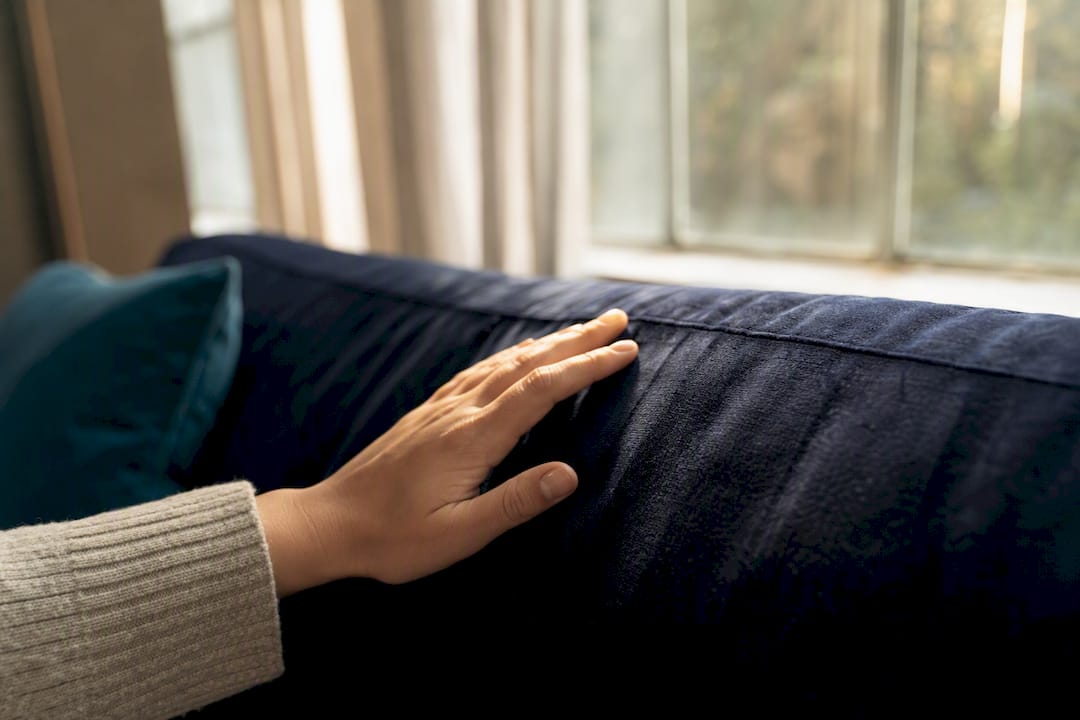
Microfiber has no pile to speak of. Its surface is flat and tightly woven, so it reflects light evenly across the entire piece. You won’t see shading or pressure marks on microfiber the way you will on velvet, but you also won’t get that soft, dimensional look that makes velvet furniture feel special in a room.
A few practical notes worth weighing before you choose based on looks alone:
- Shading isn’t damage. It’s an optical effect of the pile catching light differently, and it’s normal for velvet even when the fabric itself is in perfect condition.
- Sunlight fades both fabrics over time, but velvet’s fibers can also flatten under repeated UV exposure in addition to color loss.
- Ask for solution-dyed fibers if you’re ordering a velvet piece for a sunny room. Solution-dyed fabric has color woven into the fiber itself rather than applied as a surface treatment, so it resists fading far longer.
- Save velvet’s dramatic texture for pieces where looks lead, like an accent chair or a low-traffic formal living room, if you’re on the fence about long-term durability.
Which Fabric Fits Your Household Best?
This is where the rubber meets the road for most shoppers. The right fabric depends less on which one “wins” in the abstract and more on who’s actually going to be sitting on your sofa.
Households with dogs, cats, or both tend to do better with microfiber. Its tight, non-directional weave resists snagging from claws and doesn’t trap pet hair the way a raised pile does. Velvet can still work in a pet household, but you’ll want to commit to more frequent brushing and lint-rolling, and you should expect some visible texture change over time from claws and shedding.

Families with young kids face a similar calculation, mostly around stains and spills rather than claws. Both fabrics handle occasional spills fine when properly treated, but microfiber’s flat surface makes quick cleanup easier when you’re dealing with juice, crayons, or muddy hands.
Here’s how we’d break it down by household type:
- Heavy-pet households with kids: Microfiber or a short-pile, solution-dyed performance velvet. Skip cotton or silk velvet entirely.
- Pet-light families: Either fabric works, though short-pile synthetic velvet offers a nice middle ground of look and livability.
- Adult-only households: Performance velvet is a strong pick since crushing and shading matter less without kids climbing on furniture daily.
Pro Tip: Don’t rely on stain-repellent sprays as your only defense. They buy you a few extra minutes to blot a spill, but they wear off with cleaning and sun exposure, so treat them as a backup, not a substitute for choosing the right cleaning-code-compliant cleaner in the first place.
What Should You Check Before You Buy a Sofa?
Marketing copy on a fabric swatch tells you almost nothing useful. Here’s what to actually confirm before you commit:
- Cleaning code (W, S, W/S, or X), printed on the fabric tag or available from the retailer.
- Rub count (Martindale double rubs). Ask for the number in writing if it isn’t listed.
- Fiber content. Confirm whether you’re getting 100% polyester, a cotton-poly blend, or something else, since fiber content drives both feel and durability.
- Backing and construction. A quality backing prevents seam stretching and helps the fabric hold its shape over the cushion.
- Seam strength and cushion covers. Ask whether covers are removable and washable, which matters enormously for long-term maintenance.
- Stain treatment details. Ask what treatment was applied, whether it contains PFAS-based chemicals, and how long the treatment is expected to last.
- Warranty terms. Confirm what’s covered (fading, seam failure, pilling) and for how long.
- Recommended cleaners. Get a specific product recommendation, not just a cleaning code.
In the showroom, run your own quick tests. Press your palm into a velvet swatch and watch how quickly the pile recovers. Rub a piece of dark fabric against light clothing to check for dye transfer. If the retailer allows it, dab a drop of water on a hidden edge of a swatch to see how it beads or absorbs. These small checks tell you more than any brochure, and pairing them with the construction cues that signal quality furniture gives you a much clearer picture of what you’re actually buying.
How Custom Upholstery Solves the Velvet-vs-Microfiber Tradeoff
You don’t have to choose blind between a big-box velvet sofa that shows every pressure mark and a microfiber sofa that feels a little flat. cozyhome furniture’s Plano showroom carries more than 700 fabric and leather options, which means you can specify exactly which version of either fabric fits your household.
Want the look of velvet without the maintenance headaches? Order a short-pile, solution-dyed performance velvet built on American-made frames, guided by in-store staff who know which fibers hold up under real family use. Want the practicality of microfiber but a bit more visual texture? There are performance microfiber options that split the difference too.
A few things worth knowing before your visit:
- Every piece is made-to-order, so fabric, sizing, and configuration are matched to your actual room and lifestyle.
- In-store staff walk you through swatches, rub counts, and cleaning codes before you commit to anything.
- The upholstery process itself is handled with the same construction standards, whether you choose velvet or microfiber.
Order a few swatches or stop by the showroom before your next sofa purchase. It’s the fastest way to settle the debate for your own living room.
Sustainability: What Goes Into Each Fabric
Both performance velvet and microfiber are typically made from polyester, a petroleum-based synthetic fiber. Neither fabric is biodegradable in any practical timeframe, and both shed microplastic fibers during washing, though upholstery fabric sheds far less than clothing since it’s cleaned less frequently and rarely machine-washed.
The environmental case for either fabric usually comes down to longevity rather than raw material. A sofa fabric that lasts 15 years because it resists crushing, staining, and fading has a smaller footprint per year of use than one that needs replacing every three or four years, even if the second fabric started out as a “greener” material on paper. That’s part of why higher rub counts and better construction matter beyond just looks.
Some manufacturers now offer recycled-polyester performance fabrics, made partly from post-consumer plastic bottles, which cuts down on new petroleum extraction without sacrificing the durability performance fabrics are known for. If sustainability matters to you, ask specifically whether a fabric uses recycled fiber content, since it isn’t always obvious from the swatch alone.
Buying furniture built to last, and choosing a fabric you won’t want to replace in a few years, remains one of the more practical ways to reduce your furniture’s overall environmental footprint.
A Simple Rule of Thumb for Choosing Your Fabric
My honest read after digging into the durability data and cleaning guides: most families overthink this decision. If your sofa sits in a high-traffic room with kids, dogs, or both, pick a tight-weave performance fabric like microfiber and stop second-guessing it. Save performance velvet for the rooms where you actually want people to notice the furniture, like a formal living room or a low-use den.
Picture a family with two kids under ten and a golden retriever who sheds year-round. Microfiber, no contest. Now picture a couple in their fifties with a quiet sitting room they use for reading and coffee. Performance velvet, without hesitation.
When in doubt, order swatches of both and live with them on your coffee table for a week before deciding.
— Dean P.
Ready to Choose the Right Fabric for Your Sofa?
You’ve seen the tradeoffs. Now the question is which fabric fits the room you’re actually furnishing, and that’s exactly where cozyhome furniture’s Plano showroom earns its place over a warehouse-floor purchase: instead of guessing from a small swatch card, you work directly with in-store staff who can walk you through real fabric samples, rub counts, and cleaning codes before you commit to anything.
Every piece, from the Excelsior sofa in cream to the Excelsior sofa in shiitake beige, can be built with the fabric that actually fits your household, whether that’s a short-pile performance velvet or a durable performance microfiber. Visit the Plano showroom or browse the current lineup online, request swatches for your top picks, and talk through your specific durability needs with staff who work with these fabrics daily. Free local delivery and flexible financing make it easy to move from swatch to sofa without the guesswork of a big-box purchase.
Sources
- Microfiber vs Chenille Fabric — Kovi Fabrics
- Performance fabric vs velvet — Fabric Resource
- How to clean velvet furniture — Martha Stewart
- Velvet care guide — Heal’s
FAQ
What Are the Downsides of a Velvet Sofa?
Velvet shows shading and pressure marks from its directional pile, can crush in high-traffic spots, and cotton or silk versions are more sensitive to stains than synthetic performance velvet.
Is Performance Velvet Good for Dogs?
Short-pile, synthetic performance velvet can work for dog households if you commit to regular brushing and vacuuming, but microfiber’s tighter weave generally resists claws and sheds pet hair more easily.
What Is the Best Performance Fabric for Sofas?
There’s no single best fabric; the right choice depends on your household, but a synthetic performance velvet or a tightly woven performance microfiber with a W or W/S cleaning code and a high rub count both perform well for everyday family use. cozyhome furniture can help you compare specific fabric options against your household’s needs during a showroom visit.
How Do I Know if a Fabric Is Truly Stain Resistant?
Check the cleaning code on the tag and ask for the specific stain treatment used; a “performance” label alone doesn’t mean stain-proof, so prompt cleanup still matters.
Can You Steam Clean a Velvet Sofa at Home?
You can steam synthetic velvet at home if you keep the nozzle several inches away and never linger in one spot, since direct or prolonged steam can flatten synthetic pile.