

Leather Care Done Right: Type Based Routines for 3 to 6 Months
The simplest way to keep leather looking and performing its best is a short routine: clean, dry, condition, protect, and store. Most furniture needs conditioning every 6 to 12 months, dropping to every 3 to 6 months if it sits near sunlight or gets heavy daily use. The one thing to skip entirely is harsh household products like bleach, ammonia, alcohol, WD-40, or Dawn dish soap, all of which strip the oils leather needs to stay soft.
TL;DR:
- Regular conditioning every 6 to 12 months is essential, with more frequent treatments needed for leather exposed to sunlight, heat, or heavy use.
- Proper cleaning depends on leather type, requiring gentle, specific methods such as dry dusting for full-grain and aniline, and avoiding water on suede or nubuck.
- Always identify your leather finish with tests like water droplet or care codes before choosing cleaning or conditioning products to prevent damage.
- Household products like bleach, ammonia, WD-40, or Dawn dish soap should be avoided, as they strip natural oils and harm leather fibers.
- Store leather in breathable covers, avoid plastic, and seek professional help for deep cracks or tears beyond simple home care.
Table of Contents
- Building a Leather Care Guide Into Your Weekly Routine
- How Do You Identify Your Leather Type?
- What’s the Safest Way to Clean Each Leather Type?
- How Often Should You Condition Leather Furniture?
- How Do You Get Stains and Scratches Out of Leather?
- Should You Waterproof or Seal Leather Furniture?
- What’s the Best Way to Store Leather Long Term?
- When Should You Call a Leather Repair Professional?
- What cozyhome Has Learned From Years on the Showroom Floor
- Why Most Leather Care Advice Misses the Point
- Sources
- FAQ
Building a Leather Care Guide Into Your Weekly Routine
Leather doesn’t need constant fuss, but it does need consistency. Think of it the way you’d think about skin care: small, regular habits do more good than an occasional deep treatment after months of neglect. A weekly wipe with a soft microfiber cloth removes dust and body oils before they settle into the grain. Run a soft brush along seams and hardware while you’re at it. Grit is the real enemy here. It works like sandpaper against leather fibers every time you sit, walk, or set a bag down, and weekly vacuuming with a soft brush attachment prevents that abrasion before it becomes visible damage.
Beyond the weekly pass, build in a monthly or quarterly checkpoint for anything that’s seeing regular use.
- Weekly: dust and wipe with a dry microfiber cloth, and brush out seams, welts, and hardware crevices.
- Monthly to quarterly: spot-clean any marks you notice, and vacuum furniture crevices where crumbs and dust collect.
- Every 2 to 3 months: give a leather couch a proper light cleaning, not just a wipe, especially in a household with kids or pets.
- Every 6 to 12 months: condition furniture, tightening that window to 3 to 6 months if the piece sits in direct sun, near a heat vent, or gets daily contact.
- Every 3 to 6 months: condition handheld items like bags and shoes, adjusted for how often they leave the closet.
Environments push that schedule harder than habits do. Salted sidewalks in winter, beach humidity, dry forced-air heat, and south-facing windows all accelerate how fast leather dries out or picks up grime. If your sofa sits under a window that gets afternoon sun for four hours a day, treat it like a high-use piece even if only one person ever sits on it.
How Do You Identify Your Leather Type?
Guessing your leather type is where most home cleaning mistakes start. Cleaning and conditioning methods have to match the leather, because what’s safe for one type can ruin another. Full-grain and aniline leathers are porous and largely untreated, so they darken easily with water and show every oil stain. Pigmented or corrected leather has a plastic-like protective top coat, which is why it tolerates a damp cloth and mild soap far better. Suede and nubuck have a napped, fuzzy surface that water damages almost instantly, leaving permanent dark rings. Patent and coated leathers have a glossy, sealed finish that wipes clean but scuffs visibly.
A few quick checks help you sort your piece:
- Water drop test: a drop that soaks in fast usually means aniline or full-grain; one that beads up points to a pigmented or coated finish.
- Touch test: if it’s fuzzy or velvety, you’re dealing with suede or nubuck, not a smooth-finish leather.
- Care code: furniture and shoe tags often carry a W, S, W-S, or X code. W means water-based cleaners only, S means solvent-based only, W-S allows either, and X means vacuum or brush only, no liquids at all.
- Manufacturer tag or receipt: check the original documentation before assuming; a cozyhome sales associate or a shoe box insert will usually specify the finish.
When you’re not sure, always start gentler than you think you need to, and test any product on a hidden patch, like the underside of a cushion or the inside of a bag strap, before treating a visible surface.
What’s the Safest Way to Clean Each Leather Type?
Cleaning method has to follow leather type, not the other way around. Trying to shortcut this is how a $2,000 sofa ends up with a permanent water stain.
- Full-grain and aniline leather: Start by dry-dusting with a soft cloth to lift surface grit. Test a pH-neutral leather cleaner on a hidden spot first. If it passes, apply it with a barely damp cloth in small, circular motions, then wipe with a dry cloth immediately. Never soak the surface or let water pool. Air-dry away from direct heat.
- Pigmented or corrected leather: This finish handles a little more moisture. A soft cloth with mild soap and water, wrung out well, works for everyday marks. Rinse the residue with a second, clean damp cloth and dry quickly with a towel so the surface doesn’t stay wet longer than necessary.
- Suede and nubuck: Skip water almost entirely. Brush the nap in one direction with a dedicated suede brush to lift dirt, then use a suede eraser or rubber block on stubborn marks. Anything beyond light surface dirt, like an oil stain or deep discoloration, is a job for a specialist dry-cleaning process rather than a home fix, since water leaves permanent marks on the napped surface.
- Coated and patent leather: A damp cloth handles daily dust just fine. For scuffs, a small amount of mild cleaner on a soft cloth, rubbed gently, usually lifts the mark. Buff dry with a separate cloth to restore the shine.
Keep two or three tools on hand for this: a microfiber cloth for dusting, a slightly damp cloth for cleaning, and a soft-bristle brush for crevices and suede. Whatever product you’re trying, patch-test it on an inconspicuous area first and wait a few minutes to check for color change or texture shift before using it on the full surface.
Pro Tip: Keep a small stack of plain white cloths just for leather. Colored or printed cloths can transfer dye onto lighter leather when the surface is damp, which is a frustrating way to create a new problem while fixing an old one.
How Often Should You Condition Leather Furniture?
Conditioner does one job: it replaces the natural oils leather loses over time so the fibers stay flexible instead of turning brittle. It is not a sealant, and it won’t make leather waterproof on its own.
Frequency depends on the leather and the environment:
- Vegetable-tanned leather: every 3 to 6 months, since it’s more porous and dries out faster.
- Chrome-tanned or pigmented leather: every 6 to 12 months under normal conditions.
- Any leather in a dry, sunny, or high-traffic spot: shift to the 3 to 6 month end of the range regardless of tanning method.
Furniture in high-traffic rooms or dry climates benefits from conditioning as often as every 3 to 6 months, while lower-use pieces can comfortably stretch to the full year.
Apply conditioner only after the leather is fully clean and dry. Work in thin coats with a soft cloth, let each one absorb for several minutes, and buff off any excess before adding more. Piling on thick layers doesn’t speed up the process. It actually causes the opposite problem: oversaturated fibers go limp, and stitching can stretch out in ways that don’t reverse. Always test a hidden spot first, since some conditioners darken leather slightly on contact.
Skip household oils like neatsfoot oil or mink oil as general-purpose conditioners. They’re formulated for specific leather types and can oversaturate or darken furniture-grade leather in ways a proper conditioner won’t.
How Do You Get Stains and Scratches Out of Leather?
The first move matters more than the product you reach for. Blot spills immediately with a clean white cloth. Never rub, since rubbing pushes the stain deeper and can scuff the surface at the same time.
- Ink stains: On pigmented leather only, dab a small amount of rubbing alcohol onto a cotton swab and touch it gently to the ink, working from the outer edge in. Test this on a hidden spot first, since alcohol can strip color on some finishes.
- Grease and oil marks: Sprinkle cornstarch directly on the spot and let it sit for several hours, ideally overnight, so it absorbs the oil. Brush or vacuum away the powder rather than wiping it, which can grind it into the grain.
- Water rings: Let the leather air-dry completely before doing anything else. Once dry, condition the area to even out the texture. A dark ring that persists after conditioning usually needs professional recoloring rather than another home attempt.
- Scuffs and light scratches: Condition the spot first, which often minimizes the mark on its own, then buff gently. On pigmented leather, a small amount of matching color cream can fill in a scratch, but apply it sparingly and blend the edges so it doesn’t create a visible patch.
Pet owners dealing with regular accidents or claw marks should treat those spots the same way: blot immediately, never scrub, and let the area dry before conditioning. For households managing frequent pet-related messes, dedicated cleaning solutions built for pet stains can help lift residue before it sets into the grain.
Should You Waterproof or Seal Leather Furniture?
Protection is a separate step from conditioning, and it comes after, not instead of it. Conditioning restores the leather’s internal moisture; a repellent or wax sits on top as a barrier. Applying a repellent to dry, unconditioned leather traps that dryness underneath a sealed surface.
- Repellents make the most sense for items that see real outdoor exposure: bags carried in the rain, motorcycle seats, or shoes worn in wet weather.
- Most indoor furniture doesn’t need a dedicated repellent, since it isn’t exposed to moisture the way outdoor gear is.
- Apply sprays in light, even coats in a ventilated space, and let each coat dry before adding another.
- Test on a hidden area first. Heavy applications can darken leather or clog its pores, which interferes with how it breathes over time.
What’s the Best Way to Store Leather Long Term?
Storage mistakes undo months of good maintenance. Use breathable cotton dust bags or covers instead of sealed plastic, which traps moisture and invites mold. Stuff bags and structured items with acid-free tissue paper to hold their shape, but don’t overstuff to the point of stretching seams.
- Store leather goods in a cool, ventilated space, away from direct sunlight and heating vents.
- Aim for moderate humidity; both bone-dry and damp environments cause problems over time.
- Wrap or bag metal hardware separately when packing for travel to prevent scratches against the leather itself.
- Keep bags and shoes stuffed with tissue or shoe trees during storage so they don’t collapse or crease permanently.
When Should You Call a Leather Repair Professional?
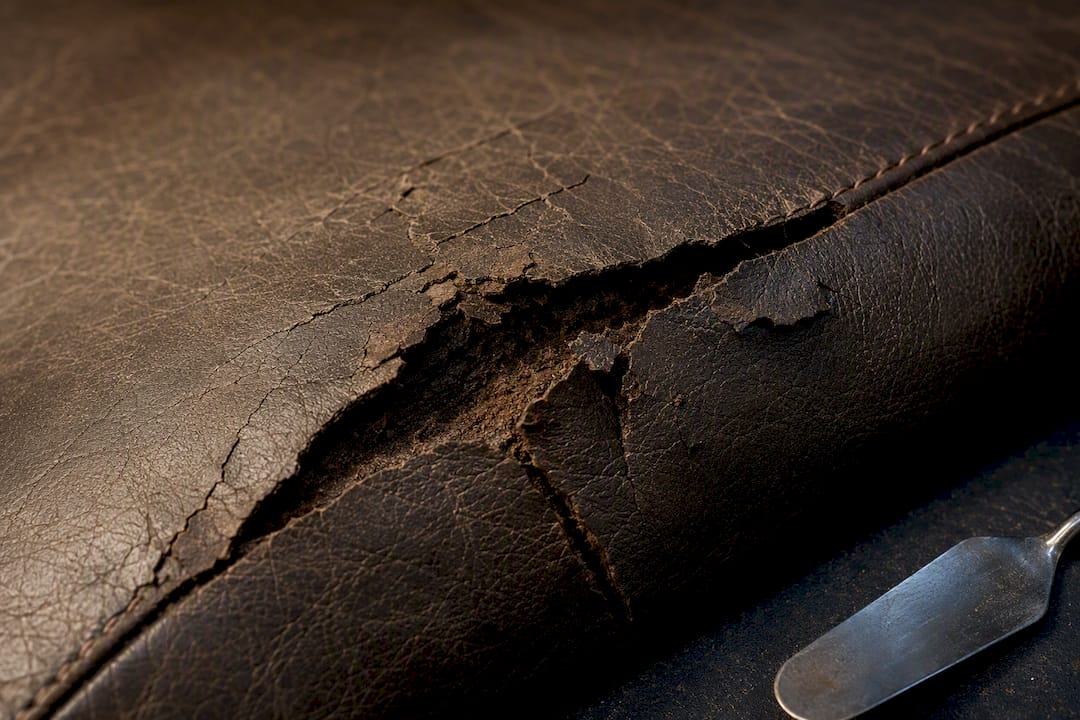
Some damage is beyond a home fix. Deep cracking that exposes the leather’s inner fibers, large flakes lifting off the surface, or tears along a structural seam all call for a professional restorer rather than another round of conditioner.
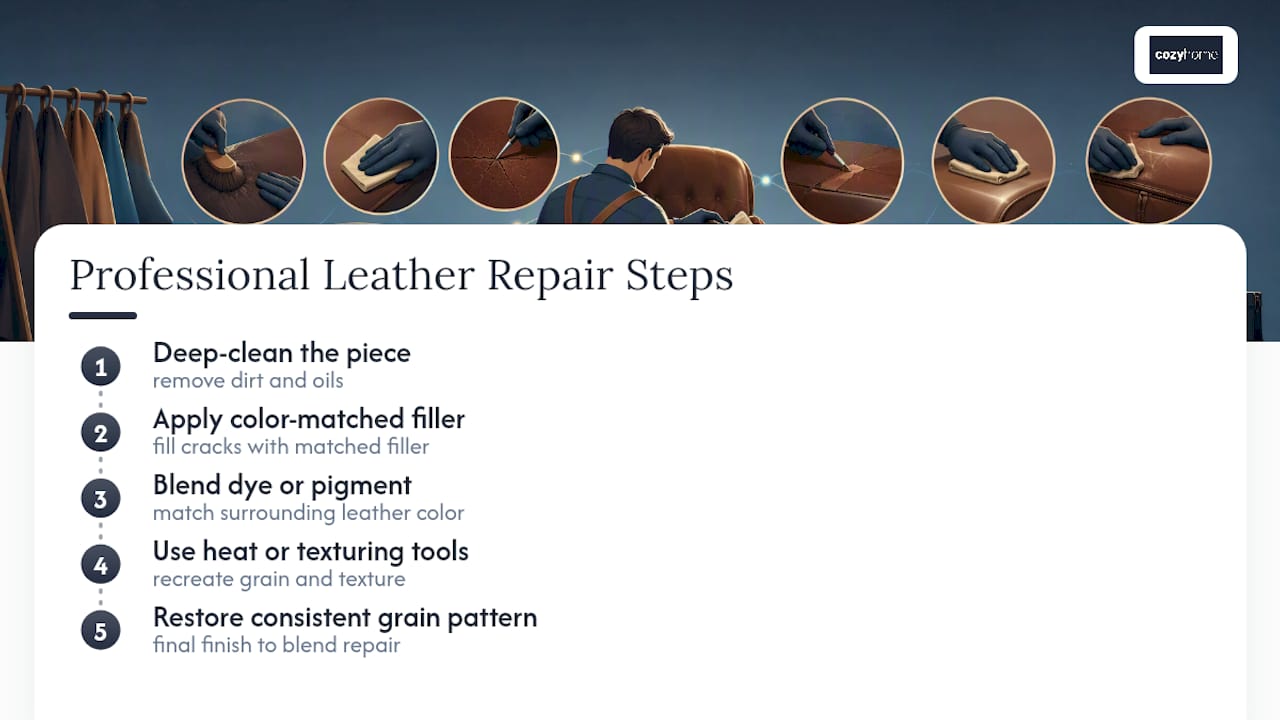
Restorers typically deep-clean the piece first, apply color-matched filler to cracks, blend dye or pigment to match the surrounding leather, and use heat or texturing tools to restore a consistent grain pattern. Before sending anything out, take clear photos of the damage and note when and how it happened. That information helps a restorer diagnose the cause and choose the right repair method.
What cozyhome Has Learned From Years on the Showroom Floor
Working with many leather sofas and sectionals has taught our team a few things that don’t always make it into general care guides. Sofas positioned near a fireplace or a heating vent dry out noticeably faster than those on an interior wall, and we routinely recommend those customers shift to a 3 to 6 month conditioning schedule instead of the standard yearly pass.
Our staff also watch for early signs during in-home consultations: stiffening at the arms and seat edges usually shows up before cracking does, and it’s the easiest window to catch dryness before it becomes permanent. If you’re choosing a finish for a new piece, pigmented and semi-aniline leathers tend to forgive daily life better than full aniline, which is worth factoring in if you have kids, pets, or a sun-facing living room. Our guide to choosing fabric or leather for custom upholstery walks through those tradeoffs in more depth, and our upholstery process breakdown covers how we help customers match a leather to the way they actually live.
Why Most Leather Care Advice Misses the Point
Most leather care content treats every leather item the same way, and that’s the core problem with a lot of advice floating around. A cracked full-grain boot and a scuffed pigmented sofa cushion don’t respond to the same fix, and treating them identically is how people end up disappointed with a $30 conditioner that “didn’t work.”
The bigger miss is frequency. People either forget conditioning entirely for years, then panic and overdo it in one sitting, or they condition so often they oversaturate the fibers and stretch the stitching. Neither extreme beats a boring, regular light touch every few months. That’s the skincare comparison at work: nobody expects one intense treatment to undo a year of neglect, and leather doesn’t work that way either.
If you take one thing from this guide, prioritize identifying your leather type before you touch a single product. Everything downstream, cleaning method, conditioner choice, conditioning frequency, depends on getting that first step right.
— Dean P.
Sources
- Leather care guide — Nicks Boots
- Leather conditioner — Laticol Leathers
- Ultimate guide to leather care — Coupland Leather
- How to clean a leather couch — BISSELL Blog
FAQ
What Is the Best Thing to Condition Leather With?
A dedicated leather conditioner formulated for your specific leather type works best, applied in thin coats after cleaning. Avoid all-purpose oils like neatsfoot or mink oil on furniture-grade leather, since they can oversaturate the fibers.
What Is the Best Way to Care for Leather?
Follow the same order every time: clean, dry, condition, protect, then store properly. Sticking to that sequence prevents irreversible damage and lets the leather develop a healthy patina instead of cracking prematurely.
Does WD-40 Protect Leather?
No. WD-40 can clog leather’s pores and cause staining rather than protecting the surface, and it’s not designed for this use at all. Stick to conditioners and repellents made specifically for leather.
Can I Put Dawn Dish Soap on Leather?
You shouldn’t. Dawn is formulated to cut grease on dishes, which makes it too harsh for leather; it strips natural oils and can leave the surface dry, discolored, or prone to cracking over time.