

How to Combine Fabric Patterns on a Custom Furniture Piece
TL;DR:
- Mixing fabric patterns on furniture involves layering three contrasting scales and unifying colors for a cohesive look. Using the 1-Large, 1-Medium, 1-Small scale rule and the 60/30/10 color method helps create balanced, intentional designs. Technical fabric compatibility and proper planning are essential for durable, visually appealing custom upholstery.
Combining fabric patterns on a custom furniture piece is defined as the deliberate layering of two or more distinct textile prints across a single upholstered item to create visual depth and cohesion. The process requires three coordinated decisions: pattern scale, pattern type contrast, and color unification. Get all three right, and a sofa or armchair becomes the defining element of a room. Get one wrong, and the result looks busy rather than intentional. This guide walks through every principle and practical step, from selecting your dominant print to calculating yardage for a custom upholstery designs project that holds up over time.
What pattern scales and types best combine on custom furniture pieces?
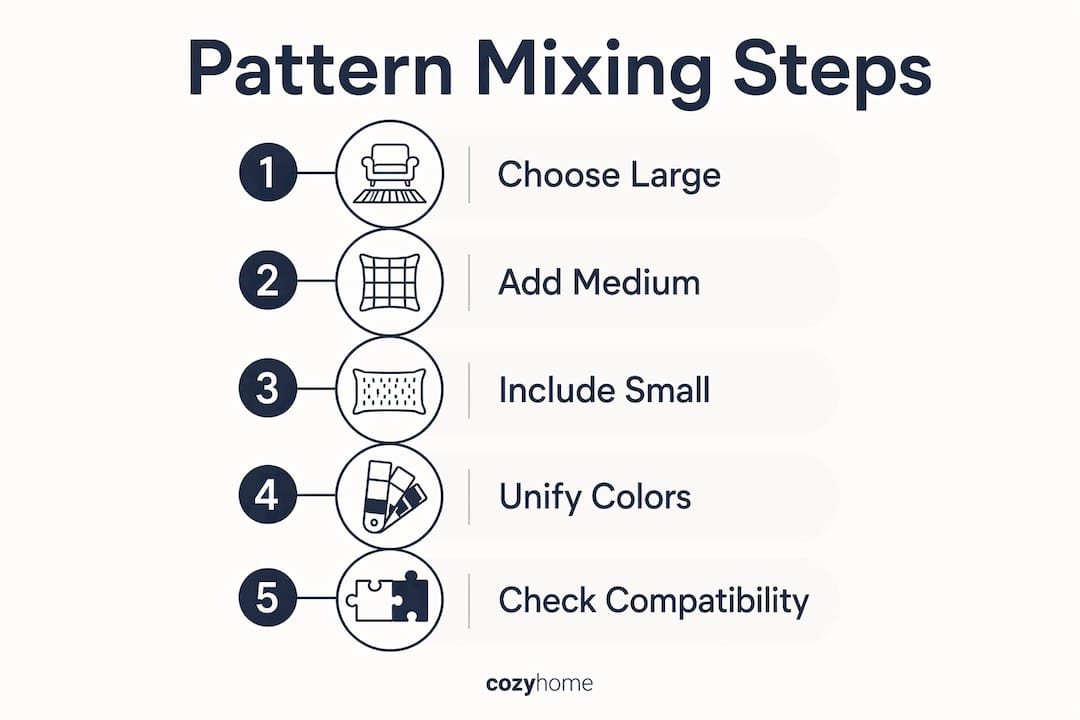
The single most effective rule for mixing fabric patterns is the 1-Large, 1-Medium, 1-Small scale system. One large-scale pattern anchors the piece, one medium-scale pattern supports it, and one small-scale accent pattern ties the composition together. This prevents any two patterns from competing for the same visual weight.
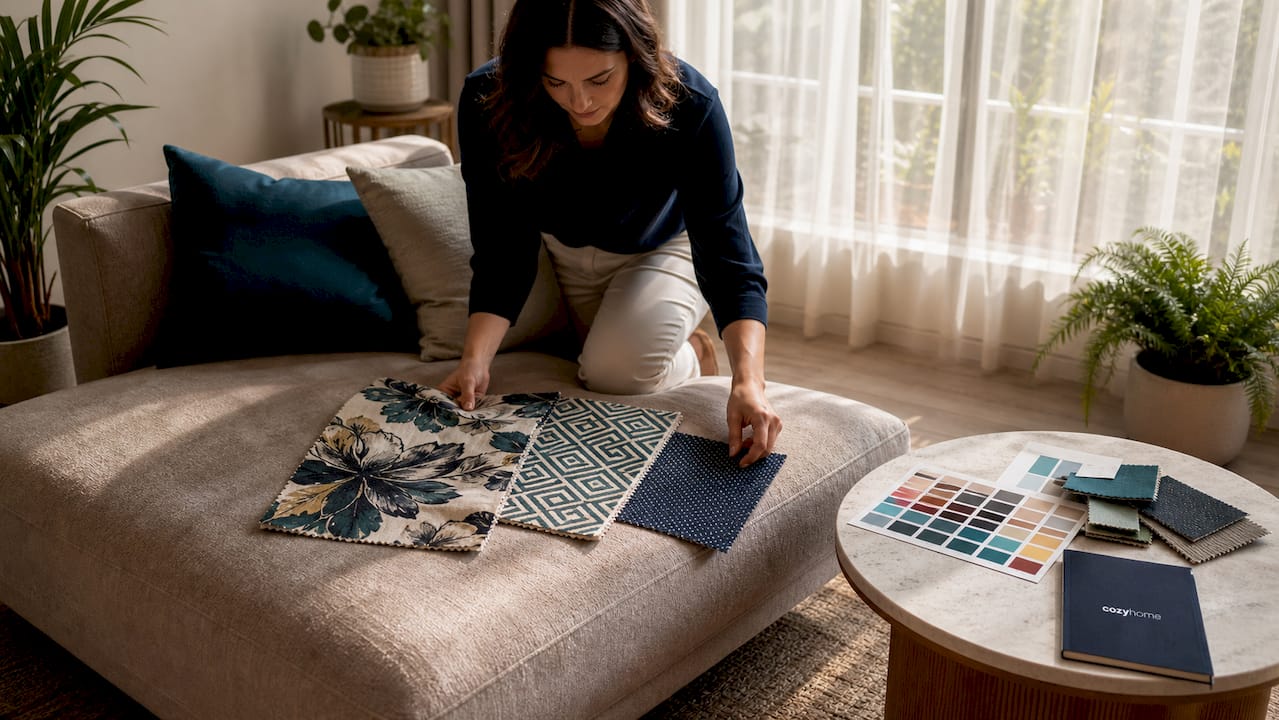
Pattern type contrast matters just as much as scale. The most successful fabric pattern combinations pair prints from different categories rather than repeating the same type. A large floral works well alongside a medium geometric and a small stripe. A bold herringbone pairs cleanly with a mid-scale medallion and a fine dot. The contrast between types creates visual interest without chaos.
Here are the pattern type pairings that consistently work on custom upholstery:
- Floral + geometric + stripe: The organic shapes of a floral soften the hard lines of a geometric, while a thin stripe acts as a neutral connector.
- Plaid + abstract + solid-weave texture: The structured grid of a plaid grounds an abstract print, and a textured solid gives the eye a place to rest.
- Damask + ticking stripe + small dot: A classic combination for traditional tailored furniture ideas, where each pattern occupies a clear visual tier.
- Botanical + chevron + linen texture: Works well on modern pieces where natural motifs meet graphic lines.
The most common failure in pattern mixing comes from combining three prints of the same size. They compete rather than harmonize, and the result reads as visual noise.
Pro Tip: A small-scale pattern, such as a fine check or tiny dot, acts as a visual “glue” between the large and medium prints. Place it on piping, cushion backs, or arm panels to unify the piece without adding another bold statement.
Understanding furniture scale principles also helps you judge how much of each pattern will actually be visible once the fabric is cut and applied to curved or angled surfaces.
How to unify fabric colors when mixing patterns for custom upholstery
Color unification is the single factor that makes or breaks a mixed-pattern piece. Every pattern you choose should share at least one or two identical colors with the others. That shared color is the thread that makes dissimilar prints read as a planned composition rather than a random collection.
The 60/30/10 method is the most reliable framework for distributing colors across a custom upholstered piece. Here is how it works in practice:
- 60% primary color: This is your dominant tone, usually carried by the largest pattern and the main body fabric. On a sofa, this covers the seat cushions, back panels, and main field of the piece.
- 30% secondary color: This appears in the medium-scale pattern and supporting upholstery areas such as the arms, side panels, or bolster cushions.
- 10% accent color: This is your boldest or most unexpected color, reserved for the small-scale pattern and details like piping, buttons, or throw pillows.
Applying this method to specific furniture components makes the distribution concrete. A cream and navy floral at 60% on the seat back pairs with a navy and sage geometric at 30% on the arms, then a sage and cream micro-stripe at 10% on the welt cord and cushion backs. The navy appears in all three patterns. That repetition is what creates cohesion.
Color also compensates for pattern type differences. Two prints that look nothing alike in isolation will read as a pair when they share a strong common color. This is why a bold botanical and a strict geometric can coexist on the same chair without conflict.
Pro Tip: Pull a single paint chip or fabric swatch in your accent color and hold it against each pattern you are considering. If the chip appears in every print, even as a minor tone, the combination will hold together on the finished piece.
What technical factors matter when combining fabrics for custom upholstery?
Aesthetics get the attention, but fabric suitability determines whether a mixed-pattern piece lasts. When you combine fabrics across a single custom upholstery project, each textile must be technically compatible with the others and with the upholstery process itself.
The key technical characteristics to check for every fabric in your combination:
- Weight: Fabrics of similar weight behave consistently under tension. Pairing a heavy canvas with a lightweight voile on the same piece creates uneven stress at seams.
- Weave structure: Tight, stable weaves hold upholstery tacks and staples cleanly. Loose or open weaves can pull and distort at stress points.
- Stretch and shrinkage: Fabrics with different stretch rates shift against each other over time. Selecting fabrics with similar shrinkage rates preserves seam stability and upholstery longevity.
- Directionality and repeat size: Directional prints must all run the same way on the finished piece. Pattern repeat size affects how much fabric you need and how cuts align across panels.
The Customer’s Own Material (COM) workflow is the standard process for bringing your own fabric combinations to a custom manufacturer. It involves specifying the piece, calculating yardage, shipping fabric for inspection, and then moving into production. COM projects require a clear workflow including yardage calculation with 15–20% overage, fabric shipment, inspection, production, and delivery.
Ordering 15–20% extra fabric above the calculated yardage is not optional for pattern-mixing projects. That overage covers pattern repeat alignment, cutting errors, and future repairs. Skipping it is the most common reason mixed-pattern projects run short of fabric mid-production.
Fabric inspection upon arrival is equally critical. Checking directionality, repeat size, and weave before production begins confirms that all fabrics in your combination will cut and align correctly. Catching a problem at this stage prevents costly delays once the upholsterer has started cutting.
The custom upholstery process covers these COM steps in detail, which is useful reading before you finalize your fabric selections.
Step-by-step guide to designing a custom piece with combined fabric patterns
A structured approach prevents the two most common errors: choosing patterns you love individually that clash together, and ordering the wrong amount of fabric. Follow these steps from concept to finished piece.
- Select your dominant pattern first. Choose the largest, boldest print and decide where it will live on the piece. Seat cushions and back panels are the highest-visibility areas. Anchoring with a dominant pattern creates hierarchy and prevents competing prints from fighting for attention.
- Choose your medium-scale supporting pattern. This goes on secondary surfaces: arms, side panels, or bolster cushions. It should differ in type from the dominant pattern but share at least one color.
- Add your small-scale accent pattern. Use it on low-visibility details: piping, cushion backs, or button tufting. This pattern should share colors with both the dominant and medium prints.
- Plan solid-color breathing room. Solid-color textiles between patterned sections act as cognitive rest points and prevent visual overload. A solid in your primary color on the seat base or skirt gives the eye a place to pause.
- Calculate yardage and add overage. Work with your upholsterer to calculate the exact yardage for each fabric based on the piece’s cut plan and each pattern’s repeat size. Add 15–20% to every fabric order.
- Coordinate with your manufacturer before ordering. Confirm repeat sizes, directionality, and cut planning with the upholsterer before you place fabric orders. Changes after fabric arrives cost time and money.
| Design step | Key decision |
|---|---|
| Dominant pattern placement | Seat back and main cushions for maximum visibility |
| Medium pattern placement | Arms, side panels, and bolster cushions |
| Small accent pattern placement | Piping, cushion backs, and button details |
| Solid fabric placement | Seat base, skirt, or frame panels for visual rest |
| Yardage calculation | Base yardage plus 15–20% overage per fabric |
Common mistakes and how to fix them when mixing fabric patterns
Pattern mixing fails in predictable ways. Knowing the mistakes in advance makes them easy to avoid.
- Same-scale competition: Three prints of equal size fight for dominance and create visual noise. Fix it by replacing one with a noticeably larger or smaller scale.
- Matchy-matchy repetition: Using the same pattern type twice, such as two florals or two stripes, removes contrast and flattens the design. Mix different pattern types like florals, geometrics, and stripes to create visual harmony.
- No breathing room: All-pattern surfaces overwhelm the eye and lose sophistication. Add a solid-color panel or cushion to reset the visual rhythm.
- Loud pattern overload: A bold large-scale print works as an anchor, not as a repeating element. A loud pattern serves as a grounding anchor when smaller, quieter patterns surround it. Repeating the bold print in multiple locations removes that anchoring effect.
- Ignoring fabric compatibility: Mixing a delicate linen with a heavy chenille on the same piece creates uneven wear. Match fabrics by weight and weave for long-term durability.
Pro Tip: Before committing to a full custom order, request fabric samples and lay them flat together in natural light. The combination that works on a screen often looks different in person, and catching a mismatch at the sample stage costs nothing.
Key takeaways
Successful mixed-pattern custom upholstery requires scale contrast, color unification, and technical fabric compatibility working together from the start.
| Point | Details |
|---|---|
| Use the 1-Large, 1-Medium, 1-Small rule | Three different scales prevent visual competition and create clear pattern hierarchy. |
| Unify with shared colors | Every pattern in the combination should share at least one or two identical colors. |
| Apply the 60/30/10 method | Distribute primary, secondary, and accent colors across furniture components for balance. |
| Order 15–20% fabric overage | Extra yardage covers pattern repeat alignment, cutting errors, and future repairs. |
| Add solid-color breathing room | Solid panels between patterned sections prevent visual overload and add sophistication. |
Why pattern mixing on custom furniture rewards patience
I have watched homeowners fall in love with three fabrics individually and then freeze when it comes time to commit them to a single piece. The hesitation is understandable. Pattern mixing looks effortless on a finished chair but feels risky at the selection stage. What I have found, after working through dozens of custom upholstery projects, is that the fear almost always comes from skipping the scale step.
Most people start with color, which is the wrong entry point. Color is what you notice first, but scale is what determines whether the combination works structurally. Once you lock in three clearly different scales, the color conversation becomes much easier because you are comparing prints that already occupy different visual tiers.
The combinations I find most satisfying are the ones that include one unexpected element. A traditional damask paired with a modern geometric and a fine stripe reads as collected rather than decorated. The geometric is the surprise, and it is the element that makes the piece feel personal rather than catalog-ready. That sense of personality is exactly what a custom piece should deliver, and it is something a mass-market sofa simply cannot replicate.
My honest advice: commit to the dominant pattern first, then build around it. Every other decision becomes easier once the anchor is set. And do not underestimate the solid. A well-placed solid panel is not a compromise. It is the element that makes the patterned sections look intentional.
— Dean P.
cozyhome furniture can bring your fabric combination to life
At cozyhome furniture, we work with homeowners and designers across Plano, Frisco, Allen, and McKinney to build custom pieces around the fabrics they love. With 700+ fabric and leather options and a team that guides you through every selection, the process is straightforward from first visit to finished piece.
The Excelsior Sofa is one of our most popular starting points for mixed-pattern projects. Its clean lines and generous proportions give each fabric zone room to breathe and show well. We also carry the Anderson Armchair as a great canvas for a bold dominant pattern paired with quieter accent fabrics. Stop by our Plano showroom, bring your fabric ideas, and we will help you build something worth keeping.
FAQ
What is the best rule for mixing fabric patterns on furniture?
The 1-Large, 1-Medium, 1-Small scale rule is the most reliable starting point. All three patterns should share at least one or two identical colors to hold the composition together.
How many fabric patterns can you use on one custom piece?
Three patterns is the practical limit for most custom upholstery pieces. Using more than three makes it difficult to maintain scale contrast and color cohesion across the finished item.
Why do I need 15–20% extra fabric for a pattern-mixing project?
The overage covers pattern repeat alignment, cutting errors, and future repairs. COM upholstery projects require this buffer because pattern matching across multiple fabric cuts uses more material than a single solid fabric would.
Can I mix fabrics of different weights on the same piece?
Mixing fabrics of very different weights creates uneven seam stress and accelerates wear. Select fabrics with similar weight and shrinkage rates to preserve both the appearance and the structural integrity of the finished piece.
What is a solid-color fabric’s role in a mixed-pattern design?
Solid-color sections act as visual rest points between patterned areas. They prevent the design from feeling chaotic and give the eye a place to pause, which makes the patterned sections read as more intentional and refined.