

What Double Rubs Mean for Fabric Durability
A double rub is one complete back-and-forth pass of an abrasive material across fabric, and it’s the standard unit for measuring how long upholstery will hold up. For a family-room sofa that sees daily use, we recommend targeting at least 30,000 double rubs (Wyzenbeek) before you fall in love with a swatch.
Here’s a quick reference for common pieces:
- Decorative or occasional-use pieces: roughly 9,000 to 15,000 DR
- Light residential (guest rooms, formal living rooms): 15,000 to 25,000 DR
- Standard residential (everyday family seating): 25,000 to 40,000 DR
- Heavy residential or performance fabric (kids, pets, high traffic): 40,000 to 100,000 DR
- Contract or commercial settings: 100,000 DR and above
Pro Tip: Industry guidelines note that Wyzenbeek results above 100,000 DR add limited additional value for most homes. Chasing the highest number on the shelf usually just means paying more for durability you’ll never use.
Key Takeaways
Rub count tells you how abrasion-resistant a fabric is, but choosing upholstery well means matching that number to your household and checking cleaning code, hand feel, and construction alongside it.
| Point | Details |
|---|---|
| Know your baseline | Standard residential seating needs roughly 25,000 to 40,000 DR Wyzenbeek to hold up to daily use. |
| Compare like with like | Wyzenbeek and Martindale use different motions and abradants, so never treat their numbers as interchangeable. |
| Watch the ceiling | Ratings above 100,000 DR rarely add real-world value and show more test variability. |
| Check more than the number | Cleaning code, seam strength, and lightfastness affect real service life as much as abrasion resistance. |
| Document your choice | Record the fabric name, DR rating, test method, and cleaning code at the time of purchase. |
Ready to see swatches in person? Explore fabric options on pieces like the Excelsior sofa, available in multiple finishes built around your durability needs, or start with a broader look at how furniture is designed to last before you commit to a fabric.
Table of Contents
- What Is a Double Rub, and How Does It Show Up on a Fabric Label?
- Wyzenbeek vs Martindale: Why the Two Tests Don’t Match Up
- How Many Double Rubs Do You Actually Need?
- What Else Matters Besides the Rub Count
- A Shopper’s Checklist for Choosing Upholstery Fabric
- How cozyhome Furniture Applies Rub-Count Guidance in Practice
- Why the Rub-Count Obsession Misses the Point
- Sources
- FAQ
What Is a Double Rub, and How Does It Show Up on a Fabric Label?
A double rub is one full cycle of an abrasive pad moving forward and back across a swatch of fabric under controlled pressure. Lab technicians run this cycle again and again until the yarns break or the fabric shows visible wear, then that cycle count becomes the fabric’s rub rating.
You’ll see this reported as “DR” on spec sheets, sometimes written out as “double rubs” or “rub count.” A fabric labeled 30,000 DR survived that many back-and-forth passes before the test ended. If a fabric sheet has no DR rating listed at all, take that as a signal to ask questions rather than assume it’s untested and fine. Reputable mills test their upholstery-weight fabrics as a matter of course, so a blank field usually means the fabric wasn’t designed with heavy use in mind, or the seller simply hasn’t published the data.
- DR ratings apply to woven upholstery fabric, not decorative trim or drapery weight goods
- The number reflects abrasion resistance only, not color retention or seam strength
- Higher DR generally costs more per yard, so the number affects your budget directly
Wyzenbeek vs Martindale: Why the Two Tests Don’t Match Up
Ask for a fabric’s rub count and you might get a number tested on completely different machines. Wyzenbeek is the dominant test in North America, and it moves an abradant back and forth in a straight line across the fabric, typically using cotton duck or a wire screen as the abrading material. Martindale, common on European mill sheets, moves in a figure-eight pattern instead and uses a worsted wool abradant under a defined pressure. Different motion, different material, different number.
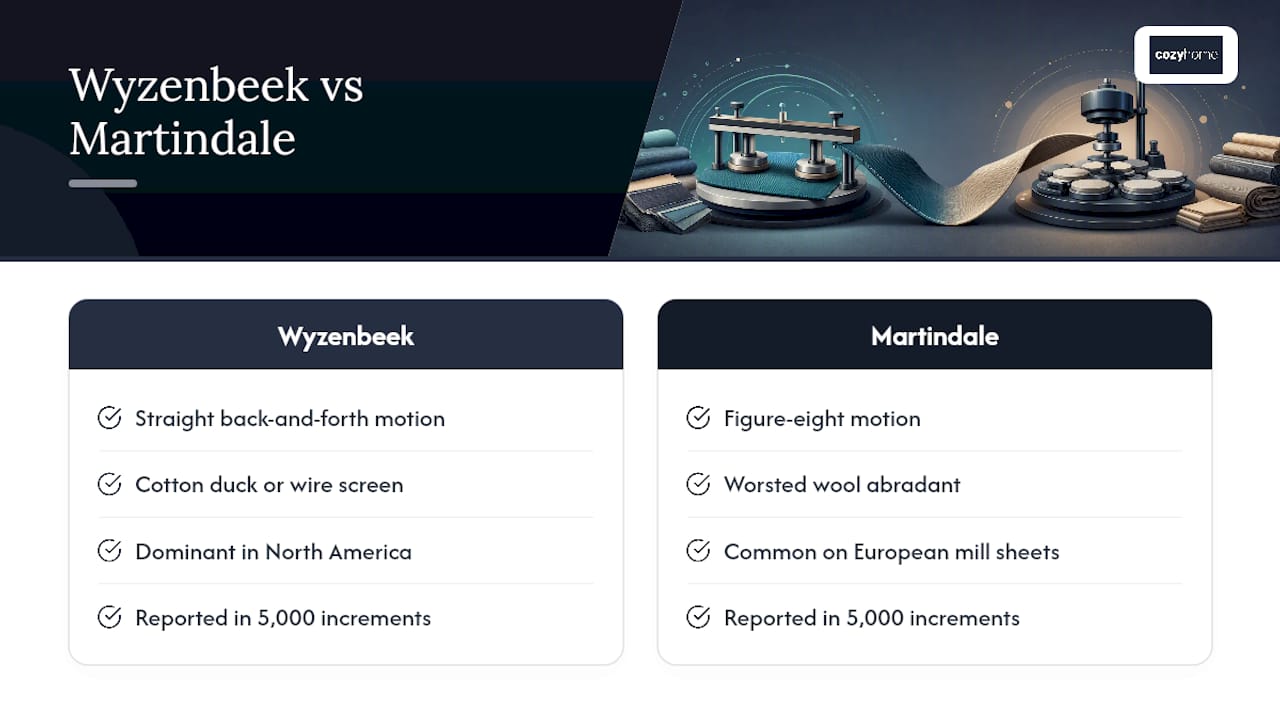
That mismatch is why converting one to the other is risky. Some guides publish approximate tables, such as 10,000 Wyzenbeek DR landing near 12,000 to 14,000 Martindale cycles, but treat any such conversion as a rough estimate rather than a real equivalency.
Both tests report results in 5,000-unit increments, so you’ll see fabrics rated at 15,000, 20,000, or 25,000 DR rather than odd numbers. That checkpoint convention matters more than it looks: testing above roughly 50,000 DR shows more variability between runs, meaning two swatches of the identical fabric can post noticeably different results at the high end. When you’re comparing two fabrics, always confirm they were tested with the same method before assuming one is more durable than the other.
How Many Double Rubs Do You Actually Need?
Matching rub count to real life keeps you from either underspending on fabric that wears out fast or overspending on ratings you’ll never test. ACT performance guidelines set 15,000 DR as the benchmark for low-traffic, private spaces, and 30,000 DR for many high-traffic public settings, and residential shopping largely maps onto that same logic.
- Formal or guest-only seating: 9,000 to 15,000 DR is fine since these pieces see occasional use.
- Accent chairs in a living room: 10,000 to 20,000 DR covers moderate daily sitting.
- Family-room sofa or sectional: 30,000 to 50,000 DR handles kids, pets, and daily lounging without showing wear early.
- Dining chairs: 15,000 to 25,000 DR is usually enough since seat backs and arms get more abrasion than seats in this category.
- Rental properties or Airbnb furniture: 30,000+ DR reduces how often you’re replacing pieces between tenants.
- Homes with pets or young kids: lean toward 40,000 to 50,000 DR or a performance fabric rated for that range.
- Small offices or light commercial spaces: 50,000 to 100,000 DR matches typical contract-grade expectations.
Trade practice generally treats 25,000 to 30,000 DR as the residential floor, stepping up from there based on who’s actually using the furniture. A mid-range number is genuinely sufficient for most households; performance fabric earns its price tag only when the wear pattern justifies it.
What Else Matters Besides the Rub Count
A high DR number tells you almost nothing about how a fabric will look after a spilled glass of red wine or three years of sunlight through a west-facing window. Rub count measures abrasion resistance and nothing else, and treating it as the sole durability metric is one of the most common mistakes shoppers make.
- Cleaning code: a letter (W, S, WS, or X) that tells you whether the fabric handles water-based cleaner, solvent only, both, or vacuuming alone.
- Pilling resistance: measures whether fuzz balls form on the surface with wear, independent of abrasion strength.
- Seam slippage and tensile strength: tell you whether the fabric will hold at the stitch line under tension, which matters as much as surface wear.
- Lightfastness: predicts fading from sun exposure, a factor rub count doesn’t touch at all.
Pro Tip: A fabric with a strong DR rating stitched onto a poorly built frame will still fail early. Check how the furniture itself is constructed alongside any fabric spec sheet.
A Shopper’s Checklist for Choosing Upholstery Fabric
Walking into a showroom with a plan beats walking in with just a color preference. Here’s the process we recommend:
- Define your use case first. Count how many people sit on the piece daily, whether pets are involved, and how often guests use the room. This single step determines your DR floor more than anything else.
- Set a minimum rub count, then widen your search. Once you know you need 30,000 DR minimum, you can compare fabrics within that range on color, texture, and pattern instead of getting distracted by swatches that won’t hold up.
- Check the cleaning code and hand feel alongside the number. A fabric with a great rub count but a stiff, scratchy hand often gets vetoed once it’s actually sat on. Comparing fabric against leather at this stage helps clarify what tradeoffs you’re willing to make.
- Request the full spec sheet and write down three things: the fabric name, its DR rating and test method, and its cleaning code. Confirm the warranty and return policy before you sign off.
Pro Tip: Ask specifically which test method was used. A seller who can’t answer “Wyzenbeek or Martindale?” usually hasn’t looked at the spec sheet themselves.
How cozyhome Furniture Applies Rub-Count Guidance in Practice
Our showroom staff walk every client through the same logic laid out above, matched to what they actually described about their household. A young family shopping for a sectional gets steered toward the 30,000 to 50,000 DR range as a starting point, while someone furnishing a formal sitting room rarely needs to go past 15,000 DR.
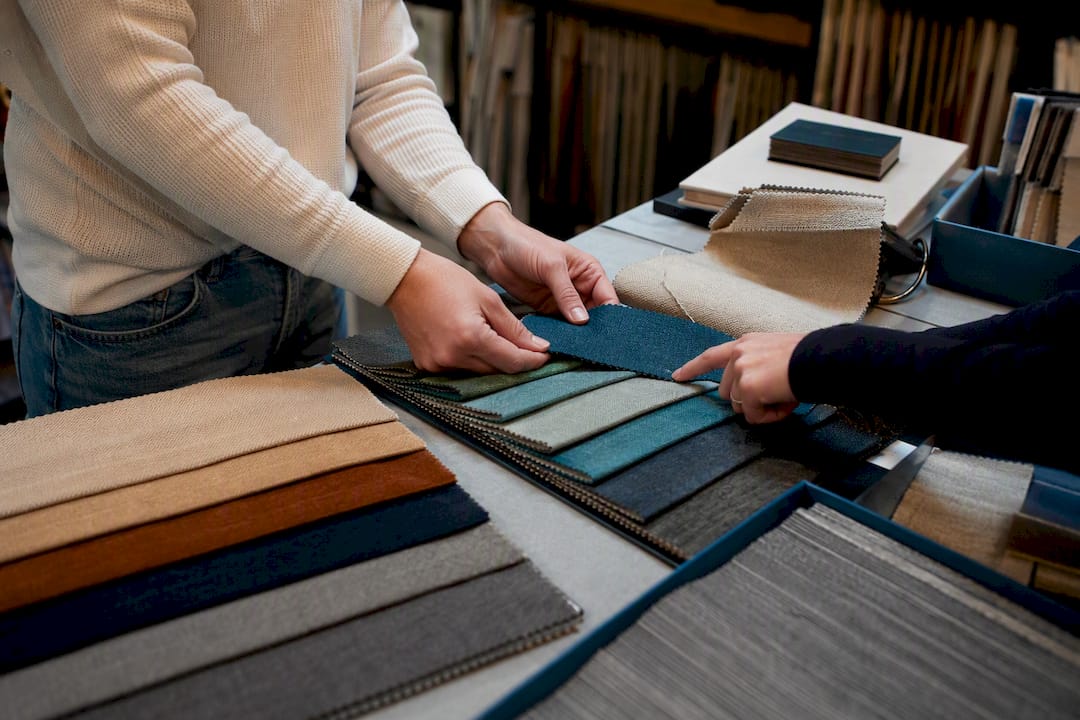
The conversations that matter most usually aren’t about the number at all. A performance fabric rated for heavy wear sometimes feels stiffer under the hand, and a client has to decide whether that tradeoff is worth it for a primary sofa. We document the fabric name, DR rating, and cleaning code on every order, so there’s a clear record of what was chosen and why, which avoids confusion later if a client wants to revisit that decision.
Why the Rub-Count Obsession Misses the Point
Most advice on this topic treats rub count like a single-number scorecard, as if 50,000 DR is automatically twice as good as 25,000 DR. It isn’t. The variability that shows up above 50,000 DR means two bolts of the identical fabric can test differently, so chasing the highest published number often buys peace of mind rather than measurable extra durability.
The bigger blind spot is treating rub count as a proxy for “good fabric” when it only measures one type of wear. A fabric can post a strong DR rating and still fade badly in direct sun, pill within a year, or fail at the seams before the weave itself shows any abrasion. Homeowners would get more value from asking sellers for cleaning codes and seam-strength data than from hunting for one more zero on the DR number.
What actually matters is matching the number to the household honestly. A formal living room does not need contract-grade fabric, and a house with two dogs and three kids should not settle for 15,000 DR because it looked nice under showroom lighting. Start with how the piece will be used, set your floor, then let comfort and cleaning code make the final call.
Sources
The ACT performance guidelines on abrasion set the industry thresholds referenced throughout this guide. The ACT white paper on abrasion explains testing increments and variability in more technical depth. For a side-by-side breakdown of test equipment, see the Wyzenbeek vs Martindale comparison and the Trivantage explainer on both methods.
- Abrasion (ACT performance guidelines, Feb 2025)
- Upholstery rub count: Martindale vs Wyzenbeek — Fabric Resource
- What Is a Double Rub Count in Upholstery Fabric? — StitchDesk
- Wyzenbeek & Martindale tests: Understanding textile durability ratings — Trivantage
FAQ
What does double rubs mean for fabric?
A double rub is one complete back-and-forth pass of an abrasive material across a fabric sample during lab testing, and the total number of passes a fabric survives before wearing through becomes its rub count.
What does 100,000 double rubs mean?
A 100,000 DR rating means the fabric withstood 100,000 abrasion cycles in testing, which meets or exceeds most contract and commercial durability standards; industry guidance notes that results above this level add limited additional real-world value.
Is 15,000 double rubs good?
Yes, for light residential or decorative use, 15,000 DR is a solid rating, and it also matches the ACT benchmark for low-traffic private spaces, though it’s on the lower end for a heavily used family sofa.
What are Wyzenbeek double rubs?
Wyzenbeek double rubs are the cycle count from the Wyzenbeek abrasion test, which moves an abradant like cotton duck or wire mesh back and forth across fabric in a straight line until the yarns break or visible wear appears.