

Custom Sofa vs. Stock Sofa: Which One Fits You Best?
If you have a room with an awkward layout, a specific fabric in mind, or a sofa that needs to last a decade, a custom made-to-order piece is almost always worth the extra investment. If you need seating fast, have a flexible space, or are working with a tight budget, a quality stock sofa gets the job done well.
Here are the four criteria that typically tip the decision:
- Space fit: Unusual room dimensions or tight doorways favor custom sizing.
- Budget: Stock sofas start lower upfront; custom pieces often cost less per year over a long ownership horizon.
- Timeline: Stock is available in days to two weeks; custom typically takes several weeks to a few months.
- Durability and lifespan: Made-to-order pieces built with hardwood frames and quality foam tend to outlast most mass-produced options.
Pro Tip: If you are on the fence, consider a hybrid approach: buy a stock sofa now for immediate seating, then invest in a custom anchor piece once you have lived in the space long enough to know exactly what you need.
Key Takeaways
Custom sofas deliver better long-term value for homeowners with defined spaces and multi-year ownership plans, while stock sofas serve buyers who need fast delivery, flexible budgets, or temporary seating solutions.
| Point | Details |
|---|---|
| Match the choice to your timeline | Stock sofas arrive in days to 2 weeks; custom orders take several weeks to a few months. |
| Amortized cost often favors custom | A $3,200 custom sofa lasting 12 years costs roughly $267 per year, often less than replacing a cheaper stock piece twice. |
| Frame and cushion fill matter most | Hardwood frames, corner-blocked joints, and high-density foam are the strongest predictors of long-term durability. |
| Hybrid strategy works for many buyers | A stock sofa now plus a custom anchor piece later lets you control budget while getting the fit you want. |
| cozyhome furniture | Offers custom, made-to-order sofas with 700+ fabric options, American-made craftsmanship, and free local delivery across DFW. |
Table of Contents
- How do custom and stock sofas compare side by side?
- What do made-to-order sofas actually give you?
- What does a stock sofa actually get you?
- How do the costs actually compare over time?
- What should you plan for with lead times and delivery?
- How do you decide? A practical checklist
- What construction details actually determine how long a sofa lasts?
- When does a mixed strategy make more sense?
- How the cozyhome furniture custom process works
- My honest recommendation for most homeowners
- cozyhome furniture: custom sofas built for your space in DFW
- Sources
- FAQ
How do custom and stock sofas compare side by side?
The table below maps the most important buying dimensions so you can see the tradeoffs at a glance.
| Dimension | Custom / Made-to-Order | Stock / Ready-Made |
|---|---|---|
| Best for | Unusual rooms, long-term investment, specific style | Fast delivery, flexible spaces, budget-conscious buyers |
| Upfront cost | Mid to high price range | Entry to mid price range |
| Lead time | Several weeks to a few months | Immediate to 2 weeks |
| Customization | Full: size, fabric, cushion fill, arm height, leg finish | Limited: preset sizes, fixed fabrics, standard firmness |
| Durability | Higher with quality build choices | Variable; depends heavily on price tier |
| Warranty and returns | Typically final sale; maker warranty on construction | Return windows common; varies by retailer |
| Resale / long-term value | Higher; quality pieces hold value longer | Lower; mass-produced pieces depreciate faster |
Three quick use-case examples show how this plays out in real homes:
- Small or awkward room: A 9-foot living room with a bay window and an off-center fireplace almost always needs a custom sofa sized to fit, not a standard 88-inch retail piece that blocks traffic flow.
- Tight timeline: Moving into a new apartment in two weeks? A well-chosen stock sofa from a local retailer or showroom is the practical answer.
- High-use family room: A household with kids, pets, and daily heavy use benefits most from a custom build with performance fabric and high-density foam, where the upfront cost spreads across 10 or more years of use.
A sofa that costs $3,500 and lasts 12 years works out to roughly $292 per year. One that costs $900 and needs replacing in four years runs about $225 per year but adds the hassle and cost of shopping again. The gap narrows quickly once you factor in delivery fees and your time.
What do made-to-order sofas actually give you?
Made-to-order sofas offer significant control over dimensions, fabric, and finish, with makers commonly quoting lead times of several weeks and positioning custom pieces as longer-lasting and more sustainable than mass-produced alternatives.
The customization options typically available include:
- Frame dimensions: Overall width, depth, and height adjusted to your room and doorway measurements.
- Seat depth and height: Critical for comfort, especially for taller or shorter users.
- Arm style and height: Track, rolled, flared, or square arms at the height that suits how you sit.
- Cushion fill: High-density foam, down-wrapped foam, or spring-down combinations.
- Frame material: Kiln-dried hardwood versus engineered wood or softwood.
- Leg finish: Walnut, oak, painted, or metal options to match existing furniture.
- Fabric and leather: Hundreds of options across performance weaves, natural fibers, and leather grades.
The cost drivers that matter most are frame material, fabric grade, and cushion fill. Upgrading from a softwood frame to kiln-dried hardwood adds cost but meaningfully extends the sofa’s lifespan. Choosing a Grade 4 or 5 fabric over a Grade 1 can add several hundred dollars but also adds years of wear resistance.
After-sales service from custom makers tends to be more personal than what you get from large retailers. Most reputable makers offer a construction warranty and will address issues like loose joints or cushion failures directly. Because the piece was built to your specifications, repairs and reupholstery are also more straightforward.
Pro Tip: The two decisions that most affect long-term comfort and durability are cushion fill and frame construction. Spend your upgrade budget there before choosing a premium fabric grade.
What does a stock sofa actually get you?
A stock sofa, also called a ready-made or retail sofa, is a pre-designed piece built in standard sizes and preset configurations, available to purchase and receive quickly. You choose from what is on the floor or in the warehouse, not from a blank spec sheet.
The typical selection at most retailers includes:
- Standard widths (usually 72, 84, or 96 inches) in a handful of fabric colors.
- Fixed cushion firmness, often medium, with no fill upgrade option.
- A limited set of leg finishes, usually two or three choices.
- Modular options at some retailers, though configurations are still preset.
Availability and returns are where stock sofas shine. Most retailers can deliver within a few days to two weeks, and many offer a return or exchange window, typically 30–90 days, as long as the piece is in original condition. That flexibility is genuinely useful if you are not certain about color or scale.
The tradeoffs are real, though. Mass-produced sofas at lower price points often use engineered wood frames, low-density foam, and sinuous springs that compress faster under daily use. Stock sofa reviews frequently note that cushions lose their shape within two to three years on entry-level models.
Stock is the sensible choice when:
- You need seating quickly for a move, a rental, or a temporary space.
- Your room dimensions are standard and the sofa will not be a permanent fixture.
- Your budget cap is firm and a quality stock piece fits within it.
- You are furnishing a secondary space, like a guest room or a home office, where daily use is light.
How do the costs actually compare over time?
Price ranges vary across the market, but the following tiers reflect what buyers typically encounter at retail and custom makers.
| Category | Typical Price Range | Example |
|---|---|---|
| Entry-level stock | $500–$900 | Basic 3-seat retail sofa |
| Mid-range stock | several hundred dollars | Higher-tier stock with better fabric options |
| Custom basics | several-thousand-dollar range | Made-to-order with standard fabric and hardwood frame |
| Premium custom | several-thousand-dollar range | Full bespoke with premium leather or specialty fabric |
Entry-level stock sofas can start for a low price for a basic configuration, while made-to-order retail collections show many custom sofas and sectionals listed in the several-thousand-dollar range. Some higher-tier stock models, like large sectional configurations, can approach prices that put them close to the entry point for a custom build.
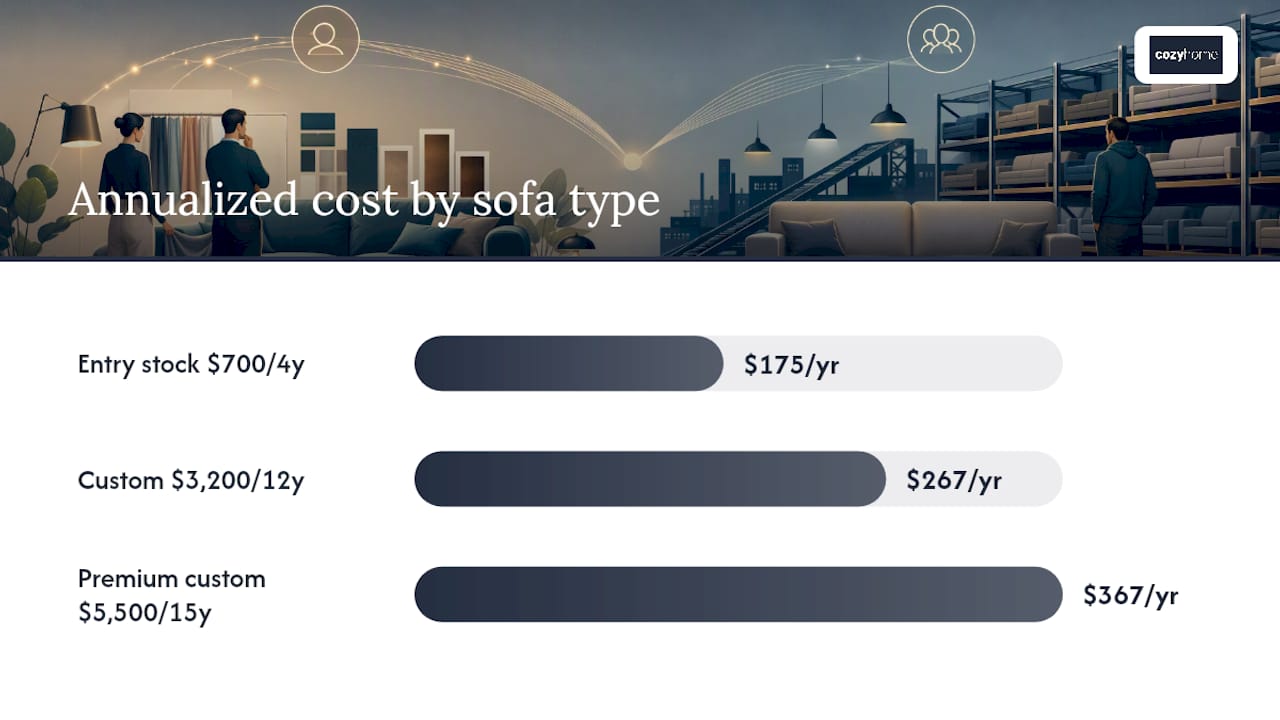
Amortized cost examples:
- A $700 stock sofa replaced every 4 years: roughly $175 per year, plus two additional delivery fees and shopping trips over a decade.
- A $3,200 custom sofa lasting 12 years: roughly $267 per year, with no replacement cost and likely a reupholstery option at year 10.
- A $5,500 premium custom sofa lasting 15 years: roughly $367 per year, but with a piece that holds its structure and can be reupholstered rather than discarded.
Resale value also differs. A well-built custom sofa in a quality fabric can sell secondhand for a meaningful fraction of its original price. Most entry-level stock sofas have little resale value after a few years of use.
Warranty differences are worth noting. Custom makers typically offer a construction warranty covering the frame and joints, often for several years. Stock retailers vary widely, from no warranty at all to limited one-year coverage on parts.
Pro Tip: Upgrading to high-density foam and a hardwood frame on a custom order adds roughly $300–$500 to the build cost but can double the functional lifespan of the sofa. That upgrade pays for itself within the first replacement cycle.
What should you plan for with lead times and delivery?
Lead times and delivery experiences differ significantly between the two paths.
| Option | Typical Lead Time | Delivery Type |
|---|---|---|
| Stock / ready-made | Immediate to 2 weeks | Curbside or white-glove (varies by retailer) |
| Custom / made-to-order | Several weeks to a few months | Usually white-glove or in-home placement |
Stock sofas from large retailers often arrive curbside, meaning the delivery team brings the piece to your door but does not bring it inside or assemble it. White-glove delivery, which includes in-home placement and packaging removal, is available from some retailers for an added fee.
Custom orders almost always include more attentive delivery, since the maker has a stake in the piece arriving in perfect condition. Many custom makers and local showrooms include in-home placement and packaging removal as standard.
Return policies and risk areas:
- Custom orders are typically final sale once production begins. Confirm this before you sign off on a fabric or configuration.
- Fabric samples are critical. A swatch in hand looks different from a full sofa under your room’s lighting. Always request samples before approving a custom order.
- Stock sofas with return windows give you flexibility, but check whether the window starts at purchase or delivery, and whether restocking fees apply.
Delivery readiness checklist:
- Measure doorways, hallways, stairwells, and elevator dimensions before ordering.
- Confirm the sofa’s packaged dimensions with the retailer, not just the assembled size.
- Have a clear path from the entry point to the room.
- Inspect the piece on delivery before signing. Note any damage in writing before the team leaves.
How do you decide? A practical checklist
Work through these criteria in order before committing to either path.
- Measure your space precisely. Note the room’s usable footprint, doorway widths, and any architectural features (fireplaces, windows, built-ins) that constrain placement. If no standard size fits cleanly, custom is likely the right call.
- Set a firm budget cap. Include delivery, any accessories, and a buffer for fabric upgrades. Know whether your budget is for the sofa alone or the full seating area.
- Define your timeline. If you need seating within two weeks, stock is your only realistic option. If you have six to twelve weeks, custom becomes viable.
- Assess intended use. Daily heavy use by a family with kids and pets calls for different materials than a formal sitting room used occasionally.
- Decide on maintenance tolerance. Some fabrics require professional cleaning; others are machine washable. Know what you are willing to manage before choosing upholstery.
Questions to ask at a showroom or custom consultation:
- What is the frame material, and is it kiln-dried hardwood?
- What foam density is used in the seat cushions?
- What is the suspension system (eight-way hand-tied, sinuous springs, webbing)?
- What is the warranty on the frame and cushions?
- What is the current lead time, and what happens if it changes after I order?
- Can I take fabric samples home before committing?
- Is the order final sale once production begins?
Red flags to watch for:
- No clear warranty terms in writing.
- Vague lead time estimates with no production start date.
- Frames described only as “solid wood” without specifying hardwood or species.
- No sample policy for fabric or leather.
- Pressure to decide on fabric in the showroom without taking samples home.
Avoiding common furniture shopping mistakes like skipping measurements or ignoring fabric performance ratings can save you from a costly return or a sofa that wears out too fast.
What construction details actually determine how long a sofa lasts?
The frame, suspension, and cushion fill are the three factors that most determine a sofa’s real lifespan, according to quality construction guidance. Cosmetic choices like nail-head trim or decorative legs have almost no effect on how long the piece holds up.
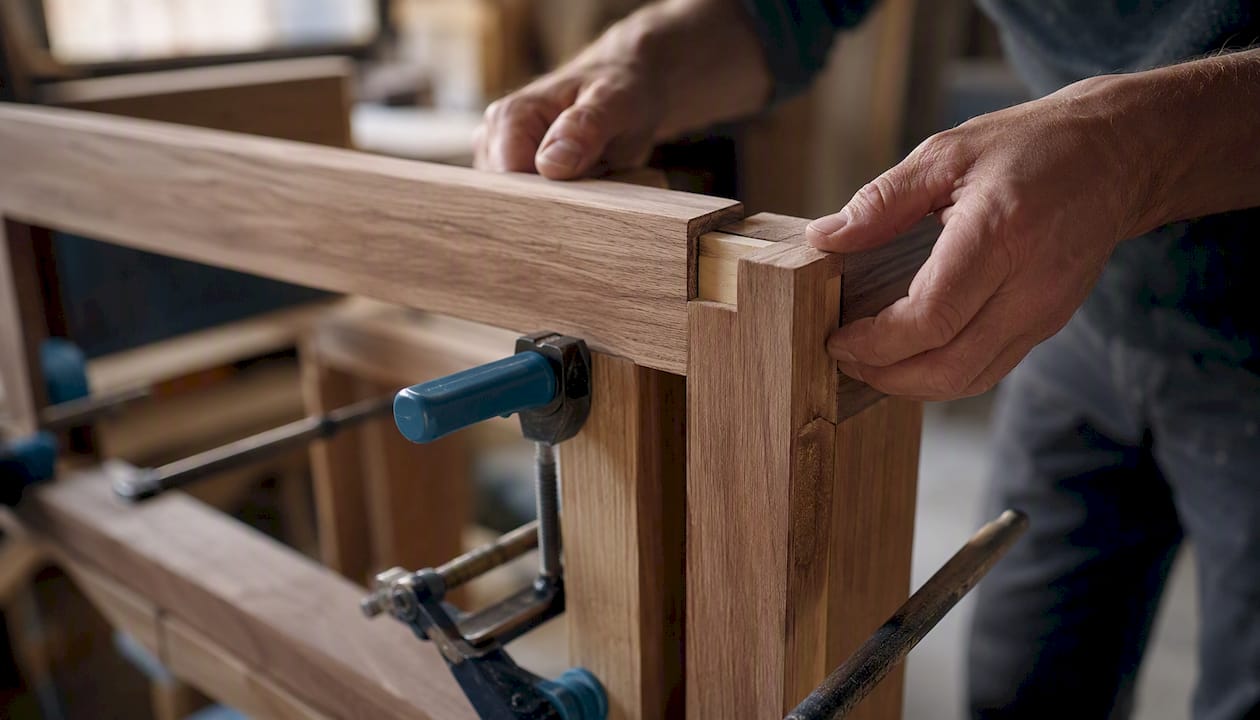
Frame: Kiln-dried hardwood (oak, maple, or ash) resists warping and cracking far better than green wood or engineered wood composites. Corner-blocked joints, where a small block of wood is glued and screwed across each corner, add structural rigidity that prevents the frame from racking over time.
Suspension: Eight-way hand-tied springs are the traditional benchmark for high-end sofas, offering even support and long-term resilience. Properly installed sinuous (S-shaped) springs are a reliable and more affordable alternative. Webbing alone, common in entry-level stock sofas, compresses faster and offers less support.
Cushion fill: High-density foam (1.8 lb/cubic foot or higher for seat cushions) holds its shape significantly longer than low-density foam. Down-wrapped foam adds a softer feel while maintaining structure. Pure down or fiber fill compresses quickly and requires frequent fluffing.
Fabric performance is where many buyers underestimate the difference. Fabric abrasion ratings, cleanability, and stain resistance materially affect daily durability. Performance weaves rated above 30,000 double rubs on the Martindale or Wyzenbeek scale are appropriate for family rooms with heavy use. Natural fibers like linen are beautiful but score lower on abrasion resistance. A well-chosen performance fabric can narrow the longevity gap between a stock sofa and a custom one considerably.
For care, vacuum upholstery weekly to prevent grit from working into fibers, rotate cushions monthly, and address spills immediately with a clean cloth rather than rubbing.
A note on warranties: Custom makers typically cover frame and joint construction for several years. Mass-market retailers vary widely, and some entry-level stock sofas carry no meaningful warranty at all. Ask for warranty terms in writing before you buy.
Grand View Research notes that consumer demand is shifting toward higher-quality and customizable furniture segments, and makers are responding by expanding made-to-order options with better materials and longer-lasting construction as a direct result.
When does a mixed strategy make more sense?
Combining stock and custom pieces is a practical approach that more homeowners use than you might expect, and it works well across a range of budgets and timelines.
A hybrid purchase pairs a custom anchor piece with stock secondary seating, letting you control the most visible investment while keeping total project cost in check.
Three scenarios where this approach works well:
- Starter home on a budget: Buy a quality stock sofa now for immediate seating. Add a custom sectional or chaise in 12–18 months once you have lived in the space and know exactly what configuration you want. This avoids the regret of a custom order placed before you understand the room.
- Large living room with one statement piece: Invest in a custom sofa as the room’s anchor, then fill secondary seating with well-chosen stock accent chairs or a bench. The custom piece sets the scale and style; the stock pieces support it without competing.
- Staged or transitional home: If you are selling a home or in a temporary living situation, stock seating makes sense for the short term. Reserve the custom investment for your next permanent space.
Pro Tip: When mixing stock and custom pieces, match leg finish and overall scale first. A stock chair with tapered walnut legs pairs naturally with a custom sofa on similar legs; mismatched finishes and wildly different seat heights make a room feel unplanned. Practical living room styling guidance consistently points to scale and finish consistency as the two easiest ways to make mixed pieces look intentional.
For fabric pattern mixing across custom and stock pieces, a consistent color anchor (a shared neutral or a repeated accent tone) ties the room together without requiring identical fabrics. The cozyhome furniture guide on combining fabric patterns walks through this in practical detail.
How the cozyhome furniture custom process works
For DFW homeowners who decide that a custom sofa is the right choice, cozyhome furniture’s Plano showroom offers a straightforward, guided process from first visit to final delivery.
The step-by-step process:
- Consultation: You visit the showroom and work directly with a knowledgeable staff member who asks about your room dimensions, how you use the space, and what you are looking for in comfort and style.
- Measurement and configuration: The team helps you determine the right size, seat depth, arm style, and configuration for your specific room, including any tricky doorways or layout constraints.
- Fabric selection: With 700+ fabric and leather options available, you choose from swatches in the showroom and take samples home to see them in your own lighting before committing.
- Build: Your sofa is crafted with American-made craftsmanship, using quality materials specified during your consultation.
- Delivery: Free local delivery to Plano, Frisco, Allen, McKinney, and the surrounding DFW area includes in-home placement so the piece lands exactly where it belongs.
Trust signals worth knowing:
- American-made construction with quality materials.
- In-person showroom access in Plano for hands-on fabric and configuration decisions.
- Flexible financing options to spread the investment.
- Warranty coverage on construction, with customer service that extends beyond the sale.
- Customer reviews consistently highlight both the finished product quality and the personal attention during the buying process.
What to bring to your consultation: Room dimensions (length, width, ceiling height), photos of the space, and any fabric or color swatches from existing pieces you want to coordinate with. Knowing your doorway and hallway measurements ahead of time saves a step.
For a deeper look at how to plan a custom sofa from the ground up, the cozyhome guide on designing a custom sofa from scratch covers every decision point in detail.
My honest recommendation for most homeowners
Most buyers come into this decision thinking the choice is purely about budget. It rarely is. The more useful question is: how long do you plan to keep this sofa, and how much does the fit of the room actually matter to you?
For a homeowner with a defined space, a clear style direction, and a plan to stay put for several years, a custom sofa is almost always the better investment. The per-year cost often ends up comparable to a mid-range stock piece once you account for the replacement cycle, and you get a sofa that actually fits the room rather than one you are working around.
That said, a well-chosen stock sofa at the mid-range tier, with a solid frame and a performance fabric, is a genuinely good piece of furniture. The gap between a thoughtfully selected stock sofa and an entry-level custom build is smaller than most people expect.
My single recommendation for the average homeowner: measure your room before you do anything else, set a realistic budget that includes delivery, and then decide. If the numbers work for custom, go that route. If they do not, buy the best stock sofa your budget allows and focus your upgrade dollars on fabric performance and cushion fill.
cozyhome furniture: custom sofas built for your space in DFW
For Plano, Frisco, Allen, McKinney, and surrounding DFW homeowners, cozyhome furniture offers a local alternative to mass-market furniture chains: custom, made-to-order sofas built around your room, your style, and the way you actually live.
With 700+ fabric and leather options, American-made craftsmanship, and free local delivery, cozyhome makes the custom process straightforward from first visit to final placement. Flexible financing means you do not have to choose between quality and budget. The showroom in Plano lets you see and feel fabrics in person, take samples home, and work with staff who know the difference between a 1.8 lb foam and a 2.5 lb foam and why it matters for your family room.
Browse the Excelsior sofa in cream or the Excelsior in gray for a curated ready-to-ship option, or visit the showroom to start a custom consultation and get a piece built exactly for your space.
Sources
- Furniture Market Size, Share & Trends Analysis Report | Grand View Research
- What makes a good sofa? A guide to quality construction | EngineerFix
- The Difference Between Custom Sofas and Store-Bought Sofas – MOMU
- Sofa fabric types: expert guide to choosing in 2026 - fabric fabric
FAQ
What is the average cost of a custom sofa?
Custom sofas typically range from around $2,000 for a basic made-to-order build to $8,000 or more for premium leather or specialty fabric configurations. Made-to-order retail collections show many custom sofas and sectionals listed in the several-thousand-dollar range.
Is custom furniture worth it?
For homeowners planning to keep a sofa for eight years or more, custom furniture usually delivers better value per year than replacing a cheaper stock piece one or two times over the same period. The fit, material quality, and repairability of a well-built custom piece also reduce long-term ownership friction.
What is the new trend in sofas?
Consumer demand is shifting toward higher-quality and customizable furniture, with more buyers choosing made-to-order pieces that reflect personal style and last longer than mass-produced alternatives. Performance fabrics and modular configurations are also growing in popularity.
How do I know if my room needs a custom sofa size?
If no standard retail width (typically 72, 84, or 96 inches) fits your room without blocking traffic flow, a doorway, or an architectural feature, a custom size is likely the right call. Measuring your usable footprint and doorway dimensions before shopping is the single most useful step you can take.