

Custom Furniture Cost: A Homeowner's Realistic Budget Guide
Custom furniture in the U.S. typically runs between $1,000 and $4,250, with most projects landing near a $2,600 average. That range covers a lot of ground, from a straightforward solid-wood side table to a fully upholstered sectional with premium fabric. The number that actually matters for your project depends on a handful of controllable factors: the materials you choose, how complex the design is, and who builds it.
Request itemized quotes from at least two makers so you can compare line by line, not just total price.
The main cost drivers are materials (wood species, fabric grade, metal type), size, joinery complexity, finishes, and labor. If you’re in the DFW area, cozyhome furniture’s Plano showroom offers made-to-order pricing consultations with no pressure, so you can get a real number for your specific piece before committing.
- Materials account for a large share of most quotes, especially for solid wood interior doors or leather pieces.
- Labor and workmanship often cost more than the materials themselves on upholstered pieces.
- Finishes and add-ons (staining, powder-coating, white-glove delivery) can add hundreds to the final bill.
Pro Tip: Before your first maker consultation, measure your space and write down the exact dimensions you need. Makers price by size, and a piece that’s 6 inches wider than standard can meaningfully change the quote.
Key Takeaways
Custom furniture in the U.S. typically costs $1,000–$4,250, with most projects averaging near $2,600, and the biggest budget lever is structural quality, not surface finish.
| Point | Details |
|---|---|
| Starting budget range | Most U.S. custom pieces fall between $1,000 and $4,250; budget near $2,600 as a midpoint. |
| Add a contingency | Build in 15–20% above your target for finish upgrades, spec changes, and delivery fees. |
| Upholstery cost drivers | Suspension and cushion construction often cost more than fabric; prioritize structure first. |
| Always get itemized quotes | Ask for materials, labor, finish, and delivery as separate line items to compare apples to apples. |
| cozyhome furniture | DFW homeowners can get a real itemized estimate at cozyhome furniture’s Plano showroom, with free local delivery included. |
Table of Contents
- What actually drives custom furniture cost?
- What are realistic price ranges by furniture type?
- How much does custom upholstery cost?
- How do shops actually calculate your quote?
- DIY vs. hiring a pro: what’s the real cost difference?
- How to get reliable quotes and build a working budget
- What working with a made-to-order showroom actually looks like
- What I’d tell a homeowner who’s about to start this process
- cozyhome furniture makes the custom process straightforward for DFW homeowners
- Sources
- FAQ
What actually drives custom furniture cost?
The price of a custom piece isn’t arbitrary. Most makers build their quotes from two core inputs: current material costs and actual bench hours. Graeber Design’s pricing breakdown puts it plainly: your quote equals the market price of materials plus the time it takes to build, with design complexity and joinery adding labor hours or specialist fees on top.
Wood species and material grade
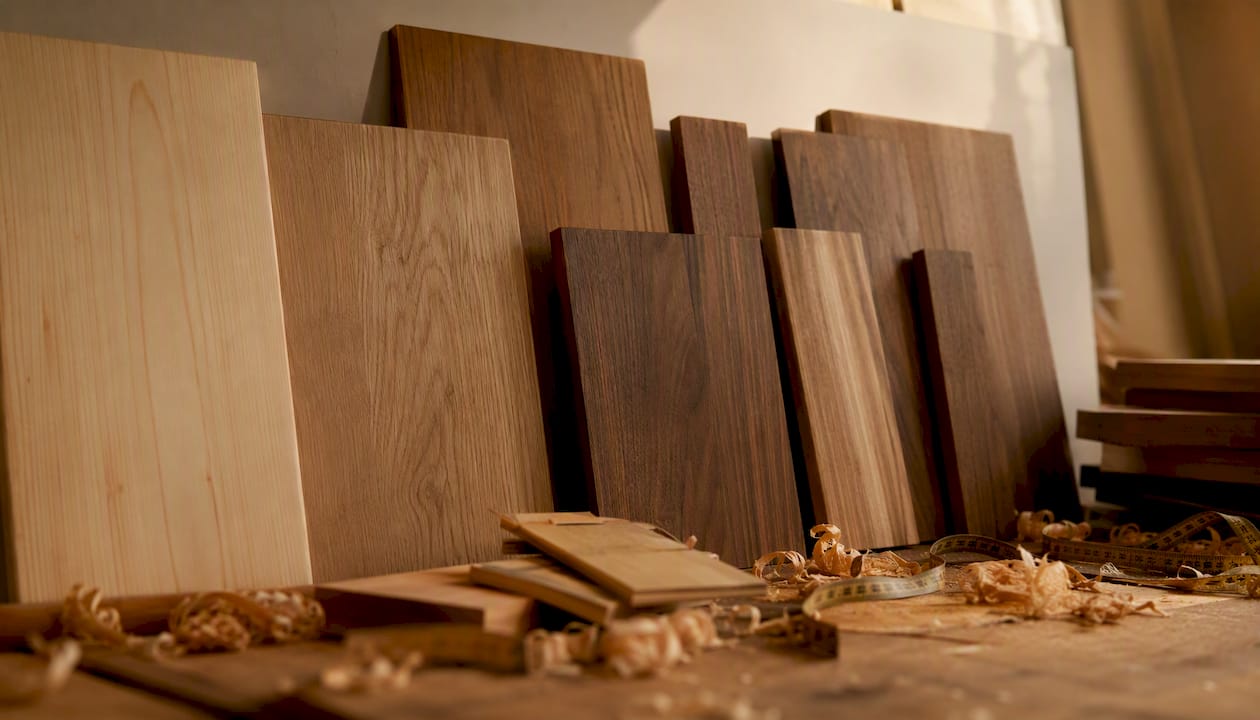
The wood you choose is one of the fastest ways to move a quote up or down. Per-board-foot costs vary widely by species: pine runs roughly $10–$25 per board foot, oak $35–$50, cherry $40–$60, and walnut $50–$90. A dining table that takes 20 board feet of material costs $200–$500 in pine but $1,000–$1,800 in walnut before a single hour of labor is added. For utilitarian pieces like a workshop bench or a mudroom shelf, a mid-grade domestic hardwood like oak gives you durability without the premium of figured walnut. Save the walnut for pieces that will be seen every day.
Fabric and leather follow similar logic. Entry-level upholstery fabrics start around $15 per yard; performance weaves and designer textiles can reach $120 per yard or more. Leather adds a meaningful premium over fabric on both material cost and labor, since it requires more careful cutting and alignment.
Size, scale, and board footage
Bigger pieces cost more, but not always in a straight line. Built-ins are typically priced by the linear foot at around $500, so a 10-foot wall of cabinetry runs roughly $5,000 before any specialty hardware or glass inserts.
Design complexity and joinery
Dovetail joints, mortise-and-tenon construction, and hidden hardware all add bench hours. A simple box joint takes a fraction of the time that hand-cut dovetails require, and that difference shows up directly in the quote. Curved forms, inlays, and concealed storage mechanisms each add specialist time. If you’re working to a budget, straight lines and standard joinery are the most reliable way to keep labor costs predictable.
Finishes and surface work
Finishing is often underestimated. Staining typically adds $150–$400 to a project; painting runs $80–$800 depending on prep and coats; powder-coating metal components adds $340–$1,020. Multi-step finishes (stain, seal, topcoat) take more time than a single oil or wax treatment, and specialty lacquers require spray booths and curing time that not every shop has in-house.
Labor rates and shop overhead
Labor commonly runs $30–$150 per hour depending on the maker’s skill level, location, and shop overhead. A one-person studio in a small market will price differently than a full-service urban shop with multiple craftspeople and a showroom. Urban markets tend to carry higher rates, and shop capacity in high-demand areas can push lead times out, which sometimes affects scheduling fees.
Pro Tip: Ask your maker to separate material costs from labor in the quote. A transparent shop will show both line items. If you get only a flat total, ask what happens to the price if you supply your own fabric or choose a different wood species.
What are realistic price ranges by furniture type?
The table below reflects typical U.S. ranges for common custom pieces. “Low” means a simpler design in a mid-grade material; “high” reflects premium materials, complex joinery, or large scale. These are starting-point benchmarks, not guarantees.
Built-ins deserve a separate note. Because they’re priced per linear foot, a modest 8-foot bookcase and a 16-foot entertainment wall are very different budget conversations, even if both look “simple” in a sketch. Always get a linear-foot quote and confirm whether it includes installation.
What pushes a piece from low to high? The jump usually comes from three places: upgrading the wood species or fabric grade, adding joinery complexity (curved forms, hidden compartments, hand-cut details), and choosing multi-step finishes. Changing just one of those three can move a piece from the low band to the midpoint.
HomeAdvisor’s custom furniture data puts the typical U.S. range at $1,000–$4,250 with an average near $2,600, which aligns with the midpoints in the table above for single-piece projects.
How much does custom upholstery cost?
Upholstered pieces have their own pricing logic, and it’s worth understanding before you start comparing quotes. The total cost of a custom sofa or reupholstery project breaks down into fabric, labor, cushion construction, and any structural work on the frame.
Upholstery project costs for sofas typically fall into three bands: roughly $1,200 on the low end, $2,800 on average, and $6,000 or more for complex or premium work. Fabric costs per yard range from about $15 for entry-level upholstery-grade cloth to $120 or more for designer or performance fabrics. Labor hours span from around 6 hours for a simple chair to 40+ hours for a large sectional with tufting, welting, or pattern-matched fabric.
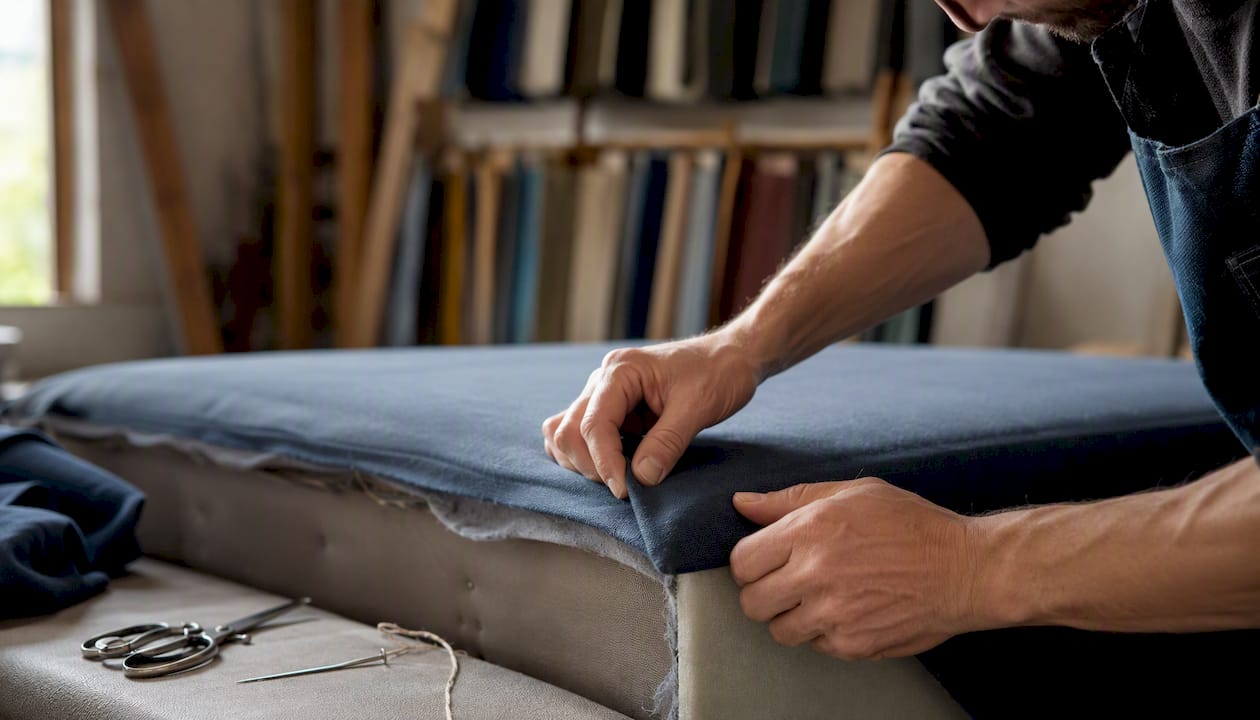
What often surprises homeowners is that workmanship choices frequently add more to the final price than fabric selection. Eight-way hand-tied spring suspension, high-density foam cores, and down-wrapped cushions each add meaningful cost. A sofa with budget fabric and excellent suspension will outlast and outperform one with premium fabric over a weak frame. That’s a trade-off worth thinking through before you fall in love with a $90-per-yard velvet.
When does reupholstery make sense?
Reupholstering an existing piece is worth it when the frame is solid hardwood and structurally sound. If the frame is particleboard or the joints are failing, the cost of frame repair plus new fabric and labor can approach or exceed the price of a new custom piece. A good upholsterer will assess the frame before quoting and tell you honestly whether it’s worth saving.
Hidden costs in reupholstery include pattern matching (adds yardage and labor), disposal of old materials ($50–$150 at most shops), and any spring or webbing replacement that only becomes visible once the old fabric is stripped. Budget for these before you commit.
For a detailed look at the full upholstery workflow, the custom furniture upholstery process guide from cozyhome furniture walks through each stage from frame assessment to final installation.
How do shops actually calculate your quote?
Most custom furniture shops price from a straightforward formula: materials at current market rates, plus bench hours at the shop’s labor rate, plus overhead and margin. Transparent makers show both line items rather than a single blended flat price, which makes it much easier to understand what you’re paying for and where you might adjust.
Common pricing structures you’ll encounter:
- Materials + hourly labor: The most transparent model. You see the wood or fabric cost and the hours estimated, priced at the shop’s rate ($30–$150/hr).
- Flat project fee: Common for simpler, repeatable pieces. Less flexible if you want to swap materials mid-project.
- Shop minimums: Many custom makers set a minimum order value, often $500–$1,500, to cover setup and design time even on small projects.
- Consultation fees: Some designers charge $75–$200 for an initial design session, which may or may not apply toward the final order.
Payment structure matters too. Extended warranty options, when offered, are typically priced as a flat fee or a percentage of the purchase.
Lead times are part of the cost equation even if they don’t appear on the invoice. Here’s what to expect:
- Simple accent pieces (side tables, benches): 2–4 weeks
- Mid-complexity pieces (dining tables, platform beds): 4–8 weeks
- Fully custom upholstered sofas or sectionals: 8–16 weeks
- Built-ins with custom hardware or glass: 10–20 weeks
Regional capacity affects these timelines. Urban markets with high demand for skilled bench labor can push lead times out further, and shops in those markets often carry higher hourly rates to reflect it.
DIY vs. hiring a pro: what’s the real cost difference?
DIY custom furniture can reduce your upfront cash outlay, but the savings are rarely as large as they look on paper. HomeAdvisor notes that DIY projects must factor in tool purchase or rental, practice time, and potential rework costs if structural or finish mistakes require professional repair.
| Factor | DIY | Hiring a Pro |
|---|---|---|
| Upfront cost | Lower (materials only) | Higher (materials + labor) |
| Tool investment | $500–$3,000+ for basic shop tools | None |
| Time required | 20–80+ hours depending on piece | 1–2 hours of your time (consult + delivery) |
| Finish quality | Variable; depends on skill | Consistent, professional |
| Structural warranty | None | Often included |
| Rework risk | High for beginners | Low |
| Resale/repairability | Harder to service | Easier with original maker |
DIY makes the most sense for simple, flat-pack-style builds: a basic bookshelf, a floating wall shelf, or a simple bench with no upholstery. The moment a project involves load-bearing joints, upholstery, or a finish that needs to look professional, the risk of a costly mistake rises quickly.
If you decide to go the DIY route, a short checklist before you start:
- Practice your joinery method on scrap wood before cutting your good material.
- Budget for tools honestly: a decent table saw, router, and finishing sander alone can run $1,500–$2,500 new.
- Test your finish on a hidden surface or scrap piece first.
- Factor in at least one “mistake board” per project for material waste.
- For any piece that will bear weight (a bed frame, a dining bench), research load ratings and use appropriate hardware.
For a broader look at where homeowners tend to overspend or under-plan, the common furniture shopping mistakes guide from cozyhome furniture covers the most frequent budget pitfalls.
How to get reliable quotes and build a working budget
Getting accurate quotes takes a little preparation, but it’s the single most effective way to avoid budget surprises. The goal is to give every maker the same information so you can compare estimates line by line.
Start by preparing a simple project brief: dimensions, intended use, preferred materials (or a shortlist), and any design references. Then ask each maker these specific questions:
- What species or fabric grade is included in this quote, and what would an upgrade cost?
- What joinery method are you using, and is it reflected in the labor estimate?
- What’s the payment schedule, and what triggers each milestone?
- What does delivery include: white-glove installation, haul-away of old furniture, or drop-off only?
- What’s the warranty, and does it cover the frame, fabric, and finish separately?
- What’s the realistic lead time, and what could extend it?
A solid itemized estimate should include at minimum:
| Line Item | What to Confirm |
|---|---|
| Materials (species/grade/yardage) | Specific name, not just “hardwood” or “fabric” |
| Labor hours and rate | Separate from materials |
| Finish type and coats | Stain, seal, topcoat listed individually |
| Delivery and installation | White-glove vs. curbside; haul-away included? |
| Contingency or change-order policy | What happens if you change a spec mid-build? |
| Warranty terms | Duration, what’s covered, who handles repairs |
Unusually low bids often reflect shortcuts in materials, joinery, or finish that only become visible after delivery.
Delivery fees alone can add $150–$1,000+ depending on distance and service level, so always confirm whether that’s included before comparing totals. A quote that looks $300 cheaper may simply have excluded delivery.
That contingency covers spec changes, finish upgrades, and the occasional “while we’re at it” addition that always seems to come up.*
For guidance on what to ask when designing a custom sofa from scratch, cozyhome furniture’s blog walks through the specification questions that matter most.
What working with a made-to-order showroom actually looks like
A local made-to-order showroom handles the complexity of custom furniture in a way that online ordering simply can’t replicate. Here’s the typical workflow at a showroom like cozyhome furniture in Plano:
- Consultation: You bring your measurements, inspiration photos, and a sense of your budget. A staff member walks you through what’s achievable at different price points and flags any sizing or configuration issues before you commit.
- Material selection: With 700+ fabric and leather options available in-store, you can feel the actual texture and weight of what you’re choosing, not just look at a swatch on a screen. This step alone prevents a lot of post-delivery regret.
- Design and specification: Dimensions, configuration, cushion fill, arm style, leg finish. Each choice is documented so the production order is exact.
- Production: American-made craftsmanship means the piece is built to your spec, not pulled from a warehouse. Lead times vary by piece and complexity.
- Delivery and installation: White-glove delivery means the piece arrives placed in your room, not left at the curb.
Regional pricing variation is real. For DFW homeowners, the Plano location offers local pricing without the premium of a major coastal market.
For context on how a showroom experience compares to a warehouse store on pricing and service, the DFW buyer’s guide to showrooms vs. warehouse stores from cozyhome furniture lays out the differences clearly.
What a showroom estimate typically includes
A well-structured showroom estimate covers: itemized materials (fabric name, grade, and yardage), labor by phase, finish specifications, delivery and installation fees, deposit amount and payment schedule, lead time with a production window, and warranty terms by component. If any of those items are missing, ask before signing.
What I’d tell a homeowner who’s about to start this process
The case for spending more on structure than on surface
Most homeowners allocate their budget emotionally: they fall for a fabric or a wood finish and then try to fit the structural choices into whatever’s left. That’s usually backwards.
For sofas and upholstered seating, the suspension and cushion construction determine how the piece feels and holds up five years from now. A sofa with eight-way hand-tied springs and a high-density foam core wrapped in down will outlast and outperform a sofa with a prettier fabric and a sinuous spring base. Spend where it’s hidden first.
For case goods like dressers and dining tables, the joinery and the wood species matter more than the finish. A well-joined piece in oak with a simple oil finish will serve a family better than a beautifully lacquered piece with weak corner blocks. The finish can be refreshed; the joints can’t easily be rebuilt.
One practical recommendation: if you’re choosing between upgrading the wood species and upgrading the joinery method, choose the joinery. A walnut table with weak joints is a liability. An oak table with mortise-and-tenon construction is an heirloom.
cozyhome furniture makes the custom process straightforward for DFW homeowners
If you’ve been putting off a custom furniture project because the pricing felt opaque or the process felt complicated, cozyhome furniture’s Plano showroom is a good place to start. We offer made-to-order sofas, sectionals, beds, and dining furniture with 700+ fabric and leather options, American-made craftsmanship, and in-store staff who guide you through every spec decision without pressure.
The practical advantage of working with us is simple: you get an itemized estimate based on your actual dimensions and material choices, not a generic online range. Free local delivery to Plano, Frisco, Allen, McKinney, and surrounding DFW communities means no surprise freight charges. Flexible financing options make it easier to invest in the structural quality that matters long-term.
Browse the Excelsior sofa to see what made-to-order craftsmanship looks like in practice, or visit our Plano showroom to bring your measurements and start a real conversation about your project. An in-store consult takes about an hour and leaves you with a clear, itemized estimate you can actually budget from.
Sources
These are the primary sources used for the price benchmarks, upholstery data, and maker pricing insights in this article.
- How Much Does Custom Furniture Cost? 2025 Data
- How Much Does Custom Furniture Cost? 2026 Data | Angi
- Cost of upholstery sofa price guide for buyers 2026
- What Goes Into a Custom Sofa Price? - The Lounge by Buildlane
- A Homeowners Guide for the Cost of Custom Furniture | Blue Ridge Furniture
FAQ
How much does custom furniture typically cost in the U.S.?
Most custom furniture projects fall between $1,000 and $4,250, with an average near $2,600. The final price depends on materials, size, joinery complexity, and labor rates in your area.
Is custom furniture more expensive than buying off the floor?
Yes, custom furniture generally costs more upfront than mass-market pieces, but the price reflects made-to-spec dimensions, material quality, and construction methods that off-the-floor furniture rarely matches.
How much does a custom sofa cost?
A custom sofa typically runs $1,200 on the low end, around $2,800 on average, and $6,000 or more for premium materials and complex construction like eight-way hand-tied springs or high-end leather.
Is it cheaper to build your own furniture or hire a pro?
DIY reduces upfront cash outlay but requires $500–$3,000+ in tools, significant time, and carries real rework risk. For structural or upholstered pieces, hiring a pro usually delivers better long-term value.
Is custom furniture worth the investment?
For pieces you’ll use daily, like a sofa, dining table, or bed frame, custom furniture built to your dimensions and with quality joinery tends to outlast and outperform mass-market alternatives, making the higher upfront cost worthwhile over time.