

Choosing Fabric or Leather for Custom Upholstery
If your furniture sees kids, dogs, coffee mugs, and Sunday football, leather is the safer long-term bet: it wipes clean, resists daily wear, and can outlast fabric by years when you choose a protected finish. If you want color, pattern, texture, and a softer feel underhand, fabric wins, especially with today’s performance weaves that shrug off spills almost as well as leather does. We built this guide the way we walk customers through it on our showroom floor: verdict first, then the specifics that make the choice stick.
Best for pets and kids: pigmented (protected) leather or a Crypton-style performance fabric. Best for style flexibility: fabric, hands down, given the sheer range of colors, patterns, and textures available. Best for a showpiece chair that won’t take daily abuse: aniline leather, prized for its natural grain and rich patina. Best for year-round comfort in a hot or humid climate: fabric, since leather can feel cold in winter and sticky in summer.
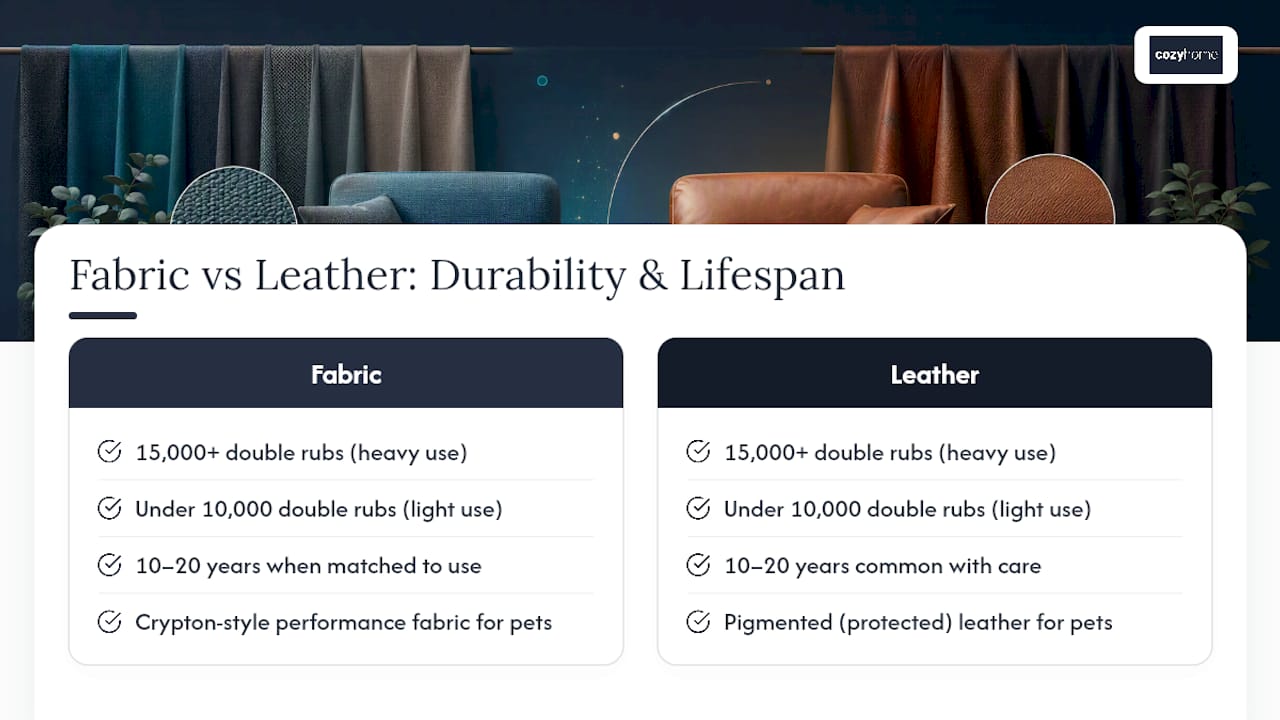
Two numbers matter more than any showroom brochure will tell you. First, double-rub abrasion ratings: a fabric or leather rated at 15,000 double rubs or higher is built for heavy daily use, while anything under 10,000 belongs on a piece that sees light, occasional traffic. Second, lifespan: well-maintained leather sofas commonly run 10 to 20 years, and fabric pieces land in a similar range when the fiber and weave match how the piece actually gets used. At our cozyhome furniture showroom in Plano, we let you handle both materials side by side before you commit, because a swatch under showroom lighting tells you things a catalog photo never will.
Key Takeaways
The right upholstery choice comes down to matching material durability and finish to how the furniture will actually be used, not just how it looks in the showroom.
| Point | Details |
|---|---|
| Choose leather for heavy use | Pigmented leather resists pet claws, spills, and daily wear better than most fabrics. |
| Choose fabric for style range | Fabric offers far more color, pattern, and texture options than any leather grade. |
| Check the double-rub rating | Look for 15,000+ double rubs on any piece expected to handle daily family traffic. |
| Test swatches at home first | Order physical samples and view them in your own lighting before finalizing an order. |
| Visit cozyhome furniture for guidance | Our Plano showroom offers 700+ fabric and leather options with staff who help confirm specs before you buy. |
Table of Contents
- How to Choose Fabric or Leather for Custom Upholstery
- What Are the Pros and Cons of Leather Upholstery?
- What Are the Pros and Cons of Fabric Upholstery?
- Is Faux Leather a Good Alternative to Real Leather?
- How Do You Read Durability Specs on Fabric and Leather?
- How Do You Clean and Maintain Fabric and Leather Upholstery?
- Which Costs More Over Time: Leather or Fabric?
- What Questions Should You Ask Before Choosing Custom Upholstery?
- How Does a Curated Showroom Make This Decision Easier?
- An Editor’s Take on Splurging Versus Saving
- Ready to See Fabric and Leather Side by Side?
- Sources
- FAQ
How to Choose Fabric or Leather for Custom Upholstery
The decision comes down to three questions: how will the piece be used, who will be sitting on it, and how much maintenance are you actually willing to do? Answer those honestly and the material choice mostly makes itself.
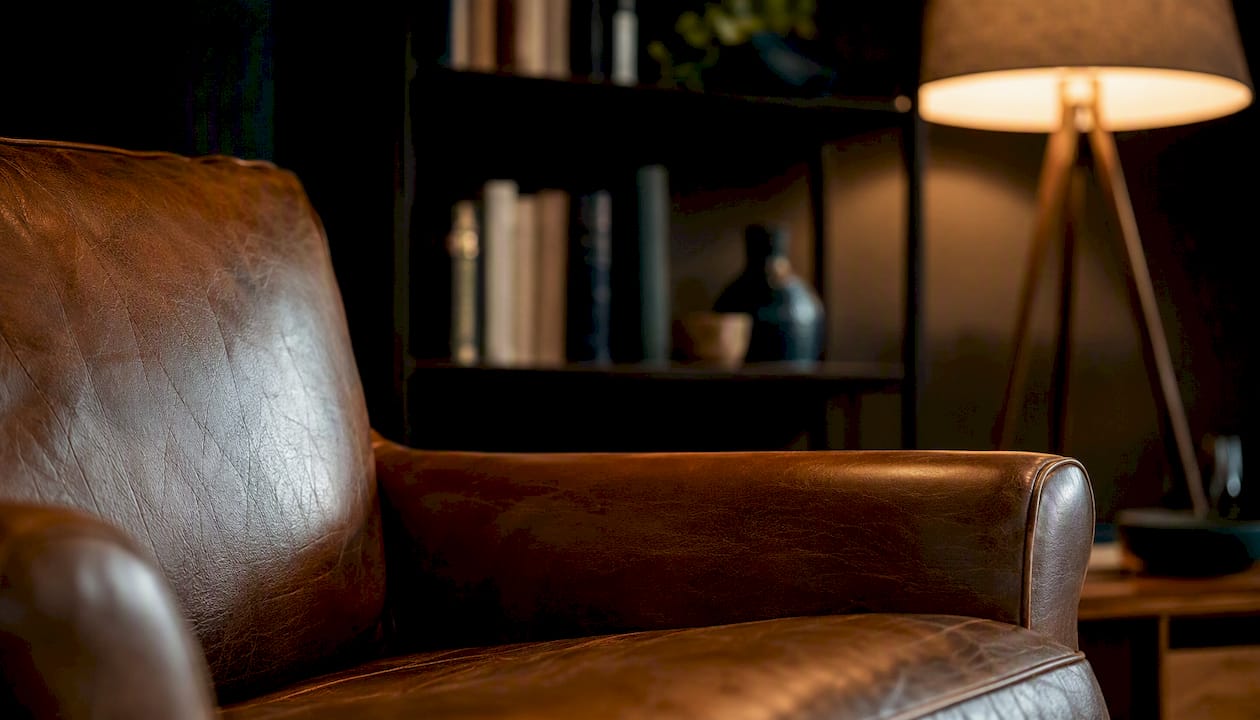
Leather earns its reputation as the low-maintenance workhorse of upholstery. It doesn’t trap dust or pet dander, spills wipe off with a damp cloth, and a well-chosen hide develops character over time instead of looking worn out. Leather is generally easier to keep clean and is naturally hypoallergenic, but it comes at the cost of color and texture variety compared to fabric. That tradeoff, ease versus expression, is the entire decision in miniature.
Fabric flips the script. You get access to hundreds of colors, patterns, and weaves, softness that leather can’t match, and a surface that feels the same temperature no matter the season. The catch is that fabric needs more thought upfront: fiber content, weave tightness, and any protective treatment all determine whether it survives a toddler’s juice cup or a cat’s claws.
What Are the Pros and Cons of Leather Upholstery?
Not all leather is created equal, and the finish tier does more to determine how a sofa performs than almost anything else on the spec sheet.
Aniline leather is dyed all the way through with soluble dyes and left with no protective topcoat, which preserves natural grain, scars, and texture. It looks and feels the most luxurious, but it’s also the most vulnerable to stains, sun fading, and scratches.
Semi-aniline leather gets a light protective coating on top of the aniline dye process, giving you a middle ground: mostly natural feel with a bit more resistance to spills and wear.
Pigmented (protected) leather has a polymer surface coating with color applied on top, which sacrifices some natural texture in exchange for serious durability. This finish tier is the one leather specialists most often recommend for households with kids and pets, since it resists scuffs and cleans up with soap and water.
Leather also comes in different grades by how the hide itself is processed. Full-grain and top-grain leather retain the strongest fiber structure and hold up the longest, while corrected-grain, split, and bonded leather cost less but wear faster and can crack or peel within a few years.
Pros:
- Wipes clean in seconds and resists dust, dander, and dirt buildup
- Naturally hypoallergenic, a real plus for households with allergy sufferers
- Full-grain leather develops a patina that most owners find more attractive with age
- Holds up to sharp claws and heavy daily traffic far better than most fabrics
Cons:
- Far fewer color and pattern choices than fabric
- Can feel cold in winter and warm or sticky in humid summer months
- Higher upfront cost, especially for full-grain hides
- Sun exposure fades and dries out unprotected aniline leather over time
Use pigmented leather for a family sofa that needs to survive daily life. Save aniline leather for a low-traffic accent chair or a room where the piece is admired more than it’s lived on. Full-grain leather is the right call when you want a piece to last many years, since the fiber structure simply holds up longer than any other grade.
Leather furniture is durable, easy to clean, and naturally hypoallergenic, but it can’t match fabric’s range of colors and textures. The right choice depends entirely on how a family actually lives with the piece.
Pro Tip: If you’re torn between a beautiful aniline hide and a more practical pigmented option, ask your upholsterer whether the piece will live in direct sunlight or heavy foot traffic. That single answer usually settles the debate.
What Are the Pros and Cons of Fabric Upholstery?
Fabric performance comes down to two things: fiber content and weave. Cotton and linen blends feel soft and breathable but wear faster under heavy use. Wool blends resist pilling and stains naturally. Synthetic fibers like polyester and nylon, especially in tight weaves, often outperform natural fibers on raw durability while costing less.
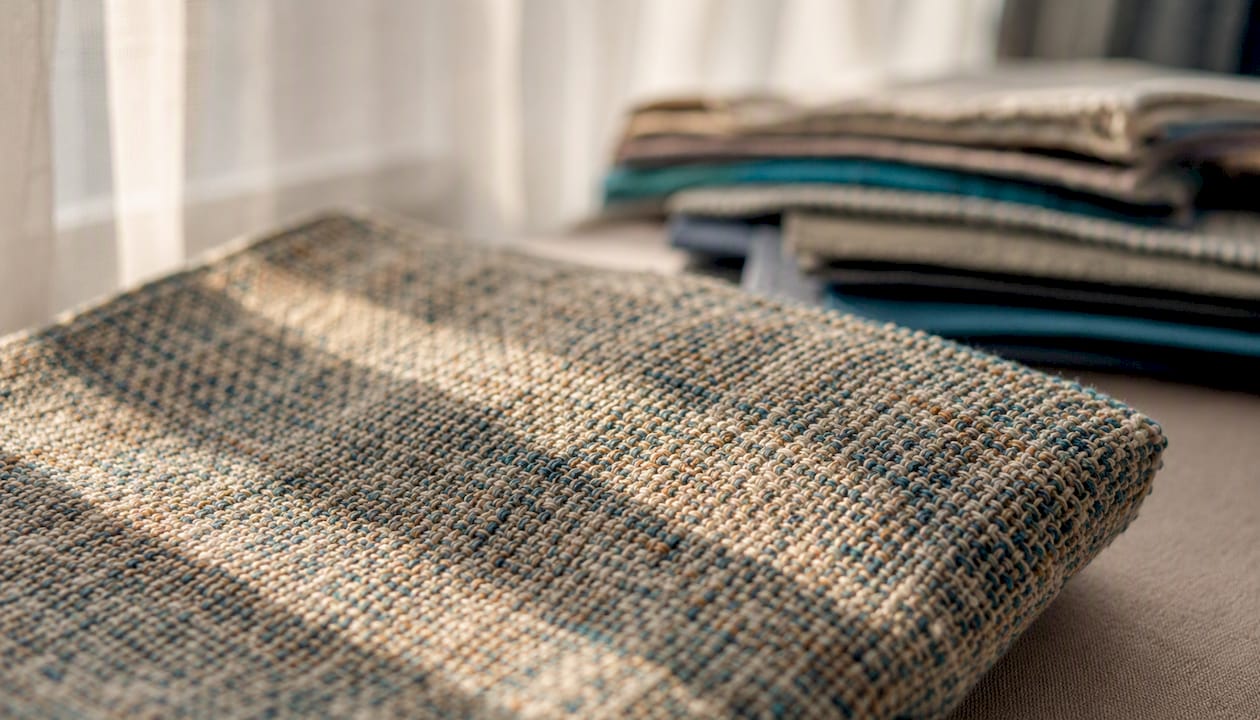
Performance fabrics have changed the calculus entirely. Crypton and similar engineered fabrics are built for stain resistance, antimicrobial protection, and high rub counts, putting them in the same durability conversation as protected leather for many households. A tightly woven performance fabric can now handle red wine, muddy paws, and marker scribbles about as well as pigmented leather, while still offering the color and pattern range that leather can’t touch.
Pros:
- Enormous range of colors, patterns, and textures for matching any design vision
- Softer, more temperature-neutral feel than leather in most climates
- Performance treatments now rival leather for stain resistance and cleanability
- Generally lower cost at the entry level than comparable leather pieces
Cons:
- Untreated fabric can trap dust, pet dander, and allergens in the weave
- Stains can set permanently if not treated with the right cleaning code
- Lower-grade weaves pill or thin out faster under heavy daily use
- Matching dye lots across large pieces can be tricky with custom orders
| Fiber Type | Durability | Care Level | Best Use |
|---|---|---|---|
| Cotton/linen blend | Moderate | Needs regular vacuuming, prone to wrinkling | Low-traffic accent chairs, formal living rooms |
| Wool blend | High | Naturally stain and pill resistant | Family rooms, moderate daily use |
| Polyester/synthetic weave | High | Wipes clean, resists fading | High-traffic sofas, sunrooms |
| Performance fabric (Crypton-style) | Very high | Stain resistant, machine washable in some cases | Homes with kids, pets, heavy entertaining |
Pro Tip: Never choose a fabric from a screen swatch alone. Order a physical sample and set it in the room where the piece will live, checking it in morning light, afternoon light, and lamp light before you sign off, since colors shift dramatically under different bulbs.
Is Faux Leather a Good Alternative to Real Leather?
Faux leather, also called leatherette, is a fabric or vinyl base coated with a polyurethane or PVC layer designed to mimic the look and feel of real hide. Hybrid coated fabrics take this further, blending woven backing with a more flexible performance coating that resists stains without the higher price tag of genuine leather.
Pros of faux leather:
- Costs significantly less than genuine leather
- Colors and finishes stay perfectly consistent across every yard, unlike natural hides
- Easier for upholsterers to match across large sectional pieces
- No animal byproducts, which matters to some environmentally minded buyers
Cons of faux leather:
- Wears out faster than genuine leather, often cracking or peeling within a few years of heavy use
- Doesn’t develop the patina that makes real leather more attractive with age
- Some manufacturing processes carry a heavier environmental footprint than buyers expect
- Repairs are harder since peeling coated fabric usually can’t be patched invisibly
| Scenario | Faux Leather Makes Sense | Faux Leather Is a Risk |
|---|---|---|
| Rental property furniture | Yes, low cost offsets shorter lifespan | Not applicable |
| Kids’ playroom bench | Yes, easy wipe-down for light use | Not applicable |
| Everyday family sofa (10+ year piece) | Not applicable | Yes, coating wear shows up fast under heavy use |
| Statement chair in a formal room | Not applicable | Yes, lacks the character genuine leather develops |
Think of faux leather as a smart choice for a short-term or low-stakes piece, not as a permanent substitute for the family sofa you expect to keep for a decade or more.
How Do You Read Durability Specs on Fabric and Leather?
Every fabric bolt and leather hide comes with a spec sheet, and most buyers never learn to read it. That’s a mistake, because the double-rub number tells you more about how a sofa will survive real life than any marketing description.
Double-rub tests, most commonly run using the Wyzenbeek or Martindale methods, measure how many rubbing cycles a fabric can withstand before it starts to show wear. A rating of 15,000 double rubs or higher is considered suitable for heavy residential use, the kind of daily sitting, sliding, and general chaos a family living room sees. Fabrics rated between 10,000 and 15,000 double rubs handle medium use well, think guest rooms or adult-only households. Anything under 10,000 double rubs should be reserved for accent pieces that rarely get sat on.
| Double-Rub Rating | Suitable Use | What It Means Day to Day |
|---|---|---|
| 15,000+ | Heavy residential, pets, kids | Withstands daily sitting, sliding, and rough handling |
| 10,000 to 15,000 | Medium residential use | Fine for adult households and moderate traffic |
| Under 10,000 | Light or occasional use | Best for accent chairs, formal rooms, low-contact pieces |
Watch for these red flags on any spec sheet:
- No double-rub or abrasion number listed at all, which usually means the fabric hasn’t been tested for durability
- Vague or missing cleaning codes, leaving you guessing how to treat a future stain
- No width or pattern-repeat data, which can lead to mismatched seams on larger pieces
- A leather hide with no thickness or ounce weight specified, since thickness affects how the leather drapes and holds its shape over time
If a showroom or online retailer can’t produce these numbers on request, that’s a sign to keep looking.
How Do You Clean and Maintain Fabric and Leather Upholstery?
Leather care is refreshingly simple once you know the routine. Dust it weekly with a soft, dry cloth, and condition it every six to twelve months with a leather conditioner suited to your finish tier to prevent drying and cracking. Keep leather out of direct, prolonged sunlight when possible, since UV exposure fades and dries unprotected finishes faster than almost anything else.
Fabric care takes a bit more attention. Vacuum weekly using an upholstery attachment to lift dust and dander out of the weave before it settles in. Blot spills immediately rather than rubbing, which drives liquid deeper into the fibers instead of lifting it out.
- Identify the spill. Oil-based stains, wine, and pet accidents each need different treatment, so don’t reach for an all-purpose cleaner blindly.
- Blot, never rub, using a clean white cloth to lift as much liquid as possible before it sets.
- Test any cleaner on a hidden section first, whether it’s leather conditioner or a fabric-safe spot remover.
- Follow the cleaning code on the tag, which tells you exactly what’s safe to use.
- Call a professional for pet urine, deep-set wine stains, or any leather scuff that goes past the surface coating, since DIY attempts often make these worse.
Do treat fresh spills within minutes. Don’t scrub aggressively or apply heat to set a stain by accident. Do keep a stocked kit of blotting cloths and the right cleaner on hand. Don’t use bleach-based products on either leather or unspecified fabric blends.
Pro Tip: Check the cleaning code tag before buying, not after a spill happens. “W” means water-based cleaners only, “S” means solvent-based cleaners only, “WS” means either works, and “X” means vacuum only, no liquid cleaners at all.
Which Costs More Over Time: Leather or Fabric?
Leather typically costs more upfront, largely because it’s sold by the hide rather than the yard, and a single sofa can require several full hides depending on size and cutting layout. Fabric pricing varies more widely, ranging from budget-friendly synthetic blends to premium designer weaves that can rival leather’s cost per yard.
Lifespan tells the more important part of the story. Well-maintained leather commonly lasts 10 to 20 years, with full-grain pieces often landing at the higher end of that range. Fabric lifespan depends heavily on fiber and weave quality, but a performance fabric matched correctly to its use case can match leather’s longevity at a lower entry price.
Reupholstery is where the math gets real. Leather reupholstery costs more per piece because of hide yield calculations and the labor required to match grain direction across cushions and arms. Fabric reupholstery costs vary with yardage needs and pattern-matching complexity, but generally run lower than a comparable leather job.
Several factors shift total cost of ownership more than people expect:
- Direct sun exposure, which accelerates fading and cracking in leather and fabric alike
- Pet claws, which shorten the lifespan of lower-grade leather and loose weaves significantly
- Seam and tufting complexity, which raises labor costs on both reupholstery and initial builds
- How often the piece gets professionally cleaned versus left to accumulate wear
A well-chosen material that costs more today often ends up cheaper per year of use than a bargain piece that needs replacing in five years.
What Questions Should You Ask Before Choosing Custom Upholstery?
Run through this checklist before you sign off on any custom order:
- What will the piece be used for, and by whom, day to day?
- How much foot and paw traffic will it realistically see?
- Does the room get direct sunlight for part of the day?
- Do you want a specific pattern, color, or texture, or is durability the priority?
- What’s your actual budget, including delivery and any protection treatment?
- How much maintenance are you honestly willing to do each month?
Bring these exact questions to your upholsterer or showroom consultant:
- What is the double-rub rating for this fabric or the finish grade for this leather?
- What cleaning code applies, and what’s the recommended care routine?
- Is this leather sold from a single dye lot, or could I see variation across a large piece?
- How much yardage or how many hides does my configuration require?
- What warranty covers frame, cushion fill, and upholstery separately?
Walk away if a showroom can’t answer the double-rub or dye-lot question directly, if swatches look noticeably inconsistent from piece to piece, or if nobody can tell you the warranty terms in plain language.
Follow these steps in order once you’ve narrowed your options:
- Order physical swatches, never trust a screen color alone.
- Test them in your actual room at different times of day and under different light sources.
- Confirm the specs in writing, including double-rub rating, cleaning code, and dye lot or fiber content.
- Place your order once the fabric or leather has passed the light test and the spec sheet checks out.
Pro Tip: Bring a fabric or leather sample home overnight before finalizing. What looks perfect under fluorescent showroom lighting sometimes reads completely differently by lamp light at 8 p.m.
How Does a Curated Showroom Make This Decision Easier?
Choosing between hundreds of fabric bolts and leather hides is genuinely hard to do from a website alone, which is exactly why the in-person swatch process exists. At cozyhome furniture, our Plano showroom carries more than 700 fabric and leather options, and our staff walks every customer through the same swatch protocol we’d recommend to a friend: pull physical samples, view them under the showroom’s varied lighting, and run your hand across the actual texture before committing to anything.
A typical session looks like this. A family comes in wanting a sectional that can survive two kids and a golden retriever. We pull a pigmented leather sample and a Crypton-style performance fabric side by side, let them handle both, and walk through the double-rub numbers and cleaning codes for each. Most families are surprised at how close the performance fabric comes to leather on stain resistance, while still giving them the color options leather can’t offer. That side-by-side comparison, not a brochure, is usually what settles the decision.
Seeing and touching the actual material in the room where it will live changes the decision every time. A swatch that looks perfect online often feels completely different once it’s sitting under your own lighting.
Our process typically runs like this:
- Schedule a showroom visit or request swatches through our furniture design process.
- Test hand-feel, color, and cleaning instructions directly on the fabric or leather tag.
- Confirm sizing and configuration with an in-store design consultant.
- Finalize your order with full spec confirmation in writing.
If you’re weighing this decision against other showrooms, our guide to evaluating furniture showrooms walks through what to look for wherever you end up shopping.
An Editor’s Take on Splurging Versus Saving
Custom upholstery is one of the few furniture purchases where spending more up front genuinely pays for itself, but only under one condition: you have to be honest about how long you plan to keep the piece. Professional design guidance consistently frames this as a long-term investment question rather than a style question. If a sofa is staying in your living room for a decade or more, the math tends to favor full-grain leather or a genuinely high-performance fabric over a cheaper option that needs replacing twice in that same window.
Where I think most buyers get it backward is treating the material choice as a style decision first and a durability decision second. Flip that order. Decide how the piece will actually be used, then let that decision narrow your color and texture options, not the other way around. A gorgeous aniline leather sofa that can’t survive a toddler isn’t a design win, it’s a return waiting to happen.
The single most important question, above pattern, above color, above brand, is this: how long do you need this piece to last, and under what conditions? Everything else follows from that one honest answer.
Ready to See Fabric and Leather Side by Side?
There’s no substitute for handling the actual material before you buy, and that’s the entire idea behind our Plano showroom. cozyhome furniture gives you access to more than 700 fabric and leather options in one place, with staff who walk you through double-rub ratings, cleaning codes, and dye-lot questions on the spot instead of leaving you to guess from a website photo.
If you already know you’re leaning toward a clean, durable look, the Koba sofa in black shows off a protected leather finish built for daily family use. Prefer the softness and warmth of fabric? The Quinn sofa in oatmeal is a good example of how a performance weave can look just as polished while staying easy to live with. Either way, book an in-showroom consultation, bring your room’s lighting and layout in mind, and let our team pull the exact swatches that match your use case before you commit to a custom order.
Sources
- How to Choose the Right Upholstery Fabric
- Upholstery Leather Selection: Buyer’s Guide
- What is the Best Leather for Upholstery - Types of Upholstery Leather – Rolford Leather
- Leather Upholstery Complete Guide: Grades Cuts and | StitchDesk
- Leather vs. Fabric Upholstery: Which Is Right for Your Home?
FAQ
Where Can I Buy Genuine Leather Fabric for Upholstery?
Genuine leather for upholstery is best sourced through a custom furniture showroom or a specialized leather supplier rather than big-box retailers, since you want to see and feel the hide and confirm its finish tier before buying. cozyhome furniture’s Plano showroom carries genuine leather options across multiple finish grades that you can test in person.
How Much Does It Cost to Reupholster a Chair With Leather?
Leather reupholstery generally costs more than fabric because leather is priced by the hide rather than the yard, and even a single chair may require careful cutting to avoid visible seams or grain mismatches. The exact price depends on the chair’s size, the leather grade chosen, and local labor rates, so getting a quote from your upholsterer is the most reliable way to know your number.
What Type of Leather Is Best for Upholstery?
For everyday family furniture, pigmented (protected) leather is generally the best choice because it resists stains and scuffs while cleaning up easily. For a lower-traffic statement piece where natural grain and patina matter more than heavy-duty protection, full-grain aniline leather offers the richest look and the longest lifespan among leather types.
How Do I Choose the Right Fabric for Upholstery?
Start with how the piece will be used daily, then check its double-rub rating, cleaning code, and fiber content before falling in love with a color. Always order a physical swatch and view it in your own home’s lighting, since screen colors and showroom lighting can both be misleading.
Is Faux Leather a Good Choice for a Family Sofa?
Faux leather works well for lower-cost, shorter-lifespan pieces like a playroom bench or a rental property sofa, but it tends to crack or peel faster than genuine leather under heavy daily use. For a family sofa expected to last a decade or more, genuine pigmented leather or a high-performance fabric is generally the more durable investment.