

Sit Test: Hit Ideal Bed Frame Heights 18–25 Inches, Try Showroom Sizing
Aim for a mattress-top height that puts your knees at about a 90 degree angle when you sit on the bed edge with your feet flat on the floor. For most adults, that lands the total height, from floor to mattress top, somewhere between 18 and 25 inches. The quickest way to find your number is the sit test, and once you know it, you just work backward through frame, foundation, and mattress to get there.
TL;DR:
- Most adults should aim for a mattress-top height between 18 and 25 inches, aligning with their knee height and comfort during the sit test.
- Traditional setups with box springs and thick mattresses often reach 24 to 29 inches total, while low platform beds are typically 12 to 16 inches.
- To find your ideal height, measure your standing knee height and run the sit test, adjusting for mattress compression and thickness.
- The standard bed height range of 22 to 26 inches works well for most adults, with taller beds suited for longer legs or storage needs, and lower ones for small rooms or mobility concerns.
- Adjusting existing beds with risers, different foundations, or mattress thickness can help achieve the preferred height without replacing furniture.
Table of Contents
- What Counts as a Standard Bed Frame Height?
- How Do You Measure Your Ideal Bed Height?
- Which Bed Height Category Fits Your Needs?
- How Can You Raise or Lower a Bed You Already Own?
- How Does Bed Height Affect Nightstand and Room Proportions?
- What Height Works Best for Seniors, Tall Sleepers, Kids, and Pregnancy?
- How Does cozyhome Help You Get the Height Right?
- Prioritize Ergonomics Over Trend
- Ready to Find Your Ideal Bed Height?
- Sources
- FAQ
What Counts as a Standard Bed Frame Height?
Most mattress and furniture guides put the industry average total height around the mid-20 inches range, and that number isn’t arbitrary. It comes from stacking three components: the frame, the foundation (box spring or bunkie board), and the mattress itself, and each layer adds its own inches to the final total.
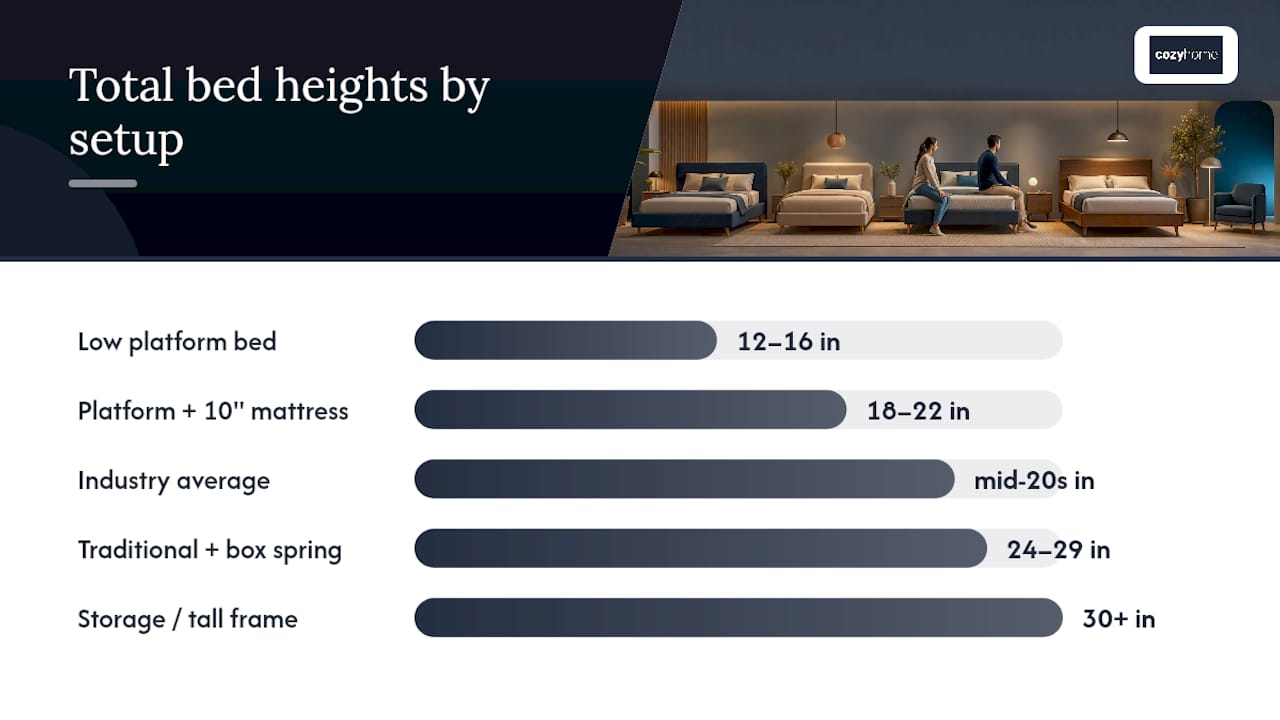
A traditional setup with a typical box spring and mattress on a low frame easily reaches about two feet or more on its own, before you even add a frame with any real height. That’s roughly why the “standard” height lines up so closely with average standing knee height for adults, which typically falls between 17 and 23 inches.
Here’s how common combinations stack up:
- Low platform bed (no box spring, thin mattress): often 12 to 16 inches total.
- Platform bed with a 10 inch mattress: usually lands around 18 to 22 inches.
- Traditional frame with box spring and a 10 to 12 inch mattress: typically 24 to 29 inches.
- Storage or tall frame with a thick mattress: can reach 30 inches or more.
Modern mattresses have shaken up these numbers. Memory foam and hybrid mattresses often skip the box spring entirely in favor of a slatted platform or a low-profile foundation, which is part of why “standard height” looks different today than it did a decade ago.
How Do You Measure Your Ideal Bed Height?
Skip the guesswork and measure your own body instead of trusting a showroom photo. Two methods work together here, and using both gives you a number you can actually trust.
- Measure your standing knee height. Stand up straight and have someone measure from the floor to the center of your kneecap. This number, typically between 17 and 23 inches for most adults, becomes your target mattress-top height.
- Run the sit test. Sit on the edge of a bed (or a stack of boxes at your target height) with feet flat on the floor. Your knees should form roughly a 90 degree angle, matching what designers and physical therapists both recommend as the comfort benchmark.
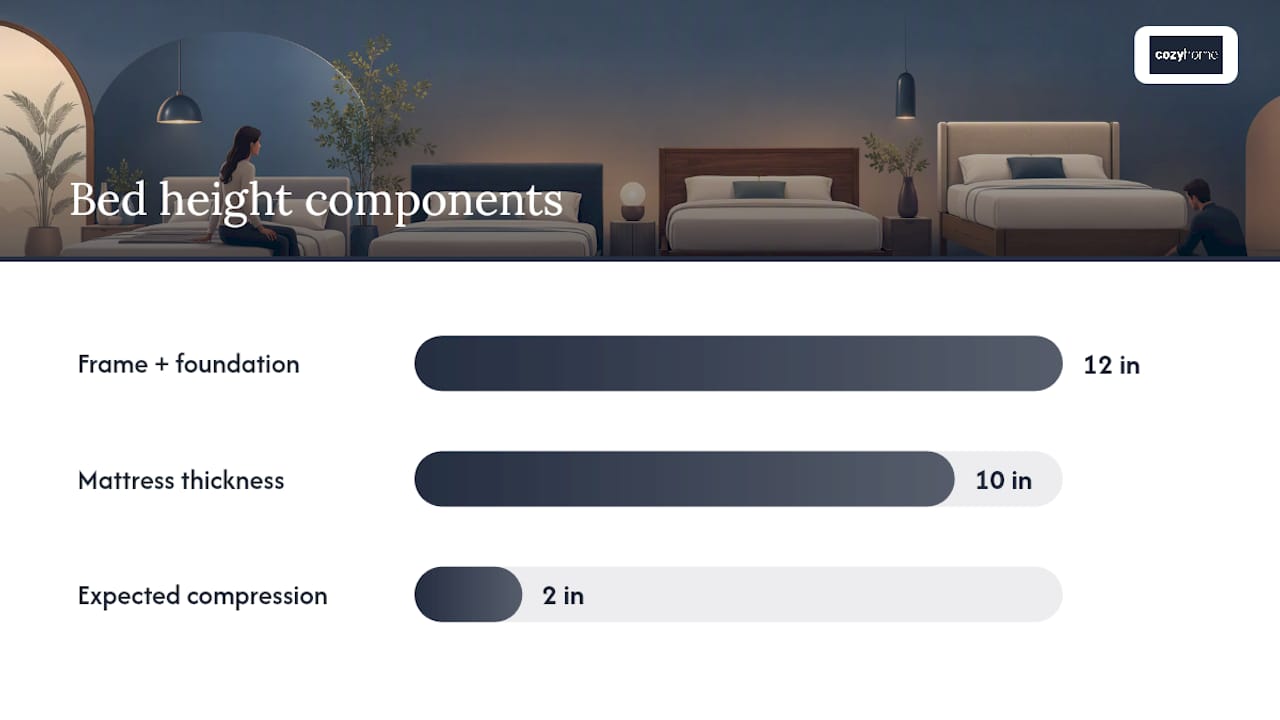
- Subtract mattress thickness from your target. If your knee height is 22 inches and your mattress is 10 inches thick, you need roughly 12 inches of combined frame and foundation height to hit that target.
Pro Tip: Test the sit test on a mattress similar in firmness to the one you’re buying. A firmer mattress barely compresses under your weight, but a plush pillow-top can sink two inches or more once you sit down, which quietly throws off your measurement.
That compression detail matters more than most people realize. A 22 inch knee height combined with an expected 2 inch compression means your actual target mattress-top height needs to land a little higher than 22 inches to compensate, or your feet end up dangling once you settle in.
Which Bed Height Category Fits Your Needs?
Bed heights generally fall into four working categories, each suited to a different kind of room, body, or lifestyle.
- Very low (12 to 16 inches): Popular in minimalist and Japanese-inspired platform designs. Great for smaller rooms and lower ceilings, but can be tough on anyone with knee or hip issues, since getting up requires more leg effort.
- Low platform (16 to 20 inches): A common sweet spot for shorter adults and anyone who prefers a grounded look without sacrificing ease of movement. Watch for insufficient under-bed clearance if you rely on storage bins.
- Standard or mid-height (22 to 26 inches): The most versatile range, comfortable for the average adult and easiest to pair with typical nightstands. This is where most traditional frame and mattress combinations naturally land.
- High or traditional (26 to 30+ inches): Favored by taller sleepers and anyone who wants storage drawers built into the frame. The tradeoff is a taller step up, which can be a real obstacle for kids or older adults.
Matching the category to the person using the bed, not just the room’s aesthetic, is what actually prevents nightly frustration.
How Can You Raise or Lower a Bed You Already Own?
You don’t need to replace your entire setup to fix a bed height that’s not working. A few practical adjustments solve most problems.
- Add bed risers if the bed sits too low. Stick to sturdy, interlocking risers rated for your bed’s weight, and check that they don’t compromise stability on frames with wheels or thin legs.
- Swap to a low-profile box spring or bunkie board if the bed sits too high. This alone can shave two to four inches off your total without touching the mattress.
- Change mattress thickness. Moving from a 12 inch mattress to a 10 inch model adjusts total height without any structural changes.
- Consider an adjustable base for a longer-term fix. Adjustable frames come in single-unit and split configurations, with mid-market queen models typically running $750 to $1,500. Split bases let each side adjust independently, which is popular with couples who have different comfort needs, though they can introduce a small gap in the middle unless you add a bed bridge.
Before committing to risers or an adjustable base, check your mattress warranty. Some manufacturers void coverage if the mattress is used on a frame or base outside their approved specifications.
How Does Bed Height Affect Nightstand and Room Proportions?
A bed that measures perfectly for your knees can still look and feel wrong in the room if the surrounding furniture doesn’t match. The most common miss is nightstand height.
- Keep your nightstand surface within about four inches of your mattress top, a proportion designers consistently recommend for comfortable reach while lying down. Our own nightstand height guide walks through quick fixes if yours is off.
- A taller bed calls for a taller or bolder headboard to keep the proportions balanced. Our headboard height guide breaks down the ratios that work.
- Lower beds tend to make a room with a low ceiling feel more open, while taller beds can visually shrink a small bedroom if the headboard doesn’t scale with the frame.
A quick way to check yourself: sit on the bed edge and reach for your nightstand without leaning. If you have to stretch or hunch, the proportions need adjusting before you settle on furniture.
What Height Works Best for Seniors, Tall Sleepers, Kids, and Pregnancy?
Different life stages and body types call for different targets, and one size rarely fits everyone in the same household.
- Older adults or anyone with mobility limitations: Aim for the higher end of standard, around 22 to 26 inches, since a taller bed reduces the effort needed to stand up and lowers fall risk. Adjustable bases or modest risers are an easy add without a full furniture swap.
- Tall sleepers: Target the upper end of the standard range or move into the high category, then confirm with the sit test, since standing knee height runs higher for taller frames.
- Children: Favor lower totals for easier, safer access and less risk of injury from a fall. Skip tall storage frames for younger kids, and add guardrails where needed. Our kids bedding guide covers safe, age-appropriate setups.
- Pregnancy: Small height increases, using a mattress topper or a set of risers, can make getting in and out easier in early pregnancy. Reassess again in the third trimester, when even modest height changes make a noticeable difference, and consider whether an adjustable base is worth the investment.
If your household spans more than one of these groups, an adjustable base or a modular frame setup is often the simplest way to satisfy everyone without buying separate furniture for each room.
How Does cozyhome Help You Get the Height Right?
Finding your ideal number on paper is one thing. Sitting on the actual mattress and frame combination before you buy is another, and that’s where a showroom visit earns its keep. Trying a few configurations in person lets you run the sit test for real, feel how a mattress compresses under your weight, and see the frame height next to your existing nightstand. cozyhome furniture’s showroom in Plano offers exactly that kind of hands-on comparison, backed by ergonomics-focused guides like our sofa seat height breakdown, which uses the same sit-test logic applied here to bed frames. Custom sizing, 700+ fabric and leather options, in-store guidance, local delivery, and flexible financing round out a process built around your actual measurements, not a warehouse default.
Prioritize Ergonomics Over Trend
Chasing a fashionable low platform or a dramatic tall frame is easy to do and easy to regret once your knees or your back start weighing in. Comfort and future mobility should drive the height decision, not a photo from a design feed. If there’s any doubt about which range fits your body or your household, lean toward modular solutions, adjustable bases, risers, swappable foundations, that let you adjust later instead of locking in a height you’ll want to change in five years.
— Dean P.
Ready to Find Your Ideal Bed Height?
If you’ve run the sit test and know your target range, the next step is seeing it in person. Showroom shopping solves a problem online furniture browsing can’t: you actually feel the mattress compression, check the frame height against your own knees, and adjust fabric or configuration on the spot instead of guessing from a product photo. A physical showroom can support this type of hands-on decision, with staff available to assist with frame height, mattress pairing, and sizing until the setup fits the way you actually sleep.

Beyond beds, the same custom approach applies across our sofas, sectionals, and dining pieces, including the Excelsior sofa, built to your fabric and sizing preferences rather than a standard warehouse spec. Stop by the showroom or reach out to schedule a visit, and bring your knee height measurement with you.
Sources
- Bed Frame Height Guide: What’s Standard and How to Go Higher or Lower | Mattress Recycling Guy
- Designers share the perfect bed height - Ideal range for bed | Good Housekeeping
- Bed Frame Height Guide: How to Choose the Right Bed Height | TheFineBed
- Adjustable bed frames (Consumer Reports)
- Is your bed the wrong height? Sleep experts say it could be affecting your rest | Real Simple
FAQ
Is 18 Inches Too High for a Bed Frame?
No. Eighteen inches sits comfortably within the standard comfort range of 18 to 25 inches, and it’s often ideal for shorter adults once you factor in mattress thickness with the sit test.
What Is the Standard Height of a Bed Frame?
The frame itself usually runs from a few inches for low platforms up to significantly taller heights for storage frames, but total height (frame plus foundation plus mattress) is what matters, and that typically averages 24 to 25 inches.
Is 25 Inches Too High for a Bed?
Not for most adults. Twenty-five inches sits at the upper end of the standard comfort range and often suits taller sleepers or anyone who prefers less effort standing up, though it’s worth confirming with the sit test first.
Is a 12 Inch Bed Frame Too High?
A 12 inch frame alone isn’t too high, but total height depends on what’s stacked on top of it. Add a foundation and mattress and you could easily land in the standard 24 inch range, which works fine for most adults.