

Apartment Size Sofa: What Actually Fits and How to Choose
An apartment size sofa is a compact sofa, typically 50 to 72 inches wide, built to preserve walking room and clear standard doorways without dominating a small living room. Anything up to 80 inches can still work, but only when your layout has the circulation to absorb it. For most studios and small one-bedrooms, a 60 to 72 inch sofa is the safest starting point, and if your hallway or entry door is under 32 inches wide, you’ll want to lean toward the narrower end or consider modular pieces that break apart for delivery.
We put together a shortlist to get you moving before we dig into the measuring and math:
- cozyhome Excelsior (made-to-measure): built to your exact width, arm style, and seat depth when standard sizes won’t clear your entryway.
- Compact modular sofa: arrives in separate pieces, ideal for narrow stairwells and awkward turns.
- Slim-depth loveseat: roughly 60 to 80 inches wide with a shallower profile that keeps walkways open.
- Compact sleeper sofa: doubles as a guest bed without eating up floor space in a studio.
Before you fall for any of these on looks alone, run the numbers. The next few sections walk through the sizing rules, the measuring checklist, and the entry-path math that decide whether a sofa actually works in your space.
Key Takeaways
Fit and circulation determine whether an apartment size sofa works, and no width number matters until it’s checked against your doorway, walkway, and wall length.
| Point | Details |
|---|---|
| Sizing sweet spot | Aim for 50 to 72 inches wide, treating 80 inches as a practical ceiling in most apartments. |
| Apply the 2/3 rule | Keep your sofa at 60 to 75% of usable wall length to avoid crowding the room. |
| Protect your clearances | Maintain around 30 inch walkways and comfortable space between sofa and coffee table. |
| Measure the path, not just the room | Check doorway width, stair turns, and elevator dimensions before you order. |
| Go custom for tight fits | cozyhome’s made-to-measure Excelsior sofa solves layouts where standard widths fail on doorways or irregular walls. |
Where to Verify Sofa Specs Before You Buy
Cross-check any listing against a source that publishes exact numbers, not rounded estimates.
- Editor-tested roundups like BHG’s small-space couch guide and Apartment Therapy’s tested picks list verified dimensions and delivery notes.
- Manufacturer product pages, such as the Eames Sofa Compact spec sheet, show exact width and depth.
- cozyhome’s order-ready measuring checklist walks through the specs to record before placing a custom order.
Table of Contents
- Sizing Rules Every Apartment Shopper Should Know
- How Do You Measure Your Room and Delivery Path?
- Which Sofa Type Actually Fits a Small Apartment?
- Compact Sofas Worth Considering: A Size and Feature Comparison
- What to Consider Before You Buy
- Made-to-Measure Sofas When Standard Sizes Don’t Work
- Sources
- FAQ
Sizing Rules Every Apartment Shopper Should Know
Width is only the headline number. A sofa that measures fine on paper can still choke a room if the depth, seat height, and clearances are off. Editor testing on small-space couches puts the sweet spot at 50 to 72 inches wide, with 80 inches as a practical ceiling for most apartments, and that band holds whether you’re in a studio or a two-bedroom with a compact living room.
Depth matters just as much as width. Standard sofa depth runs 32 to 38 inches; apartment-friendly options usually sit in the 30 to 34 inch range, with seat depth (the part you actually sit on) closer to 20 to 23 inches. Seat height typically falls between 17 and 19 inches, which keeps proportions comfortable without adding visual bulk.
Here’s the fastest layout check you can run with a tape measure: your sofa should occupy roughly 60 to 75% of your usable wall length, often called the 2/3 rule. Go much beyond that and the room starts to feel like it’s built around the couch instead of the couch fitting the room.
- Main walkways: keep clearances sufficient for easy movement.
- Sofa-to-coffee-table gap: maintain comfortable space for access.
- Wall clearance: allow some breathing room on either side.
- Maximum practical width: 80 to 84 inches, and only if your room can absorb it.
Pro Tip: Choose slim or track arms over rolled arms, and look for raised or exposed legs instead of a skirted base. Both choices can save several visual inches and make a room feel less crowded even when the actual footprint barely changes.
How Do You Measure Your Room and Delivery Path?
Measure before you fall in love with a floor sample. That’s the rule that saves the most returns.
Start with your usable wall length, then check walkway width and the sofa-to-coffee-table gap using the clearances above. Note your ceiling height too if you’re eyeing anything with a high back.
Then move to the part most people skip: the path the sofa actually has to travel.
- Measure your front door width and height, plus any interior doorways along the route.
- Check stairwell width and the turning radius at any landings.
- If there’s an elevator, measure its interior depth, width, and posted weight limit.
- Note tight corners or hallway bends where a rigid frame might not swing through.
Removable legs and knockdown frames solve a surprising number of “it won’t fit” problems, and modular pieces that ship in smaller sections are often the easiest fix for narrow stairwells.
Once you’ve got real numbers, run a low-tech fit test: tape off the sofa’s footprint on your floor with painter’s tape, or cut a cardboard mock-up to the exact width and depth. Walk around it for a day before you commit.
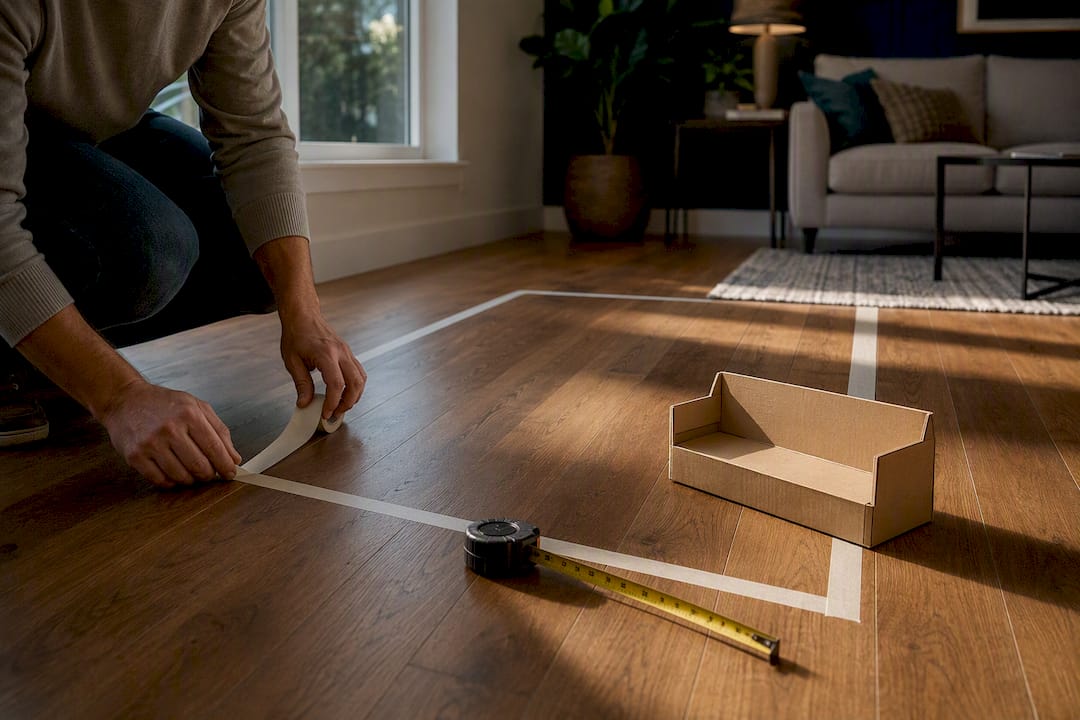
When you’re ready to order, record these specs: overall width x depth x height, seat height, cushion depth, and whether the listed depth includes the cushions or measures the frame alone. That last detail trips up more buyers than anything else on this list.
Which Sofa Type Actually Fits a Small Apartment?
Not every “small sofa” solves the same problem, so match the category to your actual constraint.
A loveseat or two-seater apartment sofa is the default for studios and single-room living. These typically run 60 to 80 inches wide, and compact storage versions can drop to around 57 inches for genuinely tight footprints. A slim-depth sofa keeps the same seating capacity but trims 4 to 6 inches of depth, which matters more than width in a narrow living room.
A compact sectional or modular piece is the right call when your room has an awkward corner or an open floor plan that needs zoning. Because modular sections ship separately, they’re often the only realistic option for third-floor walk-ups with tight stairwells.
A compact sleeper sofa earns its keep in a studio that doubles as a guest room, though you’ll trade some seat comfort for that flexibility. Storage and ottoman-integrated sofas solve a different problem entirely: they hide linens, seasonal gear, or the clutter a small apartment has nowhere else to put.
- Studio or single room: loveseat or slim-depth sofa.
- Awkward corners, open layouts: compact sectional or modular.
- Frequent guests: sleeper sofa, accepting a firmer seat.
- Pets or heavy daily use: prioritize performance fabric over form.
- Narrow doorways or irregular walls: modular or custom, every time.
Compact Sofas Worth Considering: A Size and Feature Comparison
This shortlist mixes a made-to-measure option with editor-tested compact categories, so you can compare on the numbers that actually decide whether a sofa clears your door.
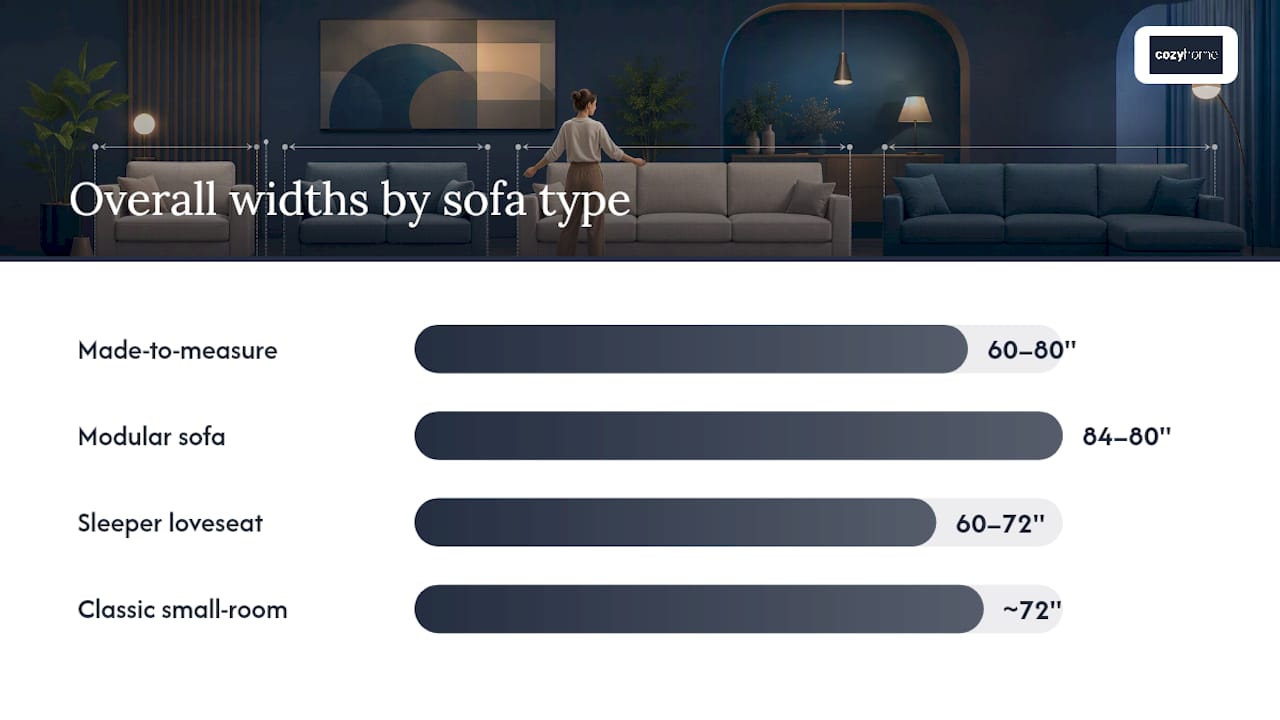
| Best For | Overall Width | Depth / Seat Depth | Seat Height | Upholstery | Features | Price Band | Delivery Fit |
|---|---|---|---|---|---|---|---|
| Tight or irregular layouts | Custom (typically 60–80") | Custom, seat depth selectable | Custom | 700+ fabric/leather options | Made-to-measure, slim-arm options | Mid to high | Local delivery, in-store measuring help |
| Narrow stairwells, open-plan rooms | 84–80" (modular) | 30–38" / 20–23" | 17–19" | Performance fabric options common | Modular, reconfigurable, some with storage | Mid | Ships in sections, strong stairwell fit |
| Studios, guest-room doubling | 60–72" | 32–34" / 20–22" | 17–19" | Cotton blend or performance weave | Pull-out or fold-out sleeper mechanism | Low to mid | Standard delivery, check door width first |
| Classic small-room profile | ~72" | ~30" | ~17" | Molded shell with upholstered cushions | Fixed frame, compact silhouette | High | Standard delivery, Herman Miller lists exact specs |
cozyhome Excelsior (made-to-measure). This is the option to reach for when a standard size almost fits but not quite, whether that’s a doorway two inches too narrow or a wall that isn’t quite long enough for a stock loveseat. You choose the width, the arm profile, and the seat depth, and the Excelsior in cream or the shiitake beige finish both show how far the fabric options stretch.
- Pros: exact fit to your space, slim-arm options save visual width, no compromise on seat depth.
- Cons: longer lead time than off-the-shelf, mid-to-high price point.
- Best for: irregular walls, narrow entries, or anyone who has already been burned by a “close enough” purchase.
Editor-tested compact modular sofa. Modular sections solve the problem a single fixed frame can’t: getting a sofa up a tight staircase or around a sharp hallway turn. Editors consistently favor these for small-space flexibility because you can rearrange the pieces as your layout changes.
- Pros: navigates narrow entry paths, reconfigurable for different rooms, often includes hidden storage.
- Cons: joints between sections can loosen over time, overall footprint can creep up if you keep adding pieces.
- Best for: open-plan apartments and anyone who rearranges furniture more than once a year.
Compact sleeper loveseat (editor-tested). A pull-out mechanism turns your living room into a guest room without needing a second piece of furniture. The tradeoff is a firmer seat cushion, since the frame has to accommodate the folding mechanism underneath.
- Pros: doubles as a bed, fits the 60 to 72 inch band comfortably, works well in studios.
- Cons: less plush than a standard fixed cushion, heavier to move.
- Best for: studio dwellers who host overnight guests more than a few times a year.
If you want a visual sense of how proportion changes a small room’s feel before you commit to any of these, our guide to furniture scale in small rooms is worth a look.
What to Consider Before You Buy
Fabric choice matters more in an apartment than almost anywhere else, because a small room gets touched, sat on, and lived in constantly. Performance fabrics and stain-resistant weaves hold up better under daily use, and designers specifically recommend them for pets and frequent guests. Removable, washable covers are worth the extra cost if you have kids or pets, since spot-cleaning a fixed cushion cover gets old fast.

Seat depth deserves more attention than most buyers give it. A shallower seat, in the 20 to 22 inch range, keeps the sofa from eating into your walkway, but go too shallow and taller people lose lounging comfort. Firmer foam holds its shape longer in a small space that sees daily use, even if it feels slightly less plush in the showroom.
On delivery: ask any vendor whether the frame breaks down, whether legs are removable, and whether depth listed on the spec sheet includes the cushions. Knockdown frames and modular shipping solve most “will it fit through the door” problems before they start.
Expect low-tier sofas ($400 to $900) to use lower-density foam and less durable fabric; mid-tier ($900 to $2,000) typically brings better frames and fabric selection; high-tier and made-to-order pieces ($2,000 and up) buy you exact sizing, premium materials, and longer warranty coverage.
Pro Tip: Favor an elevated-leg or exposed-leg frame over a skirted base. It lightens the sofa’s visual mass in a small room and makes it far easier to vacuum underneath, which matters more in 700 square feet than it does in a house.
If hidden storage is a priority alongside seating, pairing your sofa search with a look at home organization systems can help you solve clutter problems the sofa alone won’t fix.
How These Recommendations Were Chosen
Fit and circulation drove every pick here, not decorative size or brand recognition. A sofa that photographs well but blocks your hallway isn’t a small-space sofa, no matter what the listing calls it.
The criteria: verified width and depth against manufacturer specs, whether listed depth includes cushions, available delivery and assembly options, modularity for tight entry paths, and fabric durability for daily use. On product pages, look for exact numbers rather than “approximately,” a clear return policy, and documented delivery methods. Editor testing programs that evaluate dozens of couches over multiple seasons tend to catch comfort and durability issues a single showroom visit won’t reveal.
When Does a Custom Sofa Make More Sense Than Off-the-Shelf?
Choose custom when a standard size fails on circulation, doorway width, or an irregular wall, not as a default upgrade. If your entry door measures 30 inches and every stock sofa on your list is 32 inches deep at the arm, no amount of shopping around fixes that.
What to ask a maker for: slim or track arm options, a specified overall width down to the half inch, a selectable seat depth, removable covers, and confirmation that the piece can ship in modular sections if your stairwell demands it.
Pro Tip: Request a shop drawing and a delivery plan before you order. A drawing that shows how each module clears your measured doorways and stair turns catches problems while they’re still cheap to fix.
Prioritize Fit Over Brand
The sofa that fits your doorway and preserves your walkway beats the designer name every time, because a beautiful sofa you can’t get up the stairs solves nothing. cozyhome’s made-to-measure approach exists for exactly this last-inch problem, where standard sizing runs out of options and custom becomes the only workable path.
Made-to-Measure Sofas When Standard Sizes Don’t Work
cozyhome furniture builds sofas around your doorway, your stairwell, and your wall length, not the other way around. When a stock loveseat comes up two inches too wide for your hallway, that’s exactly the gap our made-to-order process closes.
We offer custom widths down to the half inch, slim-arm profiles that shave visual bulk without sacrificing seat depth, and over 700 fabric and leather options to match a space you actually live in. Our Plano showroom team walks you through sizing in person, so you’re not guessing at measurements from a listing photo. Local delivery and in-store measuring help mean the sofa that gets ordered is the sofa that actually clears your entry path.
Reach for a custom build when your layout is irregular, your doorway is narrower than the standard 32-inch band, or you need integrated storage a stock piece won’t offer. Check specs and fabric options on the Excelsior sofa page and request your exact sizing before you commit to anything off the floor.
Sources
- The 6 Best Couches for Small Spaces, Tested by BHG
- The Best Sofas for Small Spaces of 2025 (Editor Tested and Rated) | Apartment Therapy
- 13 Best Loveseat Sofas for Small Spaces in 2026
- Eames Sofa Compact — Herman Miller product page
FAQ
What Size Is an Apartment Size Sofa?
An apartment size sofa typically measures 50 to 72 inches wide, with 80 inches as a practical upper limit in most small living rooms.
What Is the Most Comfortable Sofa for an Apartment?
Comfort in a small space comes down to seat depth and cushion firmness rather than overall size; a seat depth of 20 to 23 inches with medium-firm foam usually balances lounging comfort against preserving walkway space.
What Is the 2/3 Rule for a Sofa?
The 2/3 rule means your sofa should occupy roughly 60 to 75% of your usable wall length; going wider than that usually crowds the room and blocks natural walking paths.
What Is the Best Apartment-Sized Sectional Sofa?
The best option is usually a modular sectional that ships in separate sections, since that construction lets it navigate narrow stairwells and reconfigure as your layout changes; cozyhome’s made-to-measure sectionals extend this further by letting you set exact module widths for spaces standard sizing can’t solve.